
http://www.amazon.com/Vatican-Billions-Avro-Manhattan/dp/0937958166 - Read the complete text - below
Updated April 7, 2013
Vatican Assets in England and in the United States of America
Vatican assets in London
- premises of Bulgari, the upmarket jewellers in New Bond Street
- headquarters of the wealthy investment bank Altium Capital, on the corner of St James's Square
- Pall Mall
- office blocks in one of London's most expensive districts
- 168 New Bond Street and in the city of Coventry
- blocks of flats in Paris and Switzerland
- Source from January 23 news update below: How Vatican built a secret property empire using Mussolini’s millions
Vatican assets in the United States of America
- The Catholic Church in the United States, with “assets of more than $100 billion, today possesses more than ten times the combined wealth of IBM, Exxon, General Motors, and U.S. Steel.”
- stock it controls on the New York and American stock exchanges, and property, gold reserves, and paintings—are probably $50 billion to $60 billion
- There is no accountability for these funds to anyone except the Vatican. Everything is done in complete secrecy
- The hierarchy has learned to act indirectly through Catholic laypersons
- The hierarchy acts through Catholic politicians – see list below
- Source from January 23 news update below “How does the Vatican influence US policy?
Vatican assets in Italy – see update of December 31, 2012 right below
As long as we tolerate Vatican Deceits via the Pope’s mouth- we can never influence other religions to become more peaceful. Vatican Deceptions cannot convert other world leaders to become Christians, because after all, the Vatican Billions are an intrinsic part in the machinery of wars. Evil begets evil. Lies beget lies. Deceits beget deceits. Money Greed begets money greed. Vatican Evils beget evil. Vatican lies beget lies. Vatican deceits beget deceits. Vatican greed begets greed.
When Pope Benedict XVI travels to foreign countries, despite the economic crisis and worldwide knowledge that he committed crimes against humanity pending at The Hague, all presidents and prime ministers welcome him, and the country spend hundreds of millions of dollars for his security like they did in Spain, read our related article here, Thousands protest Pope in Madrid VIDEOS.Benedict XVI the narcissistic Pope spends 100 million Euros while millions of Spaniards suffer economic crisis
http://pope-ratz.blogspot.ca/2011/08/anti-pope-protests-in-madrid-injure-11.html. Why? Because the Vatican own most of the wealth of each country and it threatens to cause a financial crisis using its wealth.
But all countries should now smart-up and instead of fearing the Vatican Mammon Beast - imitate Italy who has tracked down every Vatican wealth and start taxing it starting in 2013, from 600 million Euros up to 2.2 Billion Euros in taxes, see the staggering list below. The Vatican is saying their taxes should be around 100 million Euros only in Italy. Benedict XVI and the Vatican is the Master of Deception worse than the Devil in the Garden of Eden, read our related article , Benedict XVI Master Manipulator of the Media…the Pied Piper of Children deceiving them away from truth of his Crimes Against Humanity at The Hague http://popecrimes.blogspot.ca/2011/11/benedict-xvi-master-manipulator-of.html
So the Pope goes to perform the Sorcery of the Eucharist in each country and Catholics sit there and kneel like a “stupid herd” and open their tongues like “stupid asps” - which Galileo defined the Pope and the Vatican Inquisition who condemned him, read our related article Vatican Terror on Galileo, priests and the poor, women and children , read more here http://popecrimes.blogspot.ca/2013/01/vatican-terrorism-on-galileo-women-and.html
Today, the British reveals part of the Vatican billions in London, read news updates below. The modus operandi of the Vatican is the same in each country; they do everything with utmost secrecy. They have a lot of practise in the secret seal of Confession, read our related article, Sacrament of Confession protects criminals and persecutes their victim, http://popecrimes.blogspot.ca/2012/11/sacrament-of-confession-protects.html
All Americans should petition Obama to ask Congress to pass a law requiring all Vatican properties in the United States to pay taxes, just like the Italian Prime Minister did and Italian Parliament passed the law, read news updates below.
The Vatican Titanic is sinking moral bankruptcy and it has lost all moral authority especially in the Pope Christmas speech wherein he traditionally mocks the world but he was truly speaking about himself, read here our related article “Popenesia in Christmas Message: Vatican Last Tsar Benedict XVI does not 'practise what he preach' and he's suffering from Vaticanesia (papal amnesia) http://popecrimes.blogspot.ca/2013/01/popenesia-in-christmas-message-vatican.html...
EWTN Mother Angelica’s 150 million dollars DIAMOND studded chapel in Alabama, in John Paul II MIllstone blog. Mother Angelica and her nuns can pray in the vanity of the Temple of Solomon - because those millions of dollars worth of diamonds were harnessed through the rape of thousands of women and children soldiers killing their own families! read our related article :
Diamond bride Mother Angelica’s EWTN acquires Fr. Marcial Maciel’s National Catholic Register: same God and Mammon, same hypocrisy http://jp2m.blogspot.ca/2011/01/diamond-bride-mother-angelicas-ewtn.html
Pope Francis Top 10 Vatican Deceits. Francis cloned @3.13.13 inside Vatican Titanic as Jesuit Mask of Vatican Evils. “Bergoglio. Basura. Vos sos la dictadura.”
http://popecrimes.blogspot.ca/2013/03/pope-francis-top-10-vatican-deceits_30.htmlBillion Dollar Christ & Apostles in Red now playing in Vatican. Evil impact of Papal Conclave: epidemic violence against women & perpetuity of poor countries
http://popecrimes.blogspot.ca/2013/02/billion-dollar-christ-apostles-in-red.html- Vatican Terror on Galileo, priests and the poor, women and children...
- BOYCOTT Oratory of Saint Joseph! CANDLES to giant St. Joseph and Brother Andre cannot protect children from pedophiles...
- CSC Holy Cross Congregation delay $18 million compensation payout...
- Popenesia in Christmas Message: Vatican Last Tsar ...
- Oratory of St. Joseph copy Vatican Titanic. Montreal...
- Judge Elias, please release ALL confidential churc...
- Forbes delusion of Vatican Last Tsar Benedict XVI powers...
- Benedict XVI the Vatican Last Tsar: Final despotic acts..
- Sacrament of Confession protects criminals and persecutes their victims...
- NCAA & Penn State more moral than Vatican. Sports is more moral than John Paul II...
Updated December 31, 2012
Starting January 1, 2013, the governemnt of Italy will tax all properties of the Vatican and the amount of properties are stagerring.
VATICAN ASSETS in ITALY
According to the European Commission (EC), the Vatican avoids Ici tax on about 100,000 properties, classed as non-commercial, including:
8,779 schools
26,300 ecclesiastical structures
4,714 hospitals and clinics
Updated August 19, 2012
Pope John Paul II the Great not only proved how amoral he was as a “Holy Father” because for 27 years he had neither heart nor conscience for hundreds of thousands of little boys sodomized by his JP2 Army – John Paul II Pedophile Priests Army named aptly after him, but he also left an amoral Vatican Titanic sinking in moral bankruptcy and a an "Unholy Mess" financial empire that serves more Mammon by using God’s name in vain. Today the Economist revealed that the Catholic Church has spent $171,600,000,000 in 2010, that's ONE HUNDRED SEVENTY ONE BILLION AND SIX HUNDRED MILLION DOLLARS read news updates below. As the Vatican Bank was given a passing grade to avoid an economic crisis in austerity struck Italy, read our related article “Obama admin versus Vatican Bank: A compilation. USA government lists Vatican as 'potential money-launderingcenter'” http://popecrimes.blogspot.ca/2012/03/obama-admin-list-vatican-as-potential.html the news of Vatican financial mess can only confirm the Vatican Titanic sinking in moral bankruptcy as it serves money more than Christ and it uses the Eucharist as its magic wand to make 1.2 Catholics “Pray,Pay”Obey” to satisfy the whims of the last Tsars of the Vatican, the Pope and the Opus Dei who are controllers worse than the Pharisees whom Christ condemned as “White Sepulchres” inspite of their repetitive prayers in Latin each day.
Read our related articles
Obama admin versus Vatican Bank: A compilation. USA government lists Vatican
NCAA & Penn State more moral than Vatican
May 1 & September 11 anniversaries for SNAP and JP2 Army victims. SNAP ad in New York Times should be framed and permanently exhibited in all churches, schools and children venues: U.S. Catholic Bishops and Child Sex Crimes http://popecrimes.blogspot.ca/2012/07/may-1-september-11-anniversaries-for.html
Vatican USA nuns live Gospel, serve the poor and sick...while Benedict XVI lives in luxury out-of-touch-with-reality in Vatican Bank Tower http://popecrimes.blogspot.ca/2012/04/vatican-attacks-american-nuns.html
Goliath-bully Bill Donohue attacks David & SNAP & JP2 Army victims: A compilation. Being Anti-Catholic is necessary for justice, protection of children, women, the poor http://popecrimes.blogspot.ca/2012/03/goliath-bully-bill-donohue-attacks.html
See update below on the Economist's report that Catholic Church has spent $171,600,000,000 in 2010
Excerpts from chapters below:
Jesus, the founder of Christianity, was the poorest of the poor.
Roman Catholicism, which claims to be His church, is the richest of the rich, the wealthiest institution on earth. How come, that such an institution, ruling in the name of this same itinerant preacher, whose want was such that he had not even a pillow upon which to rest his head, is now so top-heavy with riches that she can rival - indeed, that she can put to shame - the combined might of the most redoubtable financial trusts, of the most potent industrial super-giants, and of the most prosperous global corporation of the world?
It is a question that has echoed along the somber corridors of history during almost 2,000 years; a question that has puzzled, bewildered and angered in turn untold multitudes from the first centuries to our days.
'Christ is the Lord of the whole world. At his departure he left his dominion to his representatives, Peter and his successors. Therefore the fullness of all spiritual and temporal power and dominion, the union of all rights and privileges, lies in the hands of the pope. Every monarch, even the most powerful, possesses only so much power and territory as the pope has transferred to him or finds good to allow him.'
This theory was supported by most medieval theologians. (3) It became the firm belief of the popes themselves. In 1245, for instance, Pope Innocent IV expounded this doctrine to none other than the Emperor Frederick, saying that, as it was Christ who had entrusted to Peter and his successors both kingdoms, the heavenly and the earthly, belonged to him, the pope: by which he meant that the spiritual dominion of the papacy had to have its counterpart also in papal dominion over all the lands, territories and riches of the entire world.
Not even the most ambitious emperors of the Ancient Roman Empire had ever dared to claim as much.
The immensity of the riches which brought to the papacy during the centuries is incalculable. Their use, abuse and misuse should not make us lightly condemn them, as unimportant, nor their absurdity induce us to underestimate the tremendous power they had - or rather, the tremendous power of the cumulative effect of their employment by both the Church and the popes.
The capture of Jerusalem and the success of the First Crusade gave incalculable prestige to the pontiffs. While the nations of Europe attributed this vicotry to manifest supernatural power, the Roman Pontiffs were quick to transform the great martial movements of the Crusades into powerful instruments to be used to expand their spiritual and temporal dominion. This was done by employing them as military and political levers which never ceased to yield territorial and financial advantages throughout the Middle Ages.
Excerpt
THE VATICAN BILLIONS by Avro Manhattan:
"
The Vatican has large investments with the Rothschilds of Britain, France and America, with
the Hambros Bank, with the Credit Suisse in London and Zurich. In the United States it has
large investments with the Morgan Bank, the Chase-Manhattan Bank, the First National
Bank of New York, the Bankers Trust Company, and others.
The Vatican has billions of sharesin the most powerful international corporations such as Gulf Oil, Shell, General Motors, Bethlehem Steel, General Electric, International Business Machines, T.W.A., etc. At a conservative estimate,these amount to more than 500 million dollars in the U.S.A. alone.
"In a statement published in connection with a bond prospectus, the Boston archdiocese listed its
assets at Six Hundred and Thirty-five Million ($635,891,004), which is 9.9 times its liabilities. This
leaves a net worth of Five Hundred and Seventy-one million dollars ($571,704,953). It is not
difficult to discover the truly astonishing wealth of the church, once we add the riches of the
twenty-eight archdioceses and 122 dioceses of the U.S.A., some of which are even wealthier than
that of Boston.
"Some idea of the real estate and other forms of wealth controlled by the Catholic church may be
gathered by the remark of a member of the New York Catholic Conference, namely 'that his church
probably ranks second only to the United States Government in total annual purchase.' Another
statement, made by a nationally syndicated Catholic priest, perhaps is even more telling. 'The
Catholic church,' he said, 'must be the biggest corporation in the United States. We have a branch
office in every neighborhood. Our assets and real estate holdings must exceed those of Standard
Oil, A.T.&T., and U.S. Steel combined. And our roster of dues-paying members must be second
only to the tax rolls of the United States Government.'
"
The Catholic church, once all her assets have been put together, is the most formidable
stockbroker in the world.
The Vatican, independently of each successive pope, has been
increasingly orientated towards the U.S.
The Wall Street Journal said that the Vatican's
financial deals in the U.S. alone were so big that very often it sold or bought gold in lots of a
million or more dollars at one time.
"
The Vatican's treasure of solid gold has been estimated by the United Nations World
Magazine to amount to several billion dollars.
A large bulk of this is stored in gold ingots with
the U.S. Federal Reserve Bank, while banks in England and Switzerland hold the rest. But this is
just a small portion of the wealth of the Vatican, which in the U.S. alone, is greater than that of the
five wealthiest giant corporations of the country.
When to that is added all the real estate,
property, stocks and shares abroad, then the staggering accumulation of the wealth of the
Catholic church becomes so formidable as to defy any rational assessment.
"
The Catholic church is the biggest financial power, wealth accumulator and property owner
in existence.
She is a greater possessor of material riches than any other single institution,
corporation, bank, giant trust, government or state of the whole globe. The pope, as the visible ruler
of this immense amassment of wealth, is consequently the richest individual of the twentieth
century. No one can realistically assess how much he is worth in terms of billions of dollars."
by Avro Manhattan
“Where your treasure is, there will your heart be also.”
Matthew 6:21
|
http://www.bibliotecapleyades.net/vatican/vatican_billions.htm
Chapter 1
The Historical Genesis of the Vatican’s Accumulation of Wealth
The startling contradiction of the tremendous riches of the Roman Catholic Church with the direct teaching of Christ concerning their unambiguous rejection, is too glaring to be by-passed, tolerated or ignored by even the most indifferent of believers. In the past, indeed, some of the most virulent fulminations against such mammonic accumulation came from individuals whose zeal and religious fervor were second to none. Their denunciations of the wealth, pomp, luxury and worldly habits of abbots, bishops, cardinals and popes can still be heard thundering with unabated clamor at the opening of almost any page of the chequered annals of western history.
But, while it was to their credit that such men had the honesty to denounce the very church to which they had dedicated their lives, it is also to the latter’s discredit that she took no heed of the voices of anguish and anger of those of her sons who had taken the teaching of the Gospel to the letter and therefore were eager that the Roman Catholic system, which claimed to be the true bride of Christ, be as poor as one she called master. When she did not silence them, she ignored them or, at the most, considered them utterances of religious innocents, to be tolerated as long as her revenue was not made to suffer.
Whenever that happened the Vatican did not hesitate to resort of the most prompt and drastic coercion to silence anyone capable of setting in motion forces, within or outside her, likely to divest her of her wealth.
The employment of suppressive measures went from the purely spiritual to physical ones; the ecclesiastical and lay machineries were used according to the degree and seriousness of the threat, and this to such an extent that in due course they became so integrated as to operate at all levels, wherever the two partners deemed themselves imperiled.
The result was that finally the religious exertion of Roman Church became so intermingled with her monetary interests as to identify the former with the latter, so that very often one could see a bishop or a pope fulminate excommunication and anathema against individuals, guilds, cities, princes and kings, seemingly to preserve and defend the spiritual prerogatives of the Church, when in reality they did so exclusively to preserve, defend or expand the territorial, financial or even commercial benefits of a Church determined to retain, and indeed to add to, the wealth it already enjoyed.
This policy was not confined only to come critical or peculiar period of Catholic history. It became a permanent characteristic throughout almost two millennia. This feature, besides causing immense sorrow to the most fervent of her adherents, became the spring of countless disputes, not only with the principalities of this world, whom she challenged with her incessant quest for yet more temporal tributes, but equally with vast sections of Christendom itself.
The splitting of this giant religious system into three distracted portions, Roman Catholicism in the West, the Orthodox church in the Near East, Protestantism in Northern Europe, to a very great extent became a reality very largely because of the economic interest which lay hidden behind the high-sounding dissensions between the simmering rival theological disputations.
Thus, had the Church of Rome remained apostolically poor, it is doubtful whether the lay potentates would have aligned themselves to the support of the ecclesiastical rebels, since the greed of the former for the possible acquisition of the immense wealth controlled by the Church in Germany, England, and elsewhere would not have become the decisive trigger which made them side with the revolutionary new spiritual forces whose objectives were not solely confined to the curtailment of the spiritual and political might of Rome, but equally to depriving this religious system of the wealth which she had accumulated through centuries of uncontrolled monopoly.
It was the allurement of the immediate potential redistribution of the Vatican’s riches among the lay potentates which a successful religious secession would have rendered possible, that became the principal factor ultimately to persuade them to rally to the side of Luther and his imitators. The dynastic issue of King Henry VIII of England was not as basic as the economic motivation which really led to the final breakaway from Roman authority.
The landed gentry who supported his policy did so with their eyes well fixed upon the economic benefits to come. The variegated alignment of the German princes with Lutheranism was prompted chiefly by the same basic economic considerations. It was such concrete, although seemingly secondary, factors which in the long run made the Reformation possible.
Seen in this light, therefore, the Roman Catholic Church's persistent ignoring of the fundamental command of Christ concerning the riches of this world caused irremediable harm to the spiritual interests of Christendom at large; and, even more than that, ignited revolts, provoked revolutions and promoted destructive wars which were to scar the western world for hundreds of years, up to our own days.
That was not always so. The true early Church acted upon, and indeed practiced, the tenets of Jesus Christ, thus putting the accumulation of the treasures of heaven before the accumulation of those of the earth.
But as the Roman Catholic system began to develop, the first tiny seeds of the temporal amassment of wealth were planted. These were eventually to grow into the monstrous giant mustard tree which was to obscure the light of Europe for over a thousand years.
The early Christians, following upon the example of the Apostles and the first and second generations of Christ’s disciples, upon conversion obeyed Christ’s commandment to the letter and disposed of their possessions. These they either sold or gave to the Christian community, the latter using them for communal benefit, so that all members would partake of them in equal portion. There was no personal attachment as yet to riches thus used, either on the part of the single Christian individual or for any autonomous Christian nucleus. The ownership, possession and enjoyment of any wealth was anonymous, impersonal and collective. There was also the help of the poor, of the slaves, of the sick and of the prisoners.
During the first and second centuries the early Christians, by acting in this manner, retained the innocence of the apostolic tradition; and even during the third, although the Church’s wealth had already become substantial, she managed to act in harmony with Christ’s injunction about poverty. Christians, however, by now no longer sold their goods upon being baptized. They had come to harmonize the possession of worldly good with the teaching of Christ by conveniently quoting or ignoring sundry passages of the Gospels. Also, by following the example of the Church, which as a corporate body had begun to accumulate wealth. Its retention was justified by her help of the destitute, and also by the fact that the habit had started by which many, upon their death beds, left estates or money to her.
It was thus that the apostolic tradition of poverty was eventually abandoned. There was nothing contradictory, so the argument ran, in Christians retaining earthly riches so long as these were used in the “service of religion.” The argument seemed a sound one to the individuals, particularly since Christianity had “turned respectable.” The Roman Catholic Church thus gradually became the custodian of wealth passed on to her by her sons, acting as its distributor and administrator. Until now there had been no indication of the shape of things to come.
This was soon visible, however, with the historical event of the utmost importance. The emperor Constantine, following concrete political consideration, had decided to align the growing forces of Christianity on his side. A pious legend has it that he put upon the Roman standards a cross, with the words “In this sign conquer!” He won against the rear guard forces of the pagan world.
Constantine recognized Christianity in A.D. 313. Thence forward a new phase was initiated. The Church Triumphant began to vest herself with the raiment of the world. The state became the protector. With this came not only power, but also wealth. Accumulation of the latter was no longer regarded solely for the purpose of helping the poor. It became a visible testimony to her newly found status; a necessity which went with her prestige and mounting strength and power.
This was reflected in the multiplying erection of prestigious cathedrals, the opulence of the vestments of her prelates, the magnificence of her liturgy. Parallel with these grew unchecked worldly pride, also mounting greed for earthly riches. The two begot lack of charity, which turned soon into blatant intolerance.
Pagan temples were either closed, transformed into Christian shrines or demolished. Their properties were summarily added to the Church’s patrimony. The wealth of sundry religions was mercilessly expropriated, their clergy dismissed or persecuted, when not civilly or even physically obliterated. This transfer of political might made an easy transition into acquisitional power, the Roman Catholic Church set out in earnest to promote a policy of swift appropriation of real estate, of highly remunerative governmental posts, and even of speculative monetary and commercial enterprises.
Simultaneously with the accelerated growth of prestige, might and wealth, a new factor appeared on the scene amidst the ruins of the classic and the new emerging cultures: the monastic communities. These, the nuclei of which had come to the fore in original obscurity even when the Church was being persecuted, now transformed themselves into vast associations of pious individuals determined to ensure the spiritual riches of heaven by the abandonment of the riches of the earth. But now, unlike their predecessors the anonymous hermits who sustained themselves solely upon locusts and spring water, their imitators found it increasingly difficult to follow such a strict mode of life.
The legacies of the pious, the presents of parcels of expensive lands, estates and goods from newly converted highly placed pagan individuals, and the thanksgiving of repentant sinners, all contributed within a few centuries to make the monastic families in Europe the custodians of earthly riches and thus the administrators of earthly goods. This Church soon found herself not only on a par with the political and military potentates of this world, but equally a competitor with these amassers of wealth, from her high prelates, consorting with the high officials of the imperial court, to the monastic communities, springing up with ever more frequency in the semi-abandoned hamlets of former Roman colonies.
The early apostolic tradition of poverty became an abstraction; at most, a text for sermons or pious homilies.
And, while single heroic individuals preached and observed it, the Church Triumphant, congregating with the principalities of the earth, not only ignored it; she shamelessly stultified its injunctions, until, having become embarrassed by it, she brazenly disregarded it, abandoning both its theory and, even more, its practice.
Chapter 2
The Origin of the Church’s Temporal Riches
It was at this stage that another no less spectacular factor, predestined to have profound repercussions upon the development of Roman Catholicism during its first millennium, appeared on the scene. The tradition was established of pilgrimages to places where the saints had lived, had been martyred and had been buried. Monasteries, nunneries, churches, all had their own. With the possession of the relics of the blessed, with promotion of their legends and accounts of their miracles went not only the spiritual devotions, but also the monetary offerings of the pilgrims. That spelled wealth for those localities where the pious voyagers gathered.
The more popular a shrine or a saint, the more abundant the collection of silver and gold coins.
The most fabulous was undoubtedly that promoted by the cult of the Blessed Peter, the Turnkey of Heaven. The cult demanded a journey to Rome, where Peter’s tomb lay. Peter had been crucified there, it was asserted with no more plausible data than a pious tradition, for the Bishops of Rome had no more evidence then than have the pontiffs of the twentieth century. The latter have attempted to substantiate it with doubtful archaeological finds.
The process, begun by Pope Pius XII (1939-58), was completed by Pope Paul VI.
In 1968 Paul declared officially that,
“a few fragments of human bones found under the Basilica of St. Peter are the authentic mortal remains of the Apostle”. (1)
How the “identification” had been carried out, on a site where hundreds of thousands of bodies had been buried during many centuries, was not plausibly explained, in view also of the fact that there has never been any definite historical evidence to prove that Peter was ever in Rome. The Roman Bishops, however, cultivated the myth with undiminished eagerness.
This they did, not as mere upholders of a devout legend, but as the skillful promoters of a growing cult which had concrete and far-reaching objectives, since its magnification brought them immense authority, and with it money. For the belief that the tomb of Peter was in the Eternal City induced thousands of pilgrims, beginning with English and Scottish ones, to go to pray over the Apostle’s tomb; a source of tremendous revenue. Today we would call it by the more accurate and prosaic name of tourism.
The successors of Peter promoted pilgrimages to his “tomb” in Rome very early, although from the start they showed a special predilection for the richest and most powerful personages of the times - that is, for individuals who could give them costly presents, land and power. To quote only one typical case, Pope Leo tells us how the Emperor Valentinian III and his family regularly performed their devotions at the tomb of St. Peter, “such practice yielding a useful respect for the Apostle’s successors” to whom they offered costly presents and the tenure of lands. Pope Gregory, on the other hand (590-604), promised Queen Brunhilda remission of her sins.
“The most Blessed Peter, Prince of the Apostles.. will cause thee to appear pure of all stain before the judge everlasting” (2) as long as she granted him, Gregory, what he asked of her, that, money, real estates, and investitures which yielded abundant revenues to the Church: a practice which became a tradition during the oncoming centuries.
Gregory went even further and sent the nobleman Dynamius a cross containing “fillings” from St. Peter’s chains, telling him to wear the cross at his throat,
“which is like as if he were wearing the chains of St. Peter himself.,” and adding “these chains, which have lain across and around the neck of the most Blessed Apostle Peter, shall unloose thee for ever from thy sins”.
The gift, of course, was not a free one. It cost money and gold. (3)
Not content with this, Gregory began to send out “the keys of St. Peter, wherein are found the precious filings and which by the same token also remit sins” - provided the recipients paid in cash or with costly presents. (4)
Once it became known that the relics of St. Peter, when combined with the spiritual power of his successors, could remit sins, it was natural that most of the Christians throughout Christendom longed to go to the tomb and thus partake of Peter’s and the pope’s spiritual treasures. The latter invariably involved earthly treasures of money, silver and gold, or deeds of real estate. And that is how the pilgrimage to Rome, called the Pardon of St. Peter, was initiated - curiously enough, mostly by Anglo-Saxons.
In addition to encouraging the belief that Peter’s tomb was in Rome and that his successors had “filings” from St. Peter’s chains, the popes encouraged the belief that by coming to the Eternal City the pilgrims could address the Blessed Peter in person. The Church, far from discouraging such dishonest humbuggery, gave her approval to it: witness for example the notable St. Gregory of Tours, who, in his De Gloria Martyrum, gave a detailed description of the ceremony that had to be performed in order to speak with the Prince of Apostles. (5)
The pilgrims had to kneel upon the tomb of St. Peter, the opening to which was covered by a trap door. Then, raising the door, he had to insert his head into the hole, after which, still remaining in that posture, he had to reveal in a loud voice the object of his visit to the saint. Offerings of money were thrown in. Then veneration and obeisance were to be offered to St. Peter’s successor, the pope.
The religious and even political results of this practice upon deeply ignorant nations like the Anglo-Saxons, and upon the Franks who imitated them, can be easily imagined. Secular rulers of the highest rank flocked to Rome. At the beginning of the seventh century, for instance, two Anglo-Saxon princes renounced their thrones and passed the remainder of their lives at the tomb of St. Peter. (6)
King Canute himself could not resist Peter’s appeal. Once in Rome, having paid homage to the pope, he wrote a letter to the nobles of his kingdom, in which he said:
“I inform you that I come to Rome to pray for the redemption of my sins.. I have done this because wise men have taught me that the Apostle St. Peter received of the Lord great power to bind and to loose, that he is the turnkey of the kingdom of heaven.. That is why I thought it most useful to obtain this special patronage before God.” (7)
The well-calculated policy of this cult, once widely established, yielded increasingly valuable results for the popes, who were quick to turn the prestige thus gained into a powerful instrument by which to obtain the submission of men of low or high rank, both in the spiritual and in the secular fields. The accumulation of riches, which had not only begun to the a permanent feature of Roman Catholicism but had started to grow since the times of Constantine, when that Emperor had issued a law concerning the acquisition of land by the Church (A.D.321), by now had reached such a stage that it had become a kind of patrimonium, owned, controlled and administered by the Bishops of Rome.
The possession of property brought with it inevitable deterioration and indeed corruption of the clergy and therefore of the Church herself, since the former, seeing the latter’s eagerness for the things of this world, followed her example. The clergy, for instance, began to ask for money in exchange in exchange for their work or made money out of church goods.
Thus, under the pontificate of Gregory, clerics accepted valuables in exchange for burial places. Gregory forbade the practice, “never permitting that anyone should have to pay for money for a grave.”
He issued sundry decrees which prohibited the charging of fees for the induction of clerics into office, for the investment of a bishop, for the drawing up of documents, and so on. Upon learning of repeated cases in which the clergy were accused of selling church vessels, Gregory began a thorough investigation into the whole question of the Church’s wealth.
After having been told of how a priest had sold two silver chalices and two candelabra to a Jew, he issued a series of ordinances which decreed that each Christian community should make a correct inventory of all its sacred vessels, land and property. For the first time the census have precise information of the wealth of the Church. It showed to a surprised Gregory how his Church owned landed property in Sicily, Gaul, Spain, the Balkan lands, the Near East and even many parts of Africa. These properties included not only lands and farms, but also whole towns.
St. Peter’s Patrimony, as it began to be called, owned Syracuse and Palermo, besides numerous rich estates all over Sicily, southern Italy, Apulia, Calabria and even Gallipoli, although in ruins. The estates in Campania and those of Naples and the Isle of Capri were all producing large revenues. All in all, the Roman Church in Gregory’s time owned twenty-three estates, whose total area comprised 380 square miles, with an aggregate revenue of over one million dollars a year, a colossal sum at that period.
Gregory himself lived a life of austerity. He was a strong believer in the “ancient rule of the Fathers”’ that is, in evangelical poverty. When confronted by all this wealth, he called himself “the poor man’s treasurer,” and tried to live up to the role. He was the first pope to call himself Servus Servorum Dei, Servant of the Servants of God.
Yet, while in agreement with the fathers of the early church, such as Origen, Tertullian and Cyprian, that material possessions were not a good thing, the fact remained that Gregory was ruling a religious system which owned vast properties, real estates and riches of all kinds. Gregory justified their retention on the ground that they should be used, as the early Christians had used them, to help the destitute. That he genuinely believed this was proved by the fact that once, having heard how a beggar had died of starvation in Rome, he became so distressed that he shut himself in a cell for three days and nights without food or drink, refusing even to say Mass. He tried to administer the riches with wisdom, by giving to the poor as much as he received.
But the tide of corruption and of the progressive amassment of worldly wealth continued unabated. Indeed, it gathered momentum, notwithstanding Gregory’s uncompromising efforts to stem it by every means at his disposal, such as his demands for precise details of how the money had been spent, the scrutiny of bookkeeping and his stern prohibition of “hidden balances of the Greek sort.” It came to pass then that, only 300 years after Constantine, Roman Catholicism had already turned herself into one of the largest land owners of the West.
The Patrimony of St. Peter had become, not a modest sum of liquid money to be “distributed to the destitute,” but the accumulated wealth of a rich religious system determined to become even richer in the years ahead.
While there were still individuals within the Church who believed in poverty, wealth continued to accumulate, and this to such an extent that at one stage she (or rather some of her leaders) had the audacity to make the Blessed Peter himself “write a letter from heaven.” Before relating how the Blessed Peter wrote such a celestial missive, it might be useful to cast a glance at the events which preceded, and in fact prompted, the deed.
After Pope Gregory’s death, the process of adding more riches to the already vast accumulation went on unabated for another hundred years or so. Then, to the horror of the popes, the tide suddenly turned. In the eighth century, when the papacy had so much that it did not even know how much, the semi-converted Slavs started to despoil St. Peter’s Patrimony.
This had been bad enough. But then, even worse, robbers appeared on the horizon. They sprang from distant Arabia. And the Arabs, to make things worse, also started to despoil St. Peter’s Patrimony, claiming that they were doing it in the name of God. They called him Allah.
In addition, they had the bad habit of pinpricking the pope’s subjects with their scimitars, telling them, while taking away all their possessions (or rather the possessions of their papal master) that in addition to having changed landlords they had better change also their religion - which the vast majority promptly did.
In this manner, whole papal dominions were lost. These included Dalmatia, Istria, Spain, the South of France, and the whole of North Africa. To all this, Providence, or rather human greed, added insult to injury when the successors of Constantine, the most Christian emperor of Constantinople, followed suit and deprived Peter’s Patrimony of its vast estates in Sicily, Sardinia, Calabria and Corsica. Within a few decades, St. Peter had been robbed of such immense estates that his former boundless dominion was eventually reduced to central Italy, not far away, relatively speaking, from Rome.
Notwithstanding such a shrinking of their possessions, the worst devils of all, the Lombards of North Italy, set out to rob the Blessed Peter of this last estate as well. This they were about to do when the pope invoked the help of none other than the Prince of the Apostles, the Blessed Peter himself. He asked him to mobilize the most powerful potentate of the times, Pepin, King of the Franks.
Pepin, said the pope, must preserve intact the Church’s earthly possessions. Indeed, it might even be of spiritual benefit to him to add some of his own to them.
The Blessed Peter complied! How?
Simply by writing a letter. Direct from Heaven (sic). To Pepin.
The celestial letter, of course, was first sent to the pope, Stephen, who had plenty of Peter’s chains’ “fillings”. Stephen sent it to the king by special papal envoy. The letter, on the finest vellum, was all written in pure gold.
It read as follows:
Peter, elected Apostle by Jesus Christ, Son of the Living God. I, Peter, summoned to the apostolate by Christ, Son of the Living God, has received from the Divine Might the mission of enlightening the whole world...
Pepin knelt reverently before the Papal Legate, who went on reading the Blessed Peter’s missive:
Wherefore, all those who, having heard my preaching, put it into practice, must believe absolutely that by God’s order their sins are cleansed in this world and they shall enter stainless into everlasting life Come ye to the aid of the Roman people, which has been entrusted to me by God. And I, on the day of Judgment, shall prepare for you a splendid dwelling place in the Kingdom of God.Signed,Peter, Prince of the Apostles. (8)
The Papal Envoy showed the letter to the whole court and solemnly vouched for the authenticity of Peter’s signature. Not only that. St. Peter had gone to the length of writing the letter with his very own hand. Something he had never done before.. Or since!
How had the letter ever reached the earth? asked Pepin. The Blessed Peter in person had come down from Heaven and given the letter to his successor, the pope of Rome, explained the Papal Envoy.
Thereupon he showed the king how St. Peter had addressed the celestial letter:
Peter, elected Apostle by Jesus Christ, to our favorite Son, the King Pepin, to his whole army, to all the bishops, abbesses, monks, and to the whole people. (9)
Pepin, King of the Franks, had no alternative. How could he ever refuse the urgent request of the Prince of the Apostles? The turnkey of Heaven?
The devout Fleury, in his famous Historia Ecclesiastica, book 43, 17, cannot contain his indignation at the Blessed Peter’s celestial letter, which he bluntly declared to have been nothing else than “an unexampled artifice.” Artifice or not, whether written by Stephen himself or by some of his advisors, the fact remained that the letter of the Blessed Peter had the desired effect.
In the year of our Lord 754, Pepin the Short, King of the Franks, defeated the rapacious Lombards.
Since they had originally wished to rob the lands of Peter, Pepin, besides donating to Stephen what he had just preserved and recovered added to it the Duchy of Rome, the Exarchate and the Pentapolis. All of these added up to a considerable amount of territory encompassing thousands of villages, forts, cities, farms, and estates - henceforward to be owned by the representative of St. Peter on earth, the pope. The success of the heavenly missive spurred its authors to new efforts.
Soon afterwards, in fact, the Roman chancery produced the throne of the Blessed St. Peter as well - the very chair in which St. Peter sat when in Rome, it was asserted; a further inducement to Pepin and his successors to grant the popes their protection, and additional property, if need be. The inducement was a powerful one, since a king of the Franks, if crowned sitting on the Chair of the Turnkey of Heaven, would be invested with an authority surpassing that of any other temporal ruler, with the exception of the pope.
Pepin, it seems, never heard of Peter’s chair, or had not the time, or - what is most probable - died before the scheme was put into full working operation. The chair was never used for its original purpose in his lifetime. His son, the Emperor Charlemagne, when crowned Emperor in the year 800, did not sit in it either. The throne, however, eventually came into its own.
And this so much so that by the following century - during the rule of Charles the Bald (A.D. 875) - it had become one of the most precious relics of Roman Catholicism. Since then it has been venerated as the true chair upon which Peter used to sit, the sacred relic of the Petrine cult for centuries. In 1656 it was put inside an ornate bronze case, on papal command, by the sculptor Bernini.
Some years ago, however, its authenticity was questioned by certain Catholic authorities. Having been put under intense study by a commission of scholars and scientists, following strict carbon 14 and other radiological tests, it was discovered that the chair belonged approximately to the time of Charles the Bald - i.e. around A.D. 875 - and not to the first century A.D.
Pope Paul VI was thus, in the winter of 1969-70, put into another serious quandary.
What could he do with Peter’s throne after a thousand years of veneration? Put it back where it had been during a long millennium, in St Peter’s Basilica, or put it in the Vatican Museum? (10)
But that was the personal problem of a pope of the twentieth century. Those of the eighth had been concerned only with magnifying the cult of the Blessed Peter, so as to enhance their power, no less than the earthly patrimony of the Church.
And so it came to pass that, thanks mostly to the cult of the Blessed Peter, Roman Catholicism, which had collected such vast amounts of temporal wealth prior to Pepin, now crowned her earthly possessions with additional territorial dominions. These, which had originally formed the first nucleus of the papal possessions, theoretically were given legal status by Pepin in A.D. 754. They became a concrete and accepted reality in 756.
In 774 the Donation was confirmed by Pepin’s immediate successor, Charlemagne. The Papal States had truly come into existence.
Here the popes reigned as absolute temporal rulers for more than a thousand years, until 1870, when the Italians, having seized Rome with all the adjacent papal territories, declared the Eternal City the capital of the newly formed united Kingdom of Italy.
Chapter 3
The Church as the Inheritor of the Former Roman Empire
The establishment of the Papal States provided the Roman Catholic Church with a territorial and juridical base of paramount importance. From then on it enables her to launch upon the promotion of an ever bolder policy directed at the accelerated acquisition of additional lands, additional gold, and the additional status, prestige and power that went with them.
The Emperor Charlemagne had not, in fact, turned his back on Rome after recognizing Pepin’s Donation, but Pope Hadrian I in A.D. 774 presented him with a copy of the Donation of Constantine. This was reputed to be the grant by Constantine of immense possessions and vast territories to the Church. It was another papal forgery.
Whereas the letter from Peter had been a forgery by Pope Stephen, the Donation of Constantine was one by Pope Hadrian I.(1)
The Donation of Constantine had tremendous influence upon the territorial acquisition and claims of the papacy, and a cursory glance at its origins, contents, and meaning will help to elucidate its importance.
The Donation was preceded and followed by various papally forged documents on the level of the Blessed Peter’s missive. Like the latter, their specific objective was to give power, territory and wealth to the popes. Thus, soon after Pepin’s death, for instance, a document appeared on the scene which was a detailed narrative put into the mouth of the dead Pepin himself.
In it Pepin related, in somewhat extravagant Latin, what had passed between himself and the pope, “the successor of the Turnkey of Heaven, the Blessed Peter”. His disclosure was meant as proof that he had donated to the pope, not only Rome and the Papal States already mentioned, but also Istria, Venetia and indeed the whole of Italy. (2)
Not content with the Papal States and the new regions acquired, the popes now wanted even more, thus proving the accuracy of the old saying that the appetite increases with the eating. They set themselves to expand even further their ownership of additional territories. They concluded that the newly born Papal States, although of such considerable size, were too small for the pope, the representatives of the Blessed Peter. These territories had to be extended to match Peter’s spiritual imperium. Something incontrovertible by which the popes would be unequivocally granted the ownership of whole kingdoms and empires had, therefore, become a necessity.
At this point this most spectacular of all forgeries makes its official appearance: the Donation of Constantine.
Purporting to have been written by the Emperor Constantine himself, it emerged from nowhere. The document with one master stroke put the popes above kings, emperors and nations, made them the legal heirs to the territory of the Roman Empire, which it granted to them, lock stock, and barrel, and gave to St. Peter - or rather to St. Silvester and his successors - all lands to the West and beyond, indeed, all lands of the planet.
The document was a sum of the previous forgeries, but unlike past fabrications it was definite, precise and spoke in no uncertain terms of the spiritual and political supremacy which the popes had been granted as their inalienable right. The significance and consequences of its appearance were portentous for the whole western world.
The social structure and political framework of the Middle Ages were molded and shaped by its contents. With it the papacy, having made its boldest attempt at world dominion, succeeded in placing itself above the civil authorities of Europe, claiming to be the real possessor of lands ruled by Western potentates, and the supreme arbiter of the political life of all Christendom.
In view of the profound repercussions of this famous forgery, the most spectacular in the annals of Christianity, it might be useful to glance at its main clauses:
By virtue of the Donation of Constantine, therefore, the Roman Empire became a fief of the papacy, while the Emperors turned into vassals and the popes into suzerains.
Their age old dream, the Roman dominion, became a reality, but a reality in which it was no longer the Vicars of Christ what were subject to the Emperors, but the Emperors who were subject to the Vicars of Christ. The early concrete result of the Donation thus was to give a legal basis to the territorial acquisitions of the popes, granted them by Pepin and Charlemagne.
Whereas Pepin and Charlemagne had established them sovereigns de facto, the Donation of Constantine made them sovereigns de jure - a very important distinction and of paramount importance in the claim for future possessions. It is very significant that it was after the appearance of the Donation under Pope Hadrian (c774) that the papal chancery ceased to date documents and letters by the regnal years of the Emperors of Constantinople, substituting those of Hadrian’s pontificate.
Although there are no proofs that the document was fabricated by the pope himself, yet it is beyond dispute that the style of the Donation is that of the papal chancery in the middle of the eight century.
The fact, moreover, that the document first appeared at the Abbey of St. Denis, where Pope Stephen spent the winter of 754, is additional proof that the pope was personally implicated in its fabrication. Indeed, although here again there is no direct evidence, it is supposed that the Donation was forged as early as 753 and was brought by Pope Stephen II to the Court of Pepin in 754, in order to persuade that monarch to endow the popes with their first territorial possessions. Once the Papal States came into being, the document was concealed until it was thought that it could be used with his son, Charlemange, who had succeeded his father. (3)
The first spectacular materialization of the Donation was seen not many years after its first appearance, when Charlemagne, the most potent monarch of the Middle Ages, granted additional territories to the Papal States and went to Rome to be solemnly crowned in St. Peter’s by Pope Leo, as the first Emperor of the Holy Roman Empire, in the year 800.
The great papal dreams of (a) the recognition of the spiritual supremacy of the popes over emperors and (b) the resurrection of the Roman Empire, at long last had come true.
The subjugation of the Imperial Crown was not, however enough. If it was true that this put the source of all civil authority - that is to say, the emperor - under the pope, it was also true that the distant provinces could not or would not follow the imperial example. The best way to make them obey was by controlling the civil administration in the provinces, as had been done at its center with the emperor. As the pope had made a vassals of the civil authorities in the dioceses. By so doing the pope, with a blindly obedient, hierarchical machinery, would control at will the civil administration of the whole empire.
It was to put such a scheme into effect that yet another forgery, complementary to the Donation, appeared little more than half a century later, again from nowhere. In 850 the pseudo-Isidorean Decretals, better known as the as the “False Decretals,” made their first official appearance. They are a heterogeneous collection of the early decrees of the councils and popes.
Their seeming purpose was to give a legal basis to the complaints of the clergy in the empire, appealing to Rome against the misdeeds of high prelates or of the civil authorities. Although some of the contents of the Decretals are genuine, a colossal proportion was garbled, forged, distorted or entirely fabricated. This was in order to achieve their real aim: to obtain additional power for the popes by giving to the abbots, bishops, and clergy in general authority over civil jurisdiction in all the provinces, thus establishing a legal basis for evading the orders of the provincial secular rulers.
The result was that the Roman Church obtained important privileges, among them immunity from the operation of the secular law, which put her out of reach of the jurisdiction of all secular tribunals. In this fashion the clergy acquired not only a peculiar sanctity which put them above the ordinary people, but a personal inviolability which gave them an enormous advantage in all their dealings or disputes with the civil power.
Thus, thanks to a series of fabrications, forgeries, and distortions, carried out through several centuries and of which the Donation of Constantine was the most spectacular, the popes not only obtained a vantage ground of incalculable value from which to extend their spiritual and temporal power, but rendered themselves practically independent of all secular authority.
Even more, they saw to it that the statutes of emperors and kings, no less than the civil law of nations, be undermined, greatly weakened and indeed obliterated by their newly acquired omnipotence.
Chapter 4
The Church Claims Ownership of the Western World
Once rooted in tradition and strengthened by the credulity of the times, the dubious seedling of the Donation grew into a mighty oak tree under the shadow of which papal authoritarianism thrived.
From the birth of the Carolingian Empire in the year 800 onwards,
...were assiduously used by the pontiffs to consolidate their power.
This they did, until , with additional forgeries and the arbitrary exercise of spiritual and temporal might, these documents became the formidable foundation stone upon which they were eventually to erect their political and territorial claims, the rock upon which stood the whole papal structures of the Middle Ages.
The Donation was given increasingly varied meanings by the succeeding generations of theologians. Notwithstanding the disparity in their views, however, they all agreed upon one fundamental interpretation: the Donation gave the widest possible power and authority to the papacy.
Thus, for instance, whereas Pope Hadrian I stated that Constantine had “given the dominion in these regions of the West” to the Church of Rome, Aeneas, Bishop of Paris, asserted about the year 868 that as Constantine had declared that two emperors, the one of the realm, the other of the Church, could not rule in one city, he had removed his residence to Constantinople, placing the Roman territory “and a vast number of various provinces” under the rule of the Apostolic See, after conferring regal power on the successors of St. Peter.
The Popes acted upon this, using the argument as a basis to increase their territorial sway, with the inevitable new accumulation of wealth which went with it. Gregory VII (1073) directed all his energies to that effect. He concentrated spiritual and political jurisdiction in himself, the better to administer the Western Empire as a fief of the papacy.
That implied the extension of his temporal dominion over the kings and kingdoms of the earth and therefore over their temporal riches. Indeed, Gregory had no qualms in openly asserting temporal supremacy over the whole of the Byzantine Empire, including Africa and Asia. He went even further by declaring that his ultimate goal was simply the establishment of the universal temporal domain of St. Peter. Hence his continual exertions to take possession of, in addition to Rome and Italy, all the crowns of Europe, many of which he succeeded in placing under his direct vassalage.
Although his vast scheme only partially materialized during his reign, his successors continued his work. Pope Urban II, following in his footsteps, decided to bring under subjection the churches of Jerusalem, of Antioch, of Alexandria and of Constantinople, with all the lands wherein they flourished. Under the pretext of liberating the tomb of Christ, he simply mobilized the entire western world into an irresistible army which, leaving the shores of Europe, plunged into Asia Minor like a tornado, creating the greatest military, political and economic commotion in both continents.
The capture of Jerusalem and the success of the First Crusade gave incalculable prestige to the pontiffs.
While the nations of Europe attributed this victory to manifest supernatural power, the Roman Pontiffs were quick to transform the great martial movements of the Crusades into powerful instruments to be used to expand their spiritual and temporal dominion. This was done by employing them as military and political levers which never ceased to yield territorial and financial advantages throughout the Middle Ages.
Such policies went a step further when, basing papal claims on an even more daring interpretation of the Donation, it was stated that the secular rulers should be made to pay tribute to the papacy. A vehement advocate of this was Otto of Freisingen, who in his Chronicles composed in 1143-6, did not hesitate to declare that as Constantine, after conferring the imperial insignia on the pontiff, went to Byzantium to leave the empire to St. Peter, so other kings and emperors should pay tribute to the popes.
For this reason the Roman Church maintains that the Western kingdom have been given over to her possession by Constantine, and demands tribute from them to this day, with the exception of the two kingdoms of the Franks (i.e. the French and German).
Such advocacy was made possible because only a century earlier, in 1054, Pope Leo IX had declared to the Patriarch Michael Cerularius that the Donation of Constantine really meant the donation “of earthly and heavenly imperium to the royal priesthood of the Roman chair.” From all this it followed that soon Lombardy, Italy, and Germany began to be reckoned, in the eyes of Rome, as “papal fiefs,” the popes declaring ever more boldly that the German kings had possessed the Roman Empire, as well as the Italian Kingdom, solely as a present from the pontiffs.
Such claims, of course, did not go unchallenged, and they often caused the profoundest political commotion - for instance, the one that broke out in Germany in 1157, when a letter from Pope Hadrian to Frederick Barbarossa spoke of “beneficia” which he had granted to the Emperor, or could still grant, and expressly called the imperial crown itself such a beneficium - i.e. a feud, as it was understood at the imperial court. Hadrian said, on the strength of the fact that it was he who had placed the crown on the Emperor’s head, that the pope was the real owner of Germany.
It was not only the princes who rebelled against the papal pretensions. Men otherwise devoted to this religious system spoke in no uncertain words against papal infringement upon civil power. Provost Gerhoh of Reigersburg, for instance, commenting upon the custom (which, of course, rested for support on the Donation of Constantine) of the emperor were represented as vassals of the popes, concluded that this besides causing the embittered feelings of temporal rulers, went also against the divine order by allowing the popes to claim to be emperors and lords of emperors.
A few years later Gottfried, a German educated in Bamburg, chaplain and secretary to the three Hohenstaufen sovereigns, Conrad, Frederick, and Henry IV, building on what Aeneas, Bishop of Paris, had already said, went a step further than Pope Adrian and included France in the Donation. In his Pantheon, which he dedicated to Pope Urban III in 1186, he stated that in order to secure greater peace for the Church, Constantine, having withdrawn with all his pomp to Byzantium, besides granting to the popes regal privileges, had given dominion over Rome, Italy and Gaul, with all the riches therein.
With passing of the centuries, the popes, instead of abating their claims, continued to increase them by declaring that, by virtue of the Donation, emperors were emperors simply because they permitted them to be so the sole ruler in spiritual and temporal matters being, in reality, the pontiff himself. Such pretensions were not left to wither in the theoretical field. They were directed to concrete territorial, political, and financial goals which the pontiffs pursued with indefatigable pertinacity.
Pope Innocent II (1198-1216), the most energetic champion of papal supremacy, thundered incessantly to all Europe that he claimed temporal supremacy over all the crowns of Christendom: for, as the successor of St. Peter, he was simultaneously the supreme head of the true religion and the temporal sovereign of the universe. His tireless exertions saw to it that papal rulership was extended over sundry lands and kingdoms.
By the end of his reign, in fact, the Vatican had become the temporal ruler of Naples, of the islands of Sicily and Sardinia, of almost all the States of the Iberian peninsula such as Castile, Leon, Navarre, Aragon and Portugal, of all the Scandinavian lands, of the Kingdom of Hungary, of the Slav State of Bohemia, of Servia, Bosnia, Bulgeria, and Poland. A proud list!
He became also the true de facto and de jure sovereign of England, after having compelled John to make complete submission. During the last years of that king’s reign and the first few of Henry III, Innocent governed the island effectively through his legates. That was not enough, however, for Innocent proclaimed himself the temporal ruler of the Christian states founded in Syria by the Crusaders. Indeed, he went even further.
Taking advantage of the Franco-Venetian Crusade of 1202, he planned the annexation of the Byzantine Empire. A Latin Empire came into being in the East, and while the Byzantine became the temporal vassals of the pope, the Greek Orthodox Church was compelled to acknowledge Roman supremacy. Later on, such immense dominion was extended by his successors through the conversion to Roman Catholicism of the pagans of the Baltic.
At this time, as in the past, one country more than any other opposed the irresistible ecclesiastical absorption: the powerful German Empire. But the pope, in spite of many setbacks, never recognized Germany as being outside this formidable papal imperium, on the familiar ground that she was an integral part of the patrimony of St. Peter.
Not content with the Donation of Constantine, Innocent IV asserted that when Constantine gave to the Church had not belonged to him at all, for Europe has always belonged to the Church.
In an encyclical published shortly after the close of the Council of Lyons in 1245, Innocent expressly stated:
“It is wrong to show ignorance of the origin of things and to imagine that the Apostolic See’s rule over secular matters dates only from Constantine. Before him this power was already in the Holy See. Constantine merely resigned into the hands of the Church a power which he used without right when he was outside her pale. Once admitted into the Church, he obtained, by the concession of the vicar of Christ, authority which only then became legitimate. “
After which, in the same encyclical, Innocent fondly dwelt upon the idea that the pope’s acceptance of the Constantine Donation was but a visible sign of his sovereign dominion over the whole word, and hence of all the wealth to be found on earth.
Belief in the Donation and in the wide extent of territory which Constantine included in it grew ever stronger. Gratian himself did not include it, but it was soon inserted a palea, and thus found an entry into all schools of canonical jurisprudence, so that from this time on the lawyers were the most influential publishers and defenders of the fiction. The language of the popes also was henceforward more confident.
“Omne regnum Occidentis ei (Silvestro) tradidit we dimisit,” said Innocent II (1198-1216) Gregory IX (1227-41) followed this out to its consequences, in a way surpassing anything that had been done before when he represented to the Emperor Frederick II that Constantine the duchy and the imperium to the care of the popes forever.
Whereupon the popes, without diminishing in any degree whatever the substance of their jurisdiction, established the tribunal of the empire, transferred it to the Germans, and were wont to concede the power of the sword to the emperors at their coronation. By now, this was as much as to say that this imperial authority had its sole origin in the popes, could be enlarged or narrowed at their good pleasure, and that the pope could call each emperor to account for the use of the power and the riches entrusted to him.
But the highest rung of the ladder was as yet not reached. It was first achieved by Gregory’s successor, Innocent IV, when the synod of Lyons resulted in the deposition of Frederick, in which act this pope went beyond all his predecessors in the increase of his claim and the extent of the authority of Rome. The Dominican, Tolomeo of Lucca, author of the two last books of the work De Regimine Principum, the first two books of which were by Thomas Aquinas, went even further and explained the Donation as a formal abdication of Constantine in favor of Sylvester.
Connection with this other historical circumstances, which were either inventions or misconceptions, he thence drew the conclusion that the power and wealth of all temporal princes derived its strength and efficacy solely from the spiritual power of the popes. There was no halting half way, and immediately afterwards, in the contest of Boniface VIII with Philip of France, the Audutinian monk Aegidius Colonna of Rome, whom the pope had nominated to the archbishopric of Bourges, drew the natural conclusion without the slightest disguise in a work which he dedicated to his patron.
The other theologians of the papal court, Agostino Trionfo and Alvaro Pelayo, surpassed all previous claims and declared, that if an emperor like Constantine had given temporal possession to Sylvester, this was merely a restitution or what had been stolen in an unjust and tyrannical way. (1)
Emperors and kings were compelled very often, not only to acknowledge such claims as true, but to swear that they would defend them with their swords; to cite only one before his coronation. Pope Clement V made this monarch swear that he would protect and uphold all the rights which the emperors, beginning with Constantine, had granted to the Roman Church - without, however, stating what these rights were. (2)
The power given by the Donation to the Roman Church was further enhanced by that inherent in the papacy itself. As the direct successors of Peter, the popes were the only true inheritors of the might of the Church, and hence of whatever and whoever were under her authority.
The theory ran as follows:
‘Christ is the Lord of the whole world. At his departure he left his dominion to his representatives, Peter and his successors. Therefore the fullness of all spiritual and temporal power and dominion, the union of all rights and privileges, lies in the hands of the pope. Every monarch, even the most powerful, possesses only so much power and territory as the pope has transferred to him or finds good to allow him.’
This theory was supported by most medieval theologians. (3)
It became the firm belief of the popes themselves. In 1245, for instance, Pope Innocent IV expounded this doctrine to none other than the Emperor Frederick, saying that, as it was Christ who had entrusted to Peter and his successors both kingdoms, the heavenly and the earthly, belonged to him, the pope: by which he meant that the spiritual dominion of the papacy had to have its counterpart also in papal dominion over all the lands, territories and riches of the entire world.
Not even the most ambitious emperors of the Ancient Roman Empire had ever dared to claim as much.
Chapter 5
The Church Claims Ownership of all Isles and Lands as yet Undiscovered
Following claims with deeds, the popes set about implementing their new, astounding theory by word, diplomacy, cunning, threats, and ruthless action.
While appealing for support, armed with all the mystic and spiritual authority of the Church, they went on stating, asserting, and declaring that their rights were based upon the utmost legality, by virtue of the Donation of Constantine. It was, in fact, a clause in the fabulous Donation (or rather a couple of sentences as interpreted by them) which,. although seeming at first sight insignificant, had the most tragic and far-reaching consequences.
The words, in the last clause of the Donation:
“Constantine gives up the remaining sovereignty over Rome.. “ and ending: “.. or of the western regions to Pope Sylvester and is successors” became the foundation stones upon which the papacy demanded sovereignty, not only over practically the whole of Europe, but over all the islands of the oceans.
As in the case of their claims for Europe, those for the islands grew with the passing of the years and the increase of fashion and with a comparatively small matter. When the popes proclaimed their sovereignty over Naples they included the various small islands nearby, on the ground that they were possessions of the Church. Later on, as documented in the chronicles of the Church of St. Maria del Principio, the popes, after having declared that Constantine gave to St. Peter also all the lands in the sea, said that the papal sovereignty covered the island of Sicily as well.
The use of the forged Donation initiated a new and more definite phase, however, when Pope Urban II claimed possession of Corsica in 1091, deducing Constantine’s right to give away the island from the strange principle that all islands were legally juris publici, and therefore State domain. When the popes, after having abstained for one hundred and eighty nine years from ruling Corsica directly, became strong political potentates themselves, they had no hesitation in asking for “their island” back.
In 1077 Pope Gregory VII simply declared that the Corsicans were “ready to return under the supremacy of the Papacy.”
On this notion that it was the islands especially that Constantine had given to the popes they proceeded to build, although nothing had been said in the original document; and with a bold leap the Donation of Constantine was transferred from Corsica to the far west, that is, to Ireland, with the result that soon the papal chair claimed possession of an island which the Romans themselves had never possessed.
From then onwards, by virtue of the Donation of Constantine, the popes loudly claimed to be the feudal lords of all the islands of the ocean, and started to dispose of them according to their will.
Laboring to obtain papal supremacy, they used these rights as a powerful political bargaining power by which to further their political dominion over Europe:
The most famous example of such a bargain in transfer is undoubtedly Ireland. Ireland had been for some time the prey of internecine wars which were steadily but surely bringing it to total state of quandary. By 1170, in fact, she had already had sixty-one kings. It so happened that the popes, having decided to bring the Irish, among whom were “many pagan, ungodly and rebellious rulers,” under the stern hand of Mother Church, planned a grand strategy thanks to which they would not only impose the discipline of their religious system, but also tie to the papacy more firmly than ever the English kingdom by conferring upon the English monarch the sole right to conquer that island and subjugate its people.
In this way the popes would achieve several goals simultaneously: they would re-impose their authority on Ireland, strengthen their power over the English kingdom, and thus also reinforce their hold upon France and indirectly upon the whole of Europe.
It so happened that the English kings had entertained similar designs, and also that at the time there was sitting in the papal chair a man by the name of Nicholas Breakspeare, known as Hadrian IV, an Englishman (1154-9), who made possible the English subjugation of Ireland by his “Anglicana affectione,” as an Irish chieftain declared in 1316 in a letter to Pope John XXII. King and pope began to negotiate.
The pope was ready to confer the dominion of Ireland on the English king, upon the condition that the king accepted the doctrine of papal sovereignty, which implied that, as King of England, he was a vassal of the pope. The king, on the other hand, was ready to accept this upon the condition that the papacy would support him in his military and political conquest of he Irish by using the powerful machinery of the Church.
Fortune seemed to favor the project, for Diarmait, an Irish potentate years before Henry became King of England, had brought him a long-desired opportunity by proposing the conquest of Ireland. Once the pope and the king were in agreement, Hadrian IV granted to the England king the hereditary lordship of Ireland, sending a letter with a ring as a symbol of investiture, thus conferring on him dominion over the island of Ireland, which “like all Christian islands, undoubtedly belonged of right to St. Peter and the Roman Church”.
The papal grant, made in 1155, was kept a secret until after Henry landed in Ireland in 1172. Thus the English received dominion over Ireland on the grounds that the pontiffs were feudal lords of all islands of the ocean, thanks to the Donation of Constantine.
The Irish conquest, ordered by Pope Hadrian IV, is authenticated by a document popularly called the “Bull Laudabiliter,” found only in the Roman Bullarium (1739) and in the Annals of Baronius, but its authenticity has been accepted by Roman Catholic and Protestant historians alike. The “Bull Laudabiliter” is inserted in the Expugnatio Hibernica of Giraldus Cambrensis, published in or about 188, (1) wherein he asserts it to be the document brought from Rome by John of Salisbury in 155.
He also gives with it a confirmation by Alexander II, obtained, he states, by Henry II after his visit to Ireland. John of Salisbury, the intimate friend and confidant of Pope Hadrian, quotes also the Donation of Constantine, on the grounds of this right of St. Peter over all islands. In addition to these two documents, there are three letters from Alexander III, which are similarly known to us only at second hand, being transcribed in what is known as the Black Book of the Exchequer. (2)
In them, the pope expresses his warm approval of Henry’s conquest of Ireland, calling his expedition as missionary enterprise, praising him as a champion of the Church and particularly of St. Peter and of his rights, which rights St. Peter passed on to the popes. Especially significant is the fact that the rights claimed by the popes under the Donation of Constantine, over all islands, are here asserted, not so much as justifying the grant of Ireland to Henry, but as entitling the papal see to claim those rights for itself.
Such rights were still claimed by the Vatican in an official document as recently as 1645. When in that year Pope Innocent X dispatched Rinuccini as Papal Nuncio to Ireland, he gave him formal instructions in which were included a brief outline of past events. In it we find this definite and most striking passage:
For a long period the true faith maintained itself, till the country, invaded by Danes, and idolatrous people, fell for the most part into impious superstition. This state of darkness lasted till the reigns of Adrian IV and of Henry II, King of England.
Henry, desiring to strengthen his empire and to secure the provinces which he possessed belong the era in France, wished to subdue the island of Ireland; and to compass this design had to recourse to Adrian, who. himself an Englishman, with a liberal hand granted all he coveted. The Zeal manifested by Henry to convert all Ireland to the faith moved the soul of Pope Adrian to invest him with the sovereignty of that island.
Three important conditions were annexed to the gift:
These “conditions” were obtained through papal authority and the king’s sword. When the King Henry seemed to have firmly established himself on Irish soil, the pope strengthened him by mobilizing the Irish Church in his support. Christian O’Conarchy, Bishop of Lismore and Papal Legate, president at the Synod, attended by the Archbishops of Dublin, Cashel and Tuam, their suffragan abbots and other dignitaries. Henry’s sovereignty was acknowledged and constitutions made which drew Ireland closer to Rome than ever.
Thus it was one of the ironies of history that Catholic Ireland was sold by the popes themselves to a country destined to become the champion of Protestantism. But the grant of Ireland had another great repercussion. It provided a precedent to the popes, not only to claim and give away islands and people, but also to give away a new world. For the language of the grant of Hadrian IV and some of his successors developed principles as yet unheard of in Christendom, since Hadrian had declared that Ireland and all the islands belonged to the special jurisdiction of St. Peter. (4)
This was not a rhetorical expression. It became a solid reality when daring sailors began to discover lands in the until-then-uncharted oceans. When in 1492 Christopher Columbus discovered Americas, his finding not only stimulated a keener competition between the two adventurous Iberian seafaring nations, but opened up to both Spain and Portugal tremendous vistas of territorial, economic and political expansion.
As soon as the race for the conquest of he western hemisphere began, the pope came to the forefront, as a master and arbiter of the continents to be conquered. For, if all islands belonged by right to St. Peter, than all the newly-discovered and yet-to-be-discovered lands with all riches, treasures and wealth in any form belonged to the popes, his successors.
The New World thus had become the possession of the papacy. It was as simple as that.
This was left neither to the realm of theoretical claims nor to that of speculative rights. It was promptly acted upon, with full authority. Pope Alexander VI, then the reigning pontiff, in fact, one year only after the discovery of America - that is, in 1493 - issued a document which is one of the most astounding papal writs of all times. In it Pope Alexander VI, acting as the sole legal owner of all islands of the oceans, granted all the lands yet to e discovered to the King of Spain.
Here are the relevant words of this celebrated decree:
“We are credibly informed that whereas of late you were determined to seek and find certain islands and firm lands, far remote and unknown .. you have appointed our well-beloved son Christopher Columbus... to seek (by sea, where hitherto no man hath sailed) such firm land and islands far remote and hitherto unknown..
“.. We of our own motion, and by the fullness of Apostolical power, do give grant and assign to you, our heirs and successors, all power, do give grant and assign to you, your heirs and successors, all the firm lands and islands founds or to be found, discovered or to be discovered.” (5)
But then, since the rivalry between Spain and Portugal threatened to imperil the situation, in 1494 the Treaty of Tordesillas moved the papal line of demarcation to the meridian 370 leagues west of the Azores. This brought Brazil into existence.
Pope Leo, long after feudalism had passed away, upheld as intransigently as ever the conception of earth-ownership. As world suzerain, he granted to the King of Portugal permission to possess all kingdoms and islands of the Far East, which he had wrested from the infidel, and all that he would in future thus acquire, even though up to that time unknown and undiscovered.(6)
The pope’s will was soon to be infringed by rebellious nations such Protestant England, Holland, and even Catholic countries like France. Yet it was strong enough to transform two-thirds of the New World into the spiritual domain of Rome.
The Donation of Constantine, therefore, was fraught with incalculable consequences, not only for Italy, France, Germany, England, Ireland and practically the whole of Europe, but also for the Americas and for Near and Middle East. Indeed, in its full extent found admittance even in Russia, for it exists in the Kormezaia Kniga, the Corpus juris Canonici of the Graeco-Slavonic Church, which was translated from the Greek by a Serbian or Bulgarian in the thirteenth or fourteenth century.
Many were those who rebelled against it.
Wetzeld, in a letter to the Emperor Frederick, dated 1152, centuries before the English precursor of Protestantism, Wycliff, had no hesitation in declaring:
“That lie and heretical fable of Constantine’s having conceded the imperial rights in the city to Pope Sylvester, was now so thoroughly exposed that, even day laborers and women were able to confute the most learned on the point, and the pope and his cardinals would not venture to show themselves for shame.” (7)
The exposure of the falsity of the Donation proceeded until the middle of the fifteenth century, when three men succeeded, more than any others had done, in exploding the myth on historical grounds, proving without doubt that the fact of the Donation, no less than the document, was a fraudulent invention. They were Reginal Pecock, Bishop of Chichester, Cardinal Cusa, and, above all Lorenzo Valla, who proved that the popes had no right whatever over any land in Europe and had not even the right to possess the States of the Church in Italy or in Rome itself.
One of the most stubborn opponents of the Donation, a certain Aeneas Sylvius Piccolomini, Secretary to the Emperor Frederick III, in 1443, went so far as to recommend that Emperor to summon a council at which the question of the Donation of Constantine, “which causes perplexity to many souls,” should be finally decided, on the ground of the Donation’s “utter unauthenticity.”
Indeed, Piccolomini went further and proposed that after the council had solemnly proclaimed the unauthenticity of the Donation, Frederick should take possession of most of the territories included in it and openly reject all papal claims of supremacy over rulers and nations.
Aeneas Sylvius Piccolomini was afterwards Pope Pius II.
A century before him, Dante, who had not hesitated to consign many popes to the hellish flames, uttered his famous lamentation on the Donation:
“Ah, Constantine! Of how much ill was mother, Not, thy conversion, but that marriage dower which the first wealthy Father took from thee.”
Chapter 6
When The World Was About To End - A.D. 1000
But, as if the ownership of immense territorial domains and, indeed, the ownership of practically the whole of the western world were not sufficient, the Roman Catholic Church, prior to, during and after her acquisitions, set out with no less success to despoil of their riches the faithful who lived in them.
This she did, via the greed of rapacious priests with their misuse of religion, their abuse of the credulity of multitudes, their exercise of fear and their unscrupulous use of promises designed to extract from these people land and valuables for which they had developed the most insatiable appetite since the times of Constantine.
Thus, while the Church’s possessions, identified in the gradual accumulation of lands, buildings and sundry good, multiplied with the erection of new monasteries, nunneries, abbeys and the like, her treasures in the shape of money, gold and jewels increased as new monastic and ecclesiastical centers arose. These, besides becoming the traditional repositories of the communal wealth became also the collectors, and therefore the users, of the tithes and all other legal, semi-legal and at times forced contributions which believers were compelled to “donate”.
When to these were added the voluntary contributions of believers either as a penance for their sins or as a thanksgiving for celestial favors received or on their death-beds, then the total wealth accumulated in the course of the centuries became equal to that of any baron or prince. Indeed, a time arrived when it surpassed the wealth of kings.
During the ninth and tenth centuries, after the time of the Emperor Charlemagne, her riches, already magnitudinous, became even more so by the accidental and planned combination of popular superstitions, genuine misrepresentations of the Scriptures, and the cunning promotion of a credence which in due course was accepted as the fearful reality of the steadily identified with belief in the end of all things. How such a prediction came to the fore and was so widely adopted by the Roman Catholic Institution and, above all, by the European populace, has yet to be assessed. Contributory factors of varied character seem to have given solidity to the belief that the world would come to an end with the closing of the first millennium of Christianity.
The Gospels, which spoke of the “present generations” before the coming of the Son of Man, became the main support of this belief - at least as interpreted by an ignorant or cunning clergy; for it must remembered that at this period the masses could neither read nor write. Books or any other form of literature did not exist.
The only sections of western society (beside the true Christian believers hiding in the mountains, with copies of Bible manuscripts) which had access to the Scriptures were the monks and certain pockets of the clergy. They were the only sources for the reading, interpreting and explaining of the prophecies, particularly those concerned with the approaching end of the world. That the credence was a gross by-product of popular ignorance, superstition and fear there is no doubt.
That it was fostered, promoted and magnified by certain sections of their religious system is a fact. That what motivated them to do so was the collection of more riches is a certainty. Proof of this was to be found in her behavior before, during, and after the closing of the year 1000. For, far from minimizing or discrediting the “millennium” prophecy the Roman Church fostered it even if in a negative fashion, by doing nothing!
She let the legend grow, helped by many of her clergy and the monastic orders who genuinely believed in its concrete fulfillment. Thus her policy assumed a most sinister character when finally the credence which for a long time had remained somewhat vague, unreal, and distant, began to appear as a fast-approaching reality to the vast Christian multitudes, as the predicted date came nearer and nearer.
When at last panic seized the faithful and when practically the whole of Christendom, particularly its most ignorant and barbaric portion, that of Northern and Central Europe, prepared for the end of the world, the Roman Church, instead of preaching that this was all nonsense or at least preparing herself to meet the Lord, made herself ready to accommodate the terrorized believers who deemed it prudent to get rid of their earthly possessions prior to the Day of Judgment. For, had not Christ said that it was easier for a camel to pass through the eye of a needle than for a rich man to enter into the Kingdom of God?
Many Roman Catholics, in fact, who until then had ignored Christ’s teaching about temporal wealth, now took it in deadly earnest. As the year 1000 drew nearer, they got rid of their possessions with increasing speed.
How? By donating them to what they were told was Christ’s bride on earth, the Roman Church. And so it came to pass that monasteries, nunneries, abbeys, bishops’ palaces and the like bustled with activity.
Believers came and went, not only to confess their sins, to repent and to prepare for the end of the world in purity and poverty, but also to donate and give to the Roman Catholic Institution all they had. They gave her their money, their valuables, their houses, their lands. Many of them became total paupers, since what would it avail them to die as the owners of anything when the world was destroyed?
Whereas, by giving away everything they were gaining merit in the eyes of the Great Judge!
The Church, via her monastic orders and clergy, accepted the mounting offers of earthly riches. This she did by duly recording them with legal documents, witnesses and the like.
Why such mundane precautions? To prove to the Lord on Judgment Day that Smith in England, Schmidt in Germany, Amundsen in Scandinavia, MacLaren in Scotland and O’Donovan in Ireland had truly got rid of their earthly possessions? Not at all!
To prove with matter-of-fact concreteness that the possessions of all those who had given were, form then on, the possessions of the papacy. For that is precisely what happened.
When, following the long night of terror of the last of December 999, the first dawn of the year 1000 lit the Eastern sky without anything happening, many Roman Catholics, whether they believed that the Lord had postponed the Day in response to prayers or that they had made a mistake, gave an audible sigh of relief throughout Christendom.
Those who had given away their property made for the ecclesiastical centers which had accepted their “offerings,” only to be told that their money, houses, lands, were no longer theirs. It had been the most spectacular give-away in history. Since the Church returned nothing, she embarked upon the second millennium with more wealth than ever, the result being that the monasteries, abbeys and bishoprics, with their inmates and incumbents, became richer, fatter and more corrupt than before.
To believe, however, that the accumulation of wealth ended with the grand coup of the millennium prophecy would be a mistake. The faithful, although spared the collective confrontation of Judgment Day in the year 1000, were still dying singly as individuals. That meant that to gain merit in heaven they had to give away solid goods down on earth. The tradition was never abandoned. It survived the shock of the year 1000, the wealth of the Roman Catholic system today in Europe and in wealth of the Roman Catholic system today in Europe and in the U.S. being the best witness to the veracity of this assertion.
Believers continued to give; and since believers have died generation after generation, their gifts have continued to increase in the bosom of a religious system which never died, which indeed continued to expand and to prepare for new temporal contributions, not only from generations as yet unborn, but equally from territories as yet un-Christianized.
The consequences of this uninterrupted process of wealth gathering became so blatant after the first two or three centuries of the second millennium that an increasing number of the most austere sons of Romanism revolted against it. And so it was, that Christianity witnessed the phenomenon of Francis Assisi, whose initial steps to sainthood were the renouncing of even the very clothes he wore, which he returned to his own father; after which, having thus openly signified his total renunciation of worldly goods, he dedicated himself to a life of total poverty by asking the protection of the bishop, stark naked.
The episode was a rebuff to be the Church of his time, since St. Francis, following this symbolic gesture with practical concreteness, founded a new monastic order, that of the Franciscans, and saw to it that the most striking feature of such order was the total renunciation of the riches of this world.
St. Francis, however, was not the only figure reacting against the papacy’s barefaced and brazen concern with wealth. Other individuals came to the fore in sundry lands. Bernard of Clairvaux appeared to the north, in France. Like Francis, Bernard had renounced all earthly riches as an individual. He enjoined such repudiation upon his new monastic order as well. He not only gave new life to a corrupt and rich western monasticism, he enforced his rule of total poverty outside the monasteries’ walls whenever he could. To do so he did not spare ecclesiastics of low or high rank, thundering against the wealth and opulence of the Church Militant.
He fulminated again and again against a religious system with a voracious appetite for earthly goods, accusing her of worshiping Mammon instead of God. He spared neither priests, bishops nor even popes. In his Apologia he attacked “excessively rich prelates.” In his treatise On Customs and Duties of Bishops, he thundered against bishops who “grew fat on the revenues from bishoprics.”
He did not hesitate to castigate the Papal Legates themselves.
“Those rapacious men” who “would sacrifice he health of the people for the gold of Spain”, going so far as to declare that the Curia in Rome was nothing but “a den of thieves.”
He even compared any pope who took pride in his office and riches to a monkey “perched high on a tree top”, this although the pope of that period had formerly been one of his monks and lived, like him, a most austere life.
If St. Bernard did not spare the Church, he was also a ruthless denouncer of heretics. Many he had arrested and imprisoned. Hundreds were pitilessly burned at the stake in public squares. He became the terror of any dissenter.
The Roman Church turned him into another tool to strengthen herself in matters of this world: that is, in wealth, for she saw in the denunciation of heretics another important source of revenue.
St. Bernard had not been the first; he was one of many in a series of extirpators. But he gave a renewed impetus to the practice, since, with the increase of varied heresies and the even more varied measures to suppress them, the very profitable method of expropriating their property and levying crushing fines came increasingly to the fore. Thus the burning of heretics soon brought with two visible benefits - the elimination of dangerous, devil-inspired people, and the addition of ever-increasing wealth to the Church.
From sporadic denunciations of the early periods and the relatively mild punishments that followed, a time came when the charge of heresy transformed the ecclesiastical structures into a ponderous and terrifying machinery at the service of fanatical or corrupted monks and prelates. No one was safe from its tentacles. It could crush the humblest dwellers in the poorest burgh or the mightiest head of any clan, be he in their wilderness of Scotland or a Prince of Sicily, Portugal or Germany, with equally arrogant ease.
Bishops and cardinals themselves were not immune. This became so because the desire to preserve the Faith in all its purity, the concern of monks, ultimately became so intertwined with greed for wealth in anonymous denunciators that in the long run the two became inseparable. So it came to pass that the fulminations of the popes, for instance, launching anathemas, interdicts or excommunications, in addition to arrest, torture and the death penalty, led also to the expropriation of all the goods, money and property of those who had been denounced.
This became a source of untold wealth for prelates, bishops and popes who practiced or pretended orthodoxy, so that very often no one knew with certainly whether the accused had been arrested because of their deviation from the Faith or because of greed for their wealth on the part of their anonymous denunciators.
The authorities, lay or ecclesiastical, were compelled under pain of excommunication,
“to seize all the heretic’s property, good, lands and chattels, to arrest him and throw him into prison.”(1)
Pope Innocent III issued specific instructions concerning this. The Corpus Juris, the official law book of the Papacy, gave details:
“The possessions of heretics are to be confiscated. In the Church’s territories they are to go to the Church’s treasury”. (2)
This papal injunction was carried out everywhere the Roman Catholic Institution ruled. Thus, for instance following the edict to the authorities of Nimes and Narbonne, in 1228, Blache of Castille ordered that any person who had been excommunicated “shall be forced to seek absolution by the seizure of all his property.” (3)
This order became so general that, in a collection of laws known as the Etablissement, it is commanded that royal officers, whenever summoned by the bishops, shall seize both the accused and his property. (4)
Sundry French kings eventually enacted similar decrees - Philip III and Louis X for instance. Church councils did the same. Popes strengthened them. To mention one example the pontiff in 1363 ordered that any heretic “should be arrested, imprisoned, and all his property seized.”
When Pope Honorius crowned Emperor Frederic II in 1220, he hurled a solemn excommunication against anyone “infringing the privileges of the Church.”
He declared that, among others,
“Bishops could excommunicate any Prince or Secular Ruler who refused to persecute heretics...” They were to be reported to the pope himself, who would then “deprive them in their ranks, power, civil liberties, followed by the seizure of all their temporal possessions.” (5)
Thanks to such decrees the Church could obtain vast estates and substantial wealth merely by accusing a rich man of heresy. This practice was not, however, confined to wealthy individuals. As it became more common it degenerated to such an extent that it was turned into the most blatant pretext for collecting money, often in connivance with secular rulers.
To cite only one case: witness the Regent, Blache of Castille, who in 1228, besides, as already mentioned, decreeing the seizure of any heretic’s property, ordered that,
“to quicken the process a fine of ten livres would be exacted on all those excommunicated who had not entered the church within forty days.”
The clergy, high and low, then began to practice another money-extracting device. They forced the faithful when these were beyond reproach and could not be accused of heresy, to purchase escape from excommunication. This yielded tremendous sums to the clergy throughout Christendom. Prelates, cardinals and popes used their position to make money, not only for the Church, but also for themselves.
Bishops became Cyfeiliawg, for instance. The bishop excommunicated his king. When the latter asked for the excommunication to be lifted, the bishop agreed - but at a price. This price? A plate of pure gold the size of the bishop’s face. (6)
Besides such trivia for extracting money, more serious abuses became common practice. Thus, for example, if during a quarrel one single drop of blood was shed in a cemetery, an interdict was automatically proclaimed. The latter was not lifted unless the people collected the sum of money demanded by the clergy. Refusal to pay meant that the corpses for which the necessary fine had not been paid were dug up and thrown off consecrated ground.
If a priest was killed, a whole district would be put under an interdict until the crime had been paid for with money or the equivalent in goods.
Greed for money went even further. The clergy began to excommunicate the neighborhood of the man who had been originally excommunicated; this with the specific objective of seizing the properties concerned.
The anathemas, interdicts, and excommunications employed by popes, cardinals, bishops, and minor clergy, for motives of the basest avarice became so frequent, so wide-spread and so scandalous that many genuinely religious individuals, no less than lay authorities, began openly to revolt against the abuse.
The scandal was not confined to any limited period or country. It became universal, and it lasted for centuries.
Indeed, with the passing of time the greed for worldly riches ultimately permeated the whole system to such an extent that the cry of the Diet of Nuremberg, uttered in 1522, expressed the anguish of countless individuals throughout Christendom:
“Multitudes of Christians are driven to desperation whenever their properties are confiscated, thus causing the utter destruction of their bodies no less than their souls.”
The Verdict of the Diet of Nuremberg was not a gross exaggeration. It was a most accurate assessment of the Roman Church’s insatiable thirst for the riches of this world.
Chapter 7
Pay to be a Christian - Whether Alive or Dead
At the close of the first millennium A.D. the accumulation of the wealth by the Roman Church had been carried out in a somewhat haphazard fashion, since , apart from the extensive territorial gifts which she had eight, and ninth centuries, her wealth had grown mostly to the piety of her members From that tenth and eleven centuries, however, the accretion of her riches gathered momentum. That is, it became systematized. Indeed, it became a fixed feature of her administration.
Whereas in the past the money had come from the humble and the poor who donated because of religious motives, from out on words such “donations” became compulsory. It was no longer the humble folk or the Princess who gave her “favors received.” Hence forward they were all made for “favors received.” That is, they had to give to the Church by mere fact that they were members, the principle being that the children who were cared for by the mother should give her part of their richness as a compensation for her love. The ternet was not new. Its novelty was that now it became systematized, an integral part and parcel of the Vatican’s vast machinery.
The popes were anything but slow to incorporate the practice in the expanding structures of ecclesiasticism. They promoted well-planned money-collecting operations through-out Christendom, directing them from the top. The most notorious of these pontiffs, and one of the first creators on Caesaro-Papism, as it was rightly labeled, was Pope Gregory VII , who in 1081 gave orders to his legates in France that every house inhabited by baptized persons in that country should pay an annual tribute of one denarius to the Blessed Peter.
How did the pope justify such a monetary injunction or, to be more precise, taxation ? Once more, by virtue of that most rewarding of all letters, the missive which the Blessed Peter wrote with his own golden pen to Pepin. For, said Gregory, a yearly donation to the Blessed Peter (that is, to the pope) was an ancient custom first imposed by the son of Pepin the Short, whom we have already encountered, that is, whom we have already encountered, that is, by the Emperor Charlemagne, who, having overcome the ferocious Saxons, had offered his territories to St. Peter and hence to his successors.
Anyone inhabiting the territories thus donated, therefore, was duty bound to give such contributions, because, explained Pope Gregory VII, using the appropriate feudal juridical terms of the times, he, Gregory, considered France and Saxony as belonging to the Blessed Peter. As a result, the denarius which every one of the inhabitants gave was nothing less than a fealty contribution to the Roman See - an argument which was eventually to be confirmed and practice by subsequent popes, such as Gregory IX, Innocent III and others; Pope Martin IV, for instance.
Martin interdicted King Pedro of Aragon, after that king claimed his hereditary right to Sicily following Sicily’s rising in 1282 against King Charles. Martin , using the papacy’s immense spiritual pressure, deprived King Pedro of his Kingdom. Thereupon, what did the pope do?
He presented the whole kingdom to somebody else, namely, to Charles of Valois, but on one important condition :
Charles had to pay yearly tribute to the coffers of the Blessed Peter - that is, of the papacy. Pope Clement IV, in 1265, had done even better. He had, in fact, sold millions of South Italians to Charles of Anjou, for a yearly tribute of 800 ounces of gold - again, to the Blessed Peter’s holy coffers; neglect of payment carrying with it, of course, excommunication and interdict, with all that they implied.
Pope Sixtus IV very often caused a notice to be nailed to the door of a church. When the clergy and the faithful went to see what the papal message was, they discovered that unless as certain sum was forthcoming at once that church would be under an “interdict” and furthermore, that its clergy would be under an “interdict” and furthermore, that its clergy would be suspended.
This financial expedient proved abundantly productive with other popes and hierarchs for long periods. (1) Such measures, although frequent, were not, of course, sufficiently methodical to yield a regular and steady income. Hence the creation of regulations, the enforcement of which resulted in a steady flow of riches into St. Peter’s coffers. Some of the most common were the “oblations” or offerings at mass or during certain feast days. These oblations were at first voluntary. With the passing of time, however, they became a kind of unwritten contribution of the clergy, until, in the thirteenth century, they were insisted upon as a right.
The canonical tenets which the clergy invoked for their justification were those implying that if an ancient customer is honorable and praiseworthy it acquires the binding force of law. And what habit could be more praiseworthy than that the faithful should offer the Lord some of their money for his Apostle, his Vicar on earth.
This custom eventually became so widespread that the clergy treated the collection of oblations, not only as a duty on the part of their parishioners, but as a right of the clergy, to such an extent that ultimately the oblations were exported from the utmost disregard, indeed, with such cynicism that many Councils attempted to check the Hierarchy’s rapacity.
This came about when it was discovered that many priests were putting pressure to bear even in the confessional. In fact, round about 1210, church councils were compelled to inflict penalties on some of their clergy who had gone so far as to refuse to administer the Sacrament to those who had not given their oblation or who were in arrears with their Easter offerings The result was not only growing resentment but also of avoidance of payment. Many, so as not to pay the oblations, began to stay from mass.
The clergy retorted by making it to punishable for them to do so. Indeed, they find their own parishioners if the latter frequented churches in other parishes. Fines were enforced on those who omitted confession or communion, at Christmas and Easter, for instance; upon those who neglected church fasts. The higher clergy also imposed fines, both lay folk and the lower clergy, every act of immorality, as system which became the cause of frequent extortion by unscrupulous high prelates, the immorality of clergymen having thus been turned into a regular and constant source of revenue for those above.
The most efficient and steady method that of extracting money, as well as the most widespread, was certainly that of the tithes, which were a direct and indirect tax on the faithful. The latter had to give to the church one tenth of all they produced. This applied not only to cottages and farmers, but equally to merchants, shopkeepers and even to the poorest artisans.
The laws, both ecclesiastical and temporal - which, of course, had been interlinked in such a manner as to make the custom compulsory - were considered to include even the down of his wife’s geese, pot herbs in the gardens of laborers, and grass cut by the roadside.
Farmers were compelled to cart their timing sheaves to the very houses of the priests. They had to bring also the milk which they owed, not as milk but in the form of cheese, since cheese was more durable. This last injunction so incensed many farmers that they resorted to some most un-Christian habits to spite both the ecclesiastic recipients and the Church!
Since the priest said that all their offerings were to God, they took such words literally,
“So that,” wrote English bishop, Bishop Quivil, at the end of the thirteenth century, many farmers in the Exeter diocese, instead of following, “the ancient and approved custom in our archdiocese, namely that men should bring their tithes of milk in the form of cheese.. some than maliciously bring the milk to church in its natural state, and,” adds the good bishop with genuine horror, “what is even more iniquitous, finding none there to receive it.. pour it out before the altar.. in scorn to God and His Church.”
The spirit which prompted the Exeter farmers to act thus was, of course, widespread , particularly in times of scarcity , so that it was common for farmers, laborers and others to think of all kinds of subterfuges to avoid paying.
Many of these subterfuges, complained another hierarch Archbishop Stratford, addressing the Synod of London in 1342,
“were of excessive of malice ... to the manifest prejudice of ecclesiastical rights.”
In addition to giving tithes while they were still alive, the faithful had to give more while they were still alive, the faithful had to give more while they were dying and after they were dead. Thus a man who had his will written was bound to give tithes in his legacy. “A legatee is bound to give tithes in his legacy, even though it have been already tithed by the testator,” as a fourteenth-century manual for parish priests, the Pupilla Oculi, asserted, and since it was realized by the Church that even the most devout of her members might fail at times to give her dues, she made of such an omission nothing less than a mortal sin; after which her clergy invented a yet more profitable device: that of the mortuary The mortuary fell with the weight of a millstone upon the estate of every dead Roman Catholic.
The claim consisted of taking over the second best animal from the stock of anyone who had died possessed of not less than three , a claim which was not only regulated but also legalized. It was imposed by Archbishop Winchelsey about 1305 and confirmed by Langham in 1367. As a result the mortuary became a kind of tax, amounting to succession duty of thirty-three percent on the personal property of the defunct Roman Catholic.
It was soon turned into a set custom, acknowledged by both spiritual and temporal authorities in practically every country of Christendom. In this manner the Church began to appropriate one-third of the dead man’s personal estate. Many people, like the Exeter farmers, tried to avoid payment. A typical case is that found among the many pleas to the English Parliament in year 1330. One Thomas le Forter had paid what he claimed to be a just mortuary on the estate of William le Forter; this in his capacity the executor.
The deceased’s parson, however, the Abbot of Wenlock, sued him in the episcopal court, claiming a full third of the deceased’s property, saying that this was the usual mortuary. Thomas appealed to the king, who decreed that “exactions of this kind.. manifestly redound to the oppression of the realm.” He therefore forbade the bishop to side with the abbot. Parliament intervened and set up a kind of commission, presided over by three abbots, These, invoking a statute of Edward I to the effect that no prohibition could avail to stop proceedings in the episcopal court on a question of tithers or mortuary, compelled their heir to pay in full.
The rapacity of the Church and her clergy reached unprecedented lengths. Suffice it to state that, following Thomas Aquinas, the Doctor Angelicus, theologians came to learned conclusions that the Church had the right to collect tithes even from lepers and beggars, who were under an obligation to pay one tenth of their collections.
What of prostitutes? Following a modest hesitation and few clerical blushes, the battalion of theological bachelors decided that Holy Mother Church must refuse the prostitutes’ contributions to her chaste coffers.
But, they added (and here is the theological gem) so long as they were unrepentant, lest she, the Church, would give the impression that she shared in their sins. Should, however, the prostitutes repent of their sins, or should their sins remain secret to the average burgh or burghers, although the Church knew about them, then, yes, “the tithes may be taken.” (2)
In addition to the oblations, tithes, and mortuaries, there were other means by which to replenish the Church’s treasuries with individual sizeable amounts - from the heretics.
The Inquisition was very precise about it. Listen to Diana.
In his 43rd Resolution he put the question:
“Are the possessions of heretics turned over to the Inquisitors?“I speak not, “ answers Diana, “for other countries, but the Spanish custom is to confiscate to the royal treasury (fisco regio) all the possession of heretics (omnia bona haereticorum) because our King, who is a pillar of orthodoxy (columna fidel), generously supplies the Inquisitors and their agents with whatever the Holy Office requires.” (Inquistitoribus et eorum ministris abunde suppeditat quidquid necessarium est ad conservationem sanctae Inquisionis.)
Thanks to this principle, the Church could obtain vast estates or substantial wealth when prosperous individuals were, as happened often, accused of heresy and condemned - sometimes in collusion with the temporal authorities. Witness, for instance, the case of Philip II (1556-98). Two-thirds of the income of the Inquisition went to him, the rest of the Roman Catholic institution. Further to the Inquisition were the weapons of interdiction and excommunication. These were used with increasing frequency to compel the faithful to pay under practically any pretext.
Thus, for example, church and temporal powers would often used the Inquisition. Witness Regent Blache of Castille, who in 1228 issued an edict addressed to the authorities of Nimes and Narbonne, directing that the excommunicated who remained for a whole year should be forced to seek absolution by the seizure of their property. To quicken the process, a fine of ten livres was exacted on all those excommunicated who had not entered the church within forty days.
To make money, the clergy - as already mentioned - forced the faithful to purchase escapes from excommunication. Their threats often related to the most trivial matters . For instance, at vintage time the tithers time the tithers forbade, under pain of excommunication, the gathering of gathering of grapes until they could choose the best, so that very often the peasants, owing to frequent delays, saw the ruin of their crops.
Some popes, besides thundering on behalf of the Church as a whole, did so in their own personal interests. Pope John VIII, for example, who reigned from 872 to 882, left on record at least 382 epistles, no less than 150 of which referred to excommunication. And, it is interesting to relate, almost all dealt with temporal possessions of the Church - some with worthwhile substantial solid affairs like the transfer or promise of a whole kingdom, but some with the most ridiculous and petty concerns.
To mention one: excommunication hurled by good Pope John against those miscreants who stole.. what? Nothing other than the papal horse on which the pope was traveling through France. Or that other papal bolt against the “knaves” who had pilfered his plate while he was staying at the Abbey of Avigny. And, said the Pope, to add insult to injury , “probably with the connivance of the Abbeys monks”. (3)
But one of the grossest abuses of excommunication was that perpetrated by bishops and even by hierarchs who began to excommunicate the neighbors of the originally excommunicated person, the result being that when finally the family of the latter was exiled in his whole property confiscated, dozens of others, his neighbors, were placed under the same ban and hence the same penalties that is their properties could be, and as a rule were, in new , and as our role in new and NC same penalties; that is, their properties could be, and as a rule were, confiscated.
The excommunications employed by the popes down to the lowest priests , the motives of the basest avarice, became so frequent and scandalous that many individuals and temporal authorities, including numerous genuinely devout persons, complained bitterly about them. Owing to such abuses, multitudes were driven to desperation, as the Diet of Nuremberg stated in 1522.
The immense wealth thus collected finally reached such proportions that her economic stranglehold upon all and sundry was no less massive than her spiritual dominion, and almost paralyzed whole countries. During the reign of Francis I (1515-47), for instance, a mere six hundred abbots, bishops and archbishops controlled so much land throughout France that the income they derived from it equaled that of the French state itself. (4)
France was not an exception. Practically every other country in Western Europe was in the same situation. The economic dominion of Holy Mother Church had become a collective stranglehold that was slowly but inexorably paralyzing the most vital structures of the land tenancies, commerce and finance of Christendom.
She had become such a dead weight that the revolt which her practices provoked, after simmering below the surface for hundreds of years, in due course exploded with the violence of an earthquake. It came, disguised in theological garb, when the hammer of a rebel monk, nailing some theses upon a church door, made Rome totter on her foundations for decades, indeed, for centuries to come.
Chapter 8
Holy Mass Tourism for Each Generation
It all happened in the year 1300 of the Incarnation of our Lord, when the most Blessed Peter’s Vicar on earth, Pope Boniface VIII, proclaimed that from the previous Christmas to the next and on every hundreds year following, Roman Catholics visiting the basilicas of St. Peter and St. Paul in Rome would have the fullest pardon for all their sins.
What believer could resist such unheard-of and immense spiritual bounty?
And so it was that Burgher Mackirken from Scotland, Manfredo Domino from Sicily, Count Stanislav from Poland, the Knight von Arnhem from Saxony, Senior Olivero from Spain, Olla Olafson from Scandinavia, Sgr Maerigo Bernini from Florence, Charles Montfroid from Paris and thousands of others suddenly departed, all in the same direction and towards the same goal.
Rome, the Holy City.
What had prompted Pope Boniface to create such a precedent so unexpectedly? What arcane revelation had induced him to fling wide open the gates to the treasures of heaven?
The answer is but one: the allure of the treasures of the earth.
For, truly, devotion to the Blessed Peter, which in the early golden days had made the naive Saxons flock to his tongue in Rome to ask his pardon, had greatly diminished. Coin offerings had dwindled to next to nothing . The sad fact was that, whereas the local hierarchies in many parts of Christendom were becoming fat and rich, the Holy Father in the heart of Rome was becoming increasingly poor. St. Peter’s coffer, he was being repeatedly told by his treasurers, were very low; indeed, they were well-nigh empty. Something had better be done to replenish them.
And thus it came to pass that one day Providence provided Pope Boniface with a truly “providential” inspiration. This he had, after our man reputed to have reached the ripe old age of 107, had kissed his feet, saying that in the year 1200 his father had come to Rome to offer a coin to St. Peter in order to receive an indulgence for the remission of sins. Hearing this, Boniface needed no further providential prompting. He thanked God that he had been told about it just at the beginning of the year 1300. Better late than never.
Being a man of action, he speedily proclaimed the Jubilee on 22nd February, 1300, to the amazement, surprise and the delight of many, particularly in Rome. The good children of the Church, most of whom did not believe that they could emulate the vigorous old man of 107, but realizing that so wholesome a remission of sins was truly the chance of a lifetime, did not hesitate.
They left their villages, cities and countries by the thousands. Europe saw a mass movement the like of which had never before been experienced, and all compressed within a single calendar year. A contemporary, Villani, declared that there were at least 200,000 pilgrims daily in Rome G. Ventura, another contemporary eye-witness , said that crowds were so great that he saw men and women trampled underfoot. The poet Dante could find no better comparison for the multitudes of the damned in his Inferno than the crowds which congregated in Rome during this Jubilee.
But if the pilgrims went to Rome to gain the total remission of their sins, they had to show their gratitude to the Blessed Peter and Paul, not only with prayers, but also with a more tangible token of their reverence, that is, with money; and this they did. Cardinal Gaietano, nephew of the pope, admitted that his uncle Boniface received more than 30,000 gold florins, offered by pilgrims at the altar of St. Peter alone, and 20,000 at that of St. Paul. He was in that position to know. In addition we have the description of an eye-witness who took part in the same Jubilee pilgrimage, the historian Ventura.
Ventura has assured us that the tribute received by Pope Boniface on this occasion was “incomputable”. Then, to prove that his occasion was not exaggerated, he gives a glorious description. At the altar of St. Paul, he says, where he went to pray himself, there stood, by day and by night, two clerks and “raking in infinite money” - his very words! (1) Pope Boneface’s Jubilee had proved a tremendous success.
The Blessed Peter's coffers were replenished, and Rome prospered once more for a while.
Boniface’s successors, however, brooded. Some of them could never hope to see the beginning of the next century, since the lives of the popes in those days were very often shortened not only by age but also by dagger, poison or greedy nephews. And so, one bright day in January in the year 1343, Pope Clement VI issued a bull declaring that, in view of the shortness of human life, he had reduced the Jubilee’s span from one hundred to fifty years. (2)
Then, to make sure that the pilgrims would come in multitudes as on the first occasion, he offered them a further spiritual inducement. In June 1346 he issued another bull in which he asserted that he had complete control and, indeed, power over the future life. And, proceeding to exact details, he told the prospective pilgrims that he could order the angels of heaven to liberate from purgatory the souls of any of them who might die on the road to Rome.
Pope Clement’s additional spiritual inducements proved a tremendous success, for it must be remembered that traveling in those days was the most hazardous occupation anyone could undertake. Traveling was mainly on foot ; horse-riding was only for a few. There were no hotels, hardly any real roads, no food provisions or banks or police; but, on the contrary, robbers all along the way, starvation, sleeping in the open, disease. About the time of this second Jubilee there also appeared the Black Death, which truly decimated the population of Europe. To realize how hazardous an enterprise it was, suffice it to remember that during the first and second Jubilees, only one out of ten pilgrims returned home alive.
Yet, in spite of all this, during the Easter of the Jubilee it was estimated that there were more than a million pilgrims in Rome. Many people were trampled to death at the tombs of the Apostles, Once again, the concrete gratitude of the pilgrims replenished St.Peter’s coffers beyond Clement’s wildest dreams.
Many others throughout Christendom, however, could not or would not come. Either the Black Death had killed their families or had ruined them or the survivors had to attend to important business or were too feeble to undertake such a risky journey.
But their piety and their longing for remission of their sins, with the added privilege of liberating a soul from the flames of purgatory, were no less sincere than were these feelings in the fortunate ones who had gone to Rome in person. The pope listened, agreed, in his paternal consideration for the spiritual welfare of those far-away children, he decreed that they, too should partake of the privileges of the indulgences on the Jubilee.
He began with Hugh, King of Cyprus; Edward III and Henry, Duke of Lancaster in England; Queen Isabella of France; Queen Philippa of England and Queen Elizabeth of Hungary. These all responded with regal oblations: that is, with generous, solid payments of gold.
But if kings and queens had been thus favored, why not lesser folk, as good as Roman Catholics as their majesties?
The pope agreed, and he promptly instructed his representatives outside Rome to the exempt the would-be pilgrims from undertaking the journey - provided, of course, that they did not forget to show their gratitude to the Blessed Peter with a little offering.
The Papal Nuncio in Sicily was one of the first to carry out the instructions. He exempted thirty persons from undertaking the pilgrimage, provided they paid what the pilgrimage would have cost them had they actually gone to Rome. And so the practice of collecting from penitents at home sums equivalent to the cost of the pilgrimage was born.
The advantages for both sides were too obvious to miss, and so hierarchs in other countries decided to imitate the pope. In 1420 the Archbishop of Canterbury proclaimed a Jubilee with the same “pardons” as those of Rome. This precedent, however, was too dangerous. Supposing it spread to other countries? Martin V, the reigning pope, called it “audacious sacrilege”, threatened excommunication, and the enterprising archbishop had to be content with local revenues.
The Jubilee of 1450 was again an immense success. The amount of gold collected from the pilgrims was so huge that Pope Nicholas V struck a coin known “the Jubilee”. This coin was of such unusual size going on was of such unusual size a equaled three of the ordinary cold peace and issued at that time by the royal mints of Europe.
One of Pope Nicholas’ successors, Pope Paul II, in 1470 reduced the interval of the Jubilee to twenty-five years, and, to prompt the pilgrims to come to Rome instead of benefiting from the Jubilee’s privileges at home, he suspended all other indulgences. Notwithstanding such measures, however, the Jubilee of 1475 was not a great success.
Nevertheless, even on this location the Church as a whole benefited in so far as the payment of specific sums continued increasing . The sums thus paid, of course, varied according to the status, wealth and dignity of the “exempted pilgrims.” From archbishops, bishops and nobles down to counts, four gold florins had to be paid; abbots and barons paid three gold florin. (3)
During the Jubilee of 1500, Pope Alexander VI, whose love of money was notorious, decided to add something new, and initiated the first ceremony of the Opening of the Holy Door. What the Holy Door should have been, or was, was never clearly understood - except that it was a device to entice the pilgrims to Rome. However, pope and architects looked in vain for such a Holy Door in St. Peter’s Basilica. The door could not be found; so one was prepared in haste, so as not to disappoint the oncoming penitents.
To make even more money, Pope Alexander VI charged his representatives, most of whom were called penitentiaries, with authority to reduce the days to be spent on the pilgrimage on payment of one fourth of the expense thus saved. In addition to this they were also authorized to compound for irregularities, with authority to reduce the days to be spent on the pilgrimage on payment of one-fourth of the expense thus saved.
In addition to this they were also authorized to compound for “irregularity” - for instance, on a charge of simony - on payment of one-third of the sums acquired by it. In this manner that the Basilica of St.Peter was soon transformed into a veritable market-place where pardons, indulgences, merits, dispensations and suchlike religious privileges were sold, exchanged, resold and marketed over the papal money chests.
Not content with that, Alexander in 1501 began to collect additional money throughout the rest of Europe by dispatching his legates everywhere, selling the indulgences at a discount: that is, for one fifth of what a pilgrimage to Rome would have cost the potential pilgrim buyers. More than one Catholic king, no less business-minded and no less in need of money than the pope, considered the idea an excellent one - to mention the most notorious of them, Henry VIII of England, who came to a cordial understanding with the Papal Legate as to the royal share of the proceeds.
This was the last Jubilee before the Reformation.
Indeed, it was the Jubilee which, unnoticed almost by all, had planted the seeds which were eventually to blossom into the portentous trees that were ultimately to make the monolithic structure crack into two mighty halves and bring about the emergence of Protestantism.
Chapter 9
Miracles, Portents and Wonder for Sale
Since the ecclesiastical practice of commercializing miracles could be turned into a most gratifying source of money, it soon appeared that the more spectacular the miracle the more spectacular the profits to its promoters. Miracles thus became a kind of religious investment yielding a steady, if uneven flow of revenue.
Their profitability depended, not only upon the spectacular nature or uniqueness of the portents, but also upon the advantages gained by those who believed in them, the combination of these ingredients being the cement with which both Church and its faithful could identify themselves in partaking of the visible results of God’s generosity. If the selling of indulgences was a most lucrative method of amassing wealth, the exploitation of the individual and collective gullibility of Roman Catholic people was no less profitable. God’s generosity could be dispensed, distributed manifested on numberless occasions by the most diverse means and in the most contrasting and inappropriate situations and circumstances.
During the Middle Ages and later, miracles, portents, wonders, and God’s interventions were of a variety never seen or experienced before or since. They reflected in no uncertain terms the nature, credulity and mentality of those influenced by them - not to mention the spirit of the religious system, through which as a rule they were made to work. We shall content ourselves with reporting some of the most characteristic; this will indicate not only their nature but also how they were tuned into events by which the papacy profited through the collection of yet more revenues.
One day the people of Aspe in France carried out a sudden raid upon their neighbors of Saint-Savin. To prevent them from succeeding, the Abbot of Saint-Savin climbed a tree, said the appropriate prayers, and so paralyzed them that they were all slaughtered without resistance. The pope, informed of the massacre, cast an interdict upon Saint-Savin, with the result that for seven years it was cursed with sterility in its women, cattle and fields. To gain absolution, Saint-Savin agreed to pay an annual tribute of thirty sous. (1)
In 1120 the Bishop of Laon excommunicated the caterpillars which were ravaging the diocese. This he did with the same as employed the the previous year by the Council of Rheims in cursing a priest who insisted on marrying. The Bishop of Laon was given money and offerings by the grateful peasants. (2) Similarly St. Bernard when preaching at Foigny, was interrupted by a swarm of most un-Christian flies. Losing his saintly patience, he excommunicated them. Next morning the flies were all found dead. He received offerings, which he gave to the nearest monastery. (3)
In 1451 William Saluces, Bishop of Lausanne, ordered the trial of multitudes of leeches which threatened the fish of Geneva. The leeches were ordered, under pain of excommunication, together in the given spot. The people concerned made abundant offerings to the Church. The ecclesiastical court of Autumn in 1480 excommunicated an army of caterpillars and ordered the priests of the region to repeat the anathema from the pulpit until the caterpillars had been exterminated.
The following year, 1481, and again in 1487, a most irreligious multitude of snails at Macon were duly excommunicated. In 1516 the clergy excommunicated the too numerous grasshoppers at Milliere, in Normandy. In 1587, at Valence, a formal trial was terminated with a sentence of banishment against another multitude of caterpillars. (4)
Bartholomew Chassanee, who wrote a large volume recording such trials, declared that besides being lawful they were also useful in so far that the Church, whenever successful in such actions, was rewarded with flourins and more abundant tithes than would have been the case had the vermin never arrived. When such miracles, excommunications, trials and the like the multiplied by the thousand, the florins multiplied with even greater rapidity than swarms of mayflies.
This manner of collecting money, however, although rewarding, did not yet yield as much as when authentic saints were brought into action. Thus, at the command of St.Stanislaw, one Peter, who was dead, rose from his tomb and went into a law court to certify the sale of an estate - after which, of course, the local church was amply rewarded by receiving a portion of such estate. In the thirteenth century St.Anthony was told when in Italy that his father, in Lisbon, had been accused of murder. An angel transported him from Italy to Lisbon.
Once there, Anthony asked the murdered man:
“Is it true that my father is guilty of thy death?”“Certainly not,” replied the corpse, and Anthony’s father was acquitted .
Thereupon Anthony was taken back by the same angel.
A basilica was built over Anthony’s body. Pilgrimages have been going on ever since, to this very day, with stupendous money offerings, mostly from North and Latin America.
St.Vincent Ferrier (1357-1419)did even better. For when, frequently in the midst of his preaching, he grew wings and flew into the air, he went to various places to console some dying individual. Once when in Pampeluna he told a dying woman that if she consented to confess her sins he would give an absolution from heaven.
The woman having assented, St.Vincent wrote a letter as follows:
“Brother Vincent beseeches the Holy Trinity to grant to the woman sinner here present absolution of her sins.”
The letter flew instantly to heaven, and after a few minutes flew back. Upon it was written:
“We, the Saint Trinity, requested by our Vincent, grant to the woman sinner of whom he has told us the forgiveness of her sins, and if she confesses she will be in heaven within the next few years, Holy Trinity.” (5)
To satisfy the cynicism of the incredulous, the event was attested to by none other than the pope’s chamberlain, who gave copious evidence of this “fact “, as he called it, "in addition to giving the names of fourteen highly placed prelates who vouched for it.”
The precedent created an epidemic of heavenly letters. They fetched tremendous prices. Curiously, heaven always sent them to the clergy. The number of miracles worked by St.Vincent was truly miraculous.
During an inquest held in Avignon, Toulose, Nantes and Nancy, it was revealed that the official list totaled eight hundred.
“If we reckon only the small number of eight miracles per day during his twenty-five years,” says Msgr. Guerin, his biographer, “we have 58,400 miracles.”
And he adds, with understandable prudence:
“Here we deal, of course, with public miracles only. The beneficiaries of such portents, or course, showed their gratitude with solid, matter-of-fact coins. Vincent worked so many miracles that, as was officially related,“it was a miracle which he worked so when he did not work miracles, and the greatest miracles, and the greatest miracle which he worked was then he did not work any.” (7)
In Salamanca there was a miracle bell, which rang to warn the people of an oncoming miracle.(8) This happened mostly when the collection and the cathedral had not been too good. And since we are dealing with bells, we might as well recall the case of Pope Alexander IV. When he removed the ban of excommunication, all the bells of the church of Avignonet began to ring of their own accord; not only so, but they went on pealing all night and all day, although they had not been heard for the previous forty years.
This “fact ,” was attested to by the declaration of the inhabitants of Avignonet in the year 1923. The “fact” was furthermore included as such in an Acte Notaire, dated January 29, 1676. On what authority? Not only on that of the inhabitants of Avignonet, but indeed on that of the Pope Paul III mentioned the “fact” in a Bull of 1537. (9)
All these manifestations, when they “occurred,” were taken for solid, concrete events. They happened thanks to the power which the Church vested in those who were in true communion with her - namely, the saints. The result, of a most practical nature, was that shrines were built over their bones; and since the saints went on multiplying with the passing of generations, their shrines did likewise. A shrine is a place of devotion, hence a sure magnet for pilgrimages; a kind of local regional or even international Jubilee.
Shrines like that of St.James of Compostella in Spain, for instance, became almost as the tomb of the Blessed Peter in Rome. Pilgrims congregated there from all parts of Europe, and they included princess and kings, who never went empty handed. The poorest folk always left money at the altar. Magnificent gifts of solid gold , silver, precious stones and the like still adorn the place.
Now it must be remembered that the whole of Europe was dotted with shrines, and that pilgrimages were the order of the day for centuries. This brought a continuous flow of revenue as we have already seen in a previous chapter, with the result that the accumulation of riches continued unabated, ranging from money to land and real estate.
The devotion to saints, therefore, ultimately became an immense, steady source of continuous wealth for the Roman Church as a whole, and for clergy in particular.
Chapter 10
Stock Exchange in Indulgences
Miracles, portents and wonders, although they produced a remarkable volume of income, could not be relied upon with confidence by a clerical administration which, like its modern counterpart, was burdened by the ever-mounting flow of a concrete and steady expenditure. The income derived from them was too haphazard and unpredictable, and hence too unreliable. Something of a more consistently dependable nature, therefore had to be denied for the collection of revenues.
This was near at hand; the Pope’s power to bind to loose.
Such power was, in the eyes of all Roman Catholics, capable indefinite and indeed of infinite application. When made to work it brought forth, amidst other things, the practice of buying and selling indulgences. Indulgences, like so many other privileges, were eventually much abused; so much so in fact, that they became one of Christiandom’s numbs most regrettable scandals.
Originally an indulgence was far the most innocuous instruments and the spiritual armory of the papacy. Initially it was designed to help the penitent, since there was nothing else than the remission of the penance imposed on confessed sins. The peril of leaving such power in the hands of a notoriously rapacious clergy was too obvious. So the pope reserved the granting of indulgences to himself. Like many other church institutions the practice of granting indulgences did not come to the face all at once.
At the beginning it was granted with the utmost parsimony, and even then, only during exceptional circumstances. The “real” indulgence began to appear during the eleventh and twelfth centuries, in a very unobtrusive manner, and at this period was truly a tremendous event if a pope granted an indulgence was still a rare event.
It was the Crusade which eventually pushed indulgences to the forefront. To induce people to enroll under the banner of the Cross, the popes began to grant indulgences with generosity. As the ardor for the Crusades diminished, so the issue of indulgences increased proportionately. From the liberation of the Tomb of Christ, the indulgences turned to the exterminations on the Church’s enemies in Europe. Later, they degenerated into “crusades” of all kinds, mostly of a religious-political character.
Pope Urban VI, for instance, ordered England to fight against France had taken the side of Pope Urban’s rival, Pope Clement VII. To encourage volunteers, Urban promised indulgences to anyone who would thus take up arms. Pope John XXIII did the same when he announced a crusade against Naples-again , because Naples happened to support John’s rival, the Anti-Pope Gregory.
From this to an increasing number of sundry causes the steps quickened. Indulgences were granted with ever increasing facility to places, to people, to saints, to monastic orders, and so on, ad infinitum. This process occurred not only because individuals, orders and places wanted such privileges to enhance to enhance their spiritual status, but above all because the privilege in most cases resulted in substantial and steady monetary gains. The fiscal possibilities were seeing from the earliest period.
By the later Middle Ages the practice of selling indulgences for money became general, until it was abused.
The sale of indulgences took sundry shapes and forms. If that privilege of granting indulgences was accorded to the shrine of some saint, it resulted in the increase of pilgrims, and since, after each visit, numerous coins were invariably left behind, the indulgence became ipso facto a money-spinner of considerable importance. This reached such absurd proportions that at one time no less than 800 indulgences-plenaries, accompanied by appropriate offerings, were attached to St. Peter’s in Rome.
The small Church of the Portiuncula, where Francis of Assissi had a vision, was enriched with a novel form of indulgence called the toties quoties, which meant that anyone visiting it in August during a special holy day gained one plenary indulgence each time he entered the little church. The novel indulgence was too good to be restricted to Portiuncula, and in no time Franciscans everywhere wanted a similar privilege, with the result that soon every Franciscan church in every country had its Portiuncula Day.
Other monastic orders, of course, could not resist so good an opportunity, and the Dominicans, the Carmelities and countless others followed suit in due course. Then there was the privileged altar. The pope promised that if a mass was said at a given altar, the soul on behalf of whom the mass had been said would be released instantly from purgatory. Every church was ultimately endowed with such an altar.
If the Crusades opened the flood gates to indulgences, the money-making nature of the multiplying indulgences, of course, brought a veritable flood of indulgences, of course, brought a veritable flood of indulgences as means of accumulating riches, particularly when they were applicable to the dead, thus tempting, as it were, members of families to pay for the release of the souls of their beloved from the flames of purgatory. The absurdity to which this went can be gathered by the fact that no less than 9,000 years, plus 9,000 quarantines for every step of the Scala Santa in Rome, were transferable to souls of the dead.
This was granted by the authority of Pope Pius VII and even of Pope Pius IX. Why such incredible indulgences? Because the Scala Santa is supposed to be the stairway to Pilate’s house, which Christ ascended at His trial. The Stations of the Via Crucis, also in Rome, were so rich in indulgences that, according to an eminent authority on the subject, (1) a Roman Catholic could, within one single year, gain forty-nine plenaries and more than one and a half million years of partials.
An English account appeared round the year 1370 enumerated the widespread indulgences offered by the churches of Rome, the following being but a typical sample:
We learn, for instance, that at St.Peter’s, from Holy Thursday to Lammas (August 1st), there was a daily indulgence of 14,000 years, and whenever the Vernicle (Sacro Volto) exhibited, there one of 3,000 years for citizens, 9,000 for Italians, and 12,000 for pilgrims from beyond the sea. At San Anastasio there was one of 7,000 years every day, and at San Tommaso one of 14,000 years, with one third remission of sins for all comers. (2)
The indulgences grew in number and power with the passing of time, until finally they became so unlimited that even the most pious began to have doubts about their efficacy. Gerson suggested that they were thus exaggerated owing to “the avarice” of the pardoners, “that is, the people who were selling them” and declared, incidentally, that as so many dealt with thousands of years they could not have the authority of the popes, since purgatory would end with the end of the world. (3)
On the other hand, another no less devout authority, Lavorio, declared that the indulgences of 15,000 or 20,000 years were proof of the extent of purgatorial suffering which hardened sinners might expect, while Polacchi argued that such indulgences should not seem absurd or incredible when we reflect that a single day in purgatory corresponds to many years of the fiercest bodily anguish during life. (4)
The extravagance of the indulgences continued. In 1513, for instance, Pope Leo X granted to the Servite Chapel of St.Annunciata at Florence that all visiting it on Saturdays should obtain a thousand years and as many quarantines, and double that amount on the feasts of Virgin, Christmas and Friday and Saturday of Holy Week. (5)
Even after the council of Trent had enjoined moderation in dispensing a treasure, Pius IV in 1565 granted to the members of the confraternity of the Hospital of St. Lazarus, besides several plenaries and the indulgences of Santo Spirito in Saxia and the Stations of Rome, the jubilee and the Holy Land,
The immensity of the riches which brought to the papacy during the centuries is incalculable. Their use, abuse and misuse should not make us lightly condemn them, as unimportant, nor their absurdity induce us to underestimate the tremendous power they had - or rather, the tremendous power of the cumulative effect of their employment by both the Church and the popes.
For, more often than not, they served their purpose in the mobilizations, control and use of the vast masses of men, armies and nations, none of which might otherwise have been mobilized with such ease and fluidity by successive popes. In the struggles of the papacy with the temporal powers, for instance, which was the dominating fact of medieval history, they played a paramount role. This they did, not not only by creating renewed zeal, but by putting men, riches and armies at will into the hands of the popes.
It was, thanks to the weapon of indulgences, for example, that Pope Innocent III was able to crush for good the menacing heresy of the Cathari, a heresy which at one time at one time seemed about to engulf half Europe; and for that matter, that Pope Clement IV was able to humiliate the German emperors and reduce them to quasi-impotence politically, an event which profoundly affected the subsequent course of European history.
For by the mere fact that the popes could proclaim a crusade at will with all the indulgences invariably involved, princes, kings and emperors were made to think twice before opposing the papal path in territorial disputes of political or dynastic matters. Explorations, conversions and domination of known and unknown lands and races were greatly accelerated by the power and use of indulgences. We quote only one typical case, that of the Teutonic Knights, who were spurred chiefly by indulgences in conquering and thus Christianizing North-East Germany and most of Hungary and finally in erecting an impregnable barrier against the invading Islamic armies of the Turks.
Indulgences, therefore, played a paramount part in the shaping in creation of capital events the history of Europe. Yet, if they were positive factors in certain spheres of the Church’s activity, they also contributed mightily to her mounting corruption and decadence. Their trading for money became such a scandal that it turned, as already hinted, into a universal, well-organized abuse, which operated all levels, is chief exponent and proponent being the papacy itself. Papal dynastic and personal greed was at the bottom of such gross profiteering. The corruption of the clergy, ever ready to make money by selling their offices, was a contributory factor.
Christians everywhere, who for decades had frowned upon the practice, finally came boldly to the fore in open protest . The chief exponent was a troubled monk, Dr. Martin Luther. Following many tergiversations, on the 31st October, 1517 he nailed his famous ninety-five Theses to the door of the church in Wittenberg, Germany. It was a fateful day for the whole of Roman Catholicism: for on that day the German monk, acting as the spokesman of untold millions of believers, defiantly challenged the practice of selling documents and offering money payments for penance, that is, rejecting indulgences.
Like many others, he had seen the degradation and abuse of such commerce. He had openly shuddered at the theory that by buying a papal indulgence Roman Catholics could shorten and indeed cut out altogether their time in purgatory. He considered the belief that the souls of the deceased could be released from the flames by the purchase of indulgences on their behalf a theological monstrosity.
The brazen buying and selling of indulgences to make money had become so open as to disgust the most tolerant of Christians. This was being done not only by the pope, who traded them throughout Europe, ostensibly for religious purposes, but equally by lesser dignitaries.
To mention only one among many, the Pope Leo X in 1517 gave permission to the Archbishop of Mainz, to sell indulgences on a grand scale in order to pay his debts, which he had contracted in buying the dignity of archbishop. In Germany this type of trade in indulgences was promoted by the pope’s delegate himself, Dominican J. Tetzel, who operated near Wittenberg.
The reaction and counter-reaction of Luther’s indignation in due course provoked what finally became a historical inevitability the Reformation.
Chapter 11
The Church Claims the Americas
Pope Alexander VI (1492-1503), Servant of the Servants of God, as incumbent of the throne of the Blessed Peter, was the heir, not only to the accumulated authority of all his papal predecessors, but also to their decrees, tenets and beliefs, dominated by the portentous Donation of Constantine - the foundation stone upon which the papacy, and thus the Catholic Church, had erected all its claims to territorial sovereignty.
To Pope Alexander VI, like all the popes before him, the spirit and the letter of the Donation had to be observed, maintained and practiced by all and sundry, starting with its chief custodian, the Roman Pontiff.
Pope after pope throughout the centuries, from the appearance of the Donation, had always unhesitatingly and firmly done so. The precedents, illustrious and well-known, which Alexander could invoke were many.
These rested upon the principles enunciated with such clarity by the most significant words of the Donation, which we have quoted elsewhere, to be found in its last clause, namely:
“Constantine gives up the remaining sovereignty over Rome... “ and ending: “and of the Western Regions, to Pope Sylvester and his successors.”
It was on the strength of such tenets that Pope Hadrian IV in 1155, as we have already seen, gave Ireland to the English king, as,
“like all Christian islands, it undoubtedly belonged of right to St.Peter and the Roman Church.”
Pope Boniface VIII declared that “temporal authority is subject to the spiritual,” (1) whereas Pope Gregory asserted that “the pope stands to the Emperor as the sun to the moon.”
This prompted sundry theological pillars of the Church to state that,
“the Supreme Pontiff, by divine right, has the fullest powers over the whole world.” (2)
Pope Gregory IX invoked Constantine himself to support such claim.
“It is notorious that Constantine thought that he whom God had confided the care of heavenly things, should rule earthly things,” he declared. (3)
To clarify this he elucidated the matter.
“Constantine, to whom belonged universal monarchy,” he said, “wished that the Vicar of Christ and Prince of Apostles.. should also possess the government of corporeal things in the whole world,” (4) that is, territorial possessions, with all their riches and wealth.
In virtue of this, Pope Hadrian compelled King John to pay a yearly tribute to him - that is, a tax - in token of the subjection of England and Ireland.
The successors of the Blessed Peter eventually claimed as their property all islands and lands as yet undiscovered.
Relying on this, they demanded nothing more nor less than “sovereignty” over the newly discovered lands of the Americas. In modern parlance, they claimed that the Americas, with all they contained, were their absolute property.
Were these decretals put forward and maintained only centuries before Columbus actually set foot on the Americas? Not at all.
They remained the full-blooded claims of the popes when America was actually found, so much so that when the reigning pontiff heard about the discoveries, he apportioned the New World, on the basis that he, the pope, had the legal right to do, since it was his property and no one else’s.
This celebrated document was written only one year after the discovery of the new New World; that is, in 1493, by Pope Alexander VI, not so much to re-assert in the plainest possible terms the papal right to its ownership, since that was taken for granted, but to prevent Spain and Portugal from taking over the new lands without these having first been apportioned to them by their owner, or, rather, their landlord, Peter’s successor.
The pope in this case was acting not only as a pope but also as a Spanish pope. He wanted his Spain to have all the Americas. To that effect he decreed that the Vatican’s new property - that is, the Americas - would be let to Spain. No one else, therefore, could get hold of any portion of it without the permission of the Americas’ legal landlord, the pope.
To leave the position in no doubt whatsoever, the Pontiff decreed that all lands and islands, discovered and to be discovered, would be leased to Spain. Not only that; but he told King Ferdinand where the new boundaries would and would be drawn, namely, “towards the West and South, drawing a line from the Pole Antarctic, from the North to the South “.
The original papal document, besides its extraordinary intrinsic importance, is a fascinating study which deserves to be better known.
The English version is from the original (english ed and published by R. Eden in 1577) to be found in Hakluytus Posthumus, printed by William Stansby for Henrie Fetherstone, London, in England, and 1625:
Of the pope’s Bull made to Castille, touching the New World. Alexander Bishop, the Servants of God, to our most dear beloved Son in Christ, King Ferdinando, and to our dear beloved Daughter in Christ, Elizabeth, Queen of Castille, Legion, Aragon, Sicily and Granada, most Noble Princes, greeting and Apostolical Benediction...We are credibly informed that whereas of late you were determined to seek and find certain Islands and firm lands, far remote and unknown (and not heretofore found by any other), to the intent to bring the inhabitants... to profess Catholic Faith...
This last phrase, “to the intent to bring the inhabitants.. to profess the Catholic Faith,” throws the clearest light upon the basic motivation of the whole enterprise. All other factors, no matter how important, were subsidiary to this.
The pope’s assumption, which he takes for granted and which he regards as the sole primary driving force for the daring sea voyage, must not be regarded as papal self-deception or wishful thinking or a mere ancillary rhetorical formula. It must be taken in its literal sense, since that is precisely how the true inspirer and launcher of Columbus’s adventure, the queen, saw it. It must be remembered that the queen was not only a very devout person; she was what by modern standards would be called bigoted.
She believed implicitly and absolutely in the dogmas and mission of the Roman Catholic Church. She was under the thumb of her confessor, a man responsible, no doubt, for many of her decisions, like the one which dismissed Columbus’s first to petition, or that which unleashed the horrifying hunting down of heretics, with the resulting burning and torturing, by the Holy Inquisition.
To say that her sponsoring of Columbus was motivated only by her zeal to serve the Roman Church would be an inaccurate. The prospect of finding new territories, gold and riches to replenish her empty coffers was no less important.
Yet it was in favor of financing his expedition. Here again, therefore, that “intangible” religious factor to which we have already referred played a paramount, even if an imponderable, role in the preliminary exertions which were to lead to the discovery of America. In any case, supposition or fact, the reality of the matter was that this was taken for granted by the pope himself, who talked and acted on that assumption.
Following his preliminary introduction, Alexander continued thus:
You have, not without great Labor, Perils and Charges, appointed our well-beloved Son Christopher Columbus (a man certes well commanded as most worthy and apt for so great a Matter) well furnished with Men and Ships and other Necessaries, to seek (by the Sea, where hitherto no man hath sailed) such firm Lands and Islands far remote, and hitherto unknown, who (by God’s help) making diligent search in the Ocean Sea, have found certain remote Islands and firm Lands, which were not heretofore found by any other: in the which (as is said) many Nations inhabit, living peaceably, and going naked, not accustomed to eat Flesh...
We are further advertised that the fore-named Christopher hath now builded and erected a Fortress, with good Munition., in one of the foresaid principal Islands...
After which the Pope, speaking as a master, lord and owner of what the explorers had already explored and would explore the future, came to the point. Here are his memorable words:
We greatly commending this your Godly and laudable purpose... We of our own motion, and not either at your request or at the instant petition of any other person, but of our own mere liberality and certain science, and by the fullness of Apostolical power, do give grant and assign to you, your heirs and successors, all the firm Lands and Islands found or to be found, discovered or to be discovered, towards the West and South, drawing a Line from the Pole Antarctic (that is) from the North to the South: Containing in this Donation whatsoever firm Lands or Islands are found, or to be found, towards India, or towards India, or towards any other part whatsoever it be, being distant from, or without the foresaid Line, drawn a hundred Leagues towards the West, and South, from any of the Islands which are commonly called DE LOS AZORES AND CAPO VERDE.All the Islands therefore and firm Lands found and to be found, discovered and to be discovered, from the said Line towards the West and South, such as have not actually been heretofore possessed by any other Christian King or Prince, until the day of the Nativity of our Lord Jesus Christ last past, from the which beginneth this present year, being the year of our Lord a thousand four hundred ninety three, whensoever any such shall be found by your Messengers and Captains...
Thereupon His Holiness once more reasserted his authority, indicating the source of such authority, in order to justify the grant he was making to the King of Spain in virtue of and as a derivation of the same.
We (continued the pope) by the Authority of Almighty God, granted unto us in Saint Peter , and by the Vicarship of Jesus Christ which we bear on the Earth, do for ever, by the tenor of these presents, give, grant, assign unto you, your heirs and successors (the Kings of Castile and Legion) all those Lands and Islands, with their Dominions, Territories, Cities, Castles, Towers, Places, and Villages, with all the Rights and Jurisdictions thereunto pertaining; constituting, assigning, and deputing you, your heirs and successors, the Lords thereof, with full and free Power, Authority and Jurisdiction: Decreeing nevertheless by this our Donation, Grant and Assignation, that from no Christian Prince, which actually hath possessed the foresaid Islands and firm Lands, unto the day of the Nativity of our Lord beforesaid, their Right obtained, to be understood hereby to be taken away, or that it ought to be taken away..
Having duly decreed, donated, granted and assigned all the above, Pope Alexander hurled a potential excommunication against anyone who might dare to disregard his decision:
We furthermore straightly inhibit all manner of persons, of what state, degree, order or condition soever they be, although of Imperial and Regal Dignity, under the pain of the Sentence of Excommunication which they shall incur, if they do to the contrary, that they in no case presume, without special License of you, your heirs and successors, to travail for Merchandises or for any other cause, to the said Lands or Islands, the West and South, drawing a Line from the Pole Arctic to and to be found, be situate towards India, or towards any other part.
Alexander then indicated the actual demarcation of the explorations and possessions mentioned earlier in this same document, and said:
Being distant from the Line drawn a hundred Leagues towards the West, from any of the Islands commonly called DE LOS AZORES and CAPO VERDE: Notwithstanding Constitutions, Decrees and Apostolical Ordinances whatsoever they are to the contrary.
In Him from whom Empires, Dominions, and all good things do proceed: Trusting that Almighty God, directing your Enterprising..
Finally, he concluded his deed of gift by threatening anybody who might dare “to infringe” his will:
Let no man therefore whatsoever infringe or dare rashly to contrary this Letter of our Commendation, Exhortation, Request, Donation, Grant, Assignation, Constitution, Deputation, Decree, Commandment, Inhibition, and Determination. And if any shall presume to attempt the same, let him know that he shall thereby incur the Indignation of Almighty God, and His Holy Apostles, Peter and Paul. Given at Rome at Saint Peter’s, in the year of the Incarnation of our Lord 1493.The fourth day of the Nones of May,the first year of our Popedom.
After Catholic Spain there came rival Portugal. As a result, the following year - that is, in 1494 - the Treaty of Tordesillas moved and the papal lines of demarcation to the meridian 370 leagues with of Azores. This caused yet another visible effect of the papal decision upon the New World: the existence of Brazil. For, by pushing the line so far west, a great portion of the soon-to-be-discovered Brazilian bulge was included in the Portuguese dominion.
Meanwhile, sundry daring navigators, spurred by the Colombian epic and the allure of immense riches, began to explore the unknown oceans with renewed vigor. Vasco da Gama took the eastern route, the original inspirational concept of by-passing Constantinople by rounding Africa, and in 1498 he reached India, only six years after Columbus discovered America. In 1500 Alvarez Gabral discovered what later was known as Brazil. The following year, 1501, Corte Real sailed north and landed on Greenland. Joao Martins in 1541 set foot on Alaska.
The devout sons of the Church, Spaniards and Portuguese, having caught the fever for incessant exploration, continued to criss-cross the oceans. They became the original pioneers who landed in China, the Moluccas, Japan and even Australia while, as early as 1520, Magellan was the first man ever to sail around the globe.
When the Isthmus of Panama was crossed and the Pacific Ocean discovered, a priest, a member of the expedition, rushed into the waves holding a crucifix and shouting:
"I take possession of this ocean in the name of Jesus Christ!" - and hence in the name of his Vicar on Earth, the Roman Pontiff.
The New World had become indeed, by divine and legal right, the absolute property of the popes, from the north to the south, from the eastern to the western coasts.
A New World was added to the old one, already under the triple crown.
Bibliographic Notes:
==Chapter 21. The Times, London, June 26, 1968
2. St. Gregory, Letter 65
3. Willibald, Vita Bonifacii, 14; also Liber Pontificalis
4. St. Gregory, Letters 12-17
5. De Gloria Martyrum, 1.28
6. Bede, 5.20
7. M.151.1181. See also Historia Ecclesiastica
8. Migne M. 89, 1004
9 Ibid.
10. See The Times, London, November 29, 1969
Chapter 31. A canon of the Church of St. John de Latran, named Lorenzo Valla, proved that the Donation of Constantine had been a clever deceit by the enterprising Hadrian.
2. See Dollinger’s Fables and Prophecies of the Middle Ages
3. G.H. Bohmer, art. “Konstantinische Schenking,” Herzog, Hauck, Realencyclopadie
Chapter 41. Summa de Ecclesia, 94.1
2. Clementia, 9 de jur. ej.
3. Agostino Trionfo and Alvaro Pelayo, theologians of the Papal Court.
Chapter 51. Rolls Series, Edition v.318
2. Ed. Hearne, 1774, i,42,48
3. Hutton, Cardinal Rinuccini’s Embassy to Ireland, pp. xxvii-xxix
4. Milman, Lat. Christ. viii,c.vii
5. Of the Papal Bull made to Castille, touching the New World. Given at St. Peter’s Rome, in the year of the Incarnation of our Lord 1493. The fourth day of the Nones of May, the first years of our Popedom, Englished and published by R. Eden in 1577, to be found in Hakluytus Posthumus, printed by William Stansby for Henrie Fetherstone, London, 1625. For further details see also chapter 11 of the present work.
6. For more details, see Avro Manhattan, 2000 Years of World History, chapter “The Popes and the Discovery of America.”
7. Ap. Martene, ampl. coll. ii, 556 more to come!Chapter 61. Fundationis Eccles., M. Magdal. 1422, Ludewig I.xi, pp. 457-69
2. Ibid. c. 10.
3. Ordun. Ann. 1228.
4. Establissement, Liv. i. chapt. 123.
5. Jur. Prov. Alaman., cap. 351, Ed Schilter, cap. 308.
6. Haddan and Stubbs: Councils of Great Britain, 1.207.8
Chapter 71. See also Infessurae Diar. Urb, Roman. Ann. 1484 - Eccard. Corp. Hist. II. 1940.
2. Aquinas, Summa, 2ª, 2ae, q. 87. Pupilla Oculi, pt IX, c. 18 sec. am. Summa Angelica, s.v. Decima para. 7, Lyndwood, ed. Oxon, p. 195b.
3. Johann P.P. VIII. Epist. 127
4. Pastor IV, par. 1-589.
Chapter 81. Chron. Astens. cap.26, Muratori S.R.I.V. 191
2. P. de Herenthale Vit. Clement VI, ap. Muratori S.R.I.III, ii, 584-7
3. Raynald, loc. cit; Van Ranst, Opusc. de Indulg, p.75; Ricci, Dei Giubulei Universali pp.613
Chapter 91. This tribute was faithfully paid until 1789, the year of the French Revolution. This was explicitly set forth in formal legal documents of 1348 and 1592. La Greze, Hist. du Droit dans les Pyreneers, Paris, 1867, p.339
2. Desmaze, Penalties Anciennes, Paris, 1866, pp.31-2
3. See Guillelmi S. Theod. Vit. S. Beri
4. “All destructive vermin - the emissaries of Satan. It is the duty of the Church to defeat the devil in all his manifestations.” See D. Martini de Arles, Tract. de Sperstit, ed. Francof., ad. M. 1581.
5. Magr. Guerin, Vies des Saints.
6. Ibid.
7. Ibid.
8. Ibid.
9. The Bull is still preserved in the parish church of Avignonet. It was also related that the church doors, which had been locked, barrel, bolted and nailed up for forty years, opened of their own accord.
Chapter 101. Ferraris.
2. H.C. Lea, A History of Auricular Confessions and Indulgences in the Latin Church (London, 1896), vol III.
3. Jo. Gersonia, Opusc. de Indulg. Decima Consid.
4. Lavorii, de Jubilaeo et Indulg. P. ii, cap.c, N. 28; {Po;acchi, Comment in Bull. Urabani VIII, p. 116
5. A mort de Indulgent, I. 163.
6. P. ii. PP. IV. Bull. Inter assiduas, paras 143-5. Pius V, on his accession, confirmed these privileges, but in 1567 he greatly reduced the portentous indulgences. Bull Sicuti bonus, para. 62 (ibid., p. 226)
Chapter 111. Bull Unam Sanctam.
2. Cardinal Bellarmine, Opera, Tom I: De RomanoPontefice.
3. In Clement Pastoralia, March 1314
4. Pope Gregory IX to the Emperor Frederick II, October 1236
News Updates August 18, 2012
The Economist Estimates the Catholic Church Spent $171,600,000,000 in 2010
UNITED STATES
Friendly Atheist
Friendly Atheist
August 17, 2012 By Hemant Mehta
The Economist has attempted to paint a picture of what the Catholic Church’s finances look like, especially in light of the sexual abuse scandals. I’ll admit it. I may have salivated a bit at this paragraph:

By studying court documents in bankruptcy cases, examining public records, requesting documents from local, state and federal governments, as well as talking to priests and bishops confidentially, The Economist has sought to quantify the damage.
They estimate that the church spends about $171,600,000,000 a year.
They estimate that the church spends about $171,600,000,000 a year.
Not a typo.
The Economist estimates that annual spending by the church and entities owned by the church was around $170 billion in 2010 (the church does not release such figures). We think 57% of this goes on health-care networks, followed by 28% on colleges, with parish and diocesan day-to-day operations accounting for just 6% and national charitable activities just 2.7% (see chart). In total, Catholic institutions employ over 1m people, reckons Fred Gluck, a former McKinsey managing partner and co-founder of the National Leadership Roundtable on Church Management, a lay organisation seeking to improve the way the church is run. For purposes of secular comparison, in 2010 General Electric’s revenue was $150 billion and Walmart employed roughly 2m people.Wow. You knew the Church had money… but that much?!
Where does it all come from? Offering plates, donations, tuition money, Medicare/Medicaid payments, and other investments.
I thought that the sexual abuse scandal payouts would at least put a dent in their budget. Turns out it’s only a small fraction of it and most of the payments are made by local dioceses and not the Vatican:
The molestation and rape of children by priests in America has resulted in more than $3.3 billion of settlements over the past 15 years, $1.3 billion of that in California. The total is likely to increase as more states follow California and Delaware in relaxing the statute of limitations on these crimes, most of which were reported long after they happened. For an organisation with revenues of $170 billion that might seem manageable. But settlements are made by individual dioceses and religious orders, whose pockets are less deep than those of the church as a whole.One of the consequences of the dioceses paying these costs is that some of them have gone out of business and more will likely follow:
Over the past eight years, a combination of these stresses has driven eight dioceses (including San Diego, Tucson and Milwaukee) to declare bankruptcy, as well as the American arm of the Irish Christian Brothers and a regional branch of the Jesuits. More of America’s 196 dioceses could be forced to do the same. Efforts are under way in the legislatures of Arizona, Illinois, New York, Florida, Wisconsin, Minnesota, Colorado, Pennsylvania, Ohio and California (again) to extend statutes of limitations, according to Jeff Anderson, a lawyer who represents many victims of abuse. If any of these efforts succeeds, the expectation among lawyers like Mr Anderson is that some of the affected dioceses would seek Chapter 11 protection while they attempt to settle the cases. (Troubled dioceses generally settle suits just before the bishop is due in court.) The diocese of Honolulu could be the next to go bankrupt. In May it was hit by a pair of new lawsuits after the extension of Hawaii’s statute of limitations for victims of abuse.The article also notes that there isn’t a long line of future priests, donations are dropping, and pensions are underfunded. All of that means the future doesn’t look very good for the Church.
There’s only one thing left to do:
"An unholy mess"
UNITED STATES
National Catholic Reporter
by Heidi Schlumpf on Aug. 17, 2012 NCR Today
That's what an in-depth, investigative piece in the Economist called the state of finances in the Catholic Church in America: an unholy mess.
It's hard to decide what is most horrifying in this report of financial mismanagement, which looks at data made public through bankruptcy proceedings in several dioceses:
•Some dioceses have raided priests' pension funds to pay for sexual abuse damages and other costs. Under Cardinal Bernard Law, the archdiocese of Boston contributed nothing to its clergy retirement fund between 1986 and 2002, despite receiving an estimated $70 million to $90 million in Easter and Christmas offerings that many parishioners believed would benefit retired priests.
After several years of scandal in which the Catholic Church has faced allegations of financial impropriety, paedophile priests and rumours of plots to kill the Pope, the Vatican is now facing a new €600m-a-year tax bill as Rome seeks to head off European Commission censure over controversial property tax breaks enjoyed by the Church.
Meanwhile, as the Vatican financial authorities do their sums and continue to lobby, the Holy See has announced an official investigation into a series of embarrassing leaks. After the child abuse and financial scandals of recent years, the prospects for another annus horribilis were underlined last week when a document emerged suggesting there was a plot to kill Pope Benedict XVI this year.
"It's now complete war inside the Vatican," said Robert Mickens, The Tablet's Rome correspondent, who has20 years' experience of reporting on the Vatican. "Things are falling apart."
•The same is true for parish savings. A parish in Wilmington, Del., sent $1 million to be deposited in what it thought was a separate account, but was really a pooled, general cash account for the diocese. The parish lost the money when the diocese struck a sexual-abuse settlement.
•Cardinal Dolan and othe
Vatican Insider
British daily “The Guardian” has published an article on the Vatican’s “secret property empire” in the UK. The Vatican Secretary of State, Fr. Federico Lombardi, claims this has been public knowledge for 80 years
ANDREA TORNIELLI
Vatican City
British daily newspaper The Guardian published an article today on the list of prestigious Vatican properties in London. From the Bulgari store on New Bond Street to a building on the corner of St. James’ Square and Pall Mall. The real owners of these extremely valuable London properties are not easy to trace as the individuals identified as reference points for getting information on the identity of the buildings’ owners hid behind the right to keep this information confidential when the newspaper asked questions. The Guardian article goes on list a number of similar properties in Paris, suggesting that this real estate empire was built using millions of lira (the equivalent of 65 million Euros in today’s money) “originally handed over by Mussolini in return for papal recognition of the Italian fascist regime in 1929,” as compensation for the properties the Italian State confiscated from the Pope 59 years prior to this. Thanks to this money which was invested by those in charge of the Vatican’s finances at the time, the Vatican now finds itself in possession of 500 million pounds sterling, according to The Guardian’s estimates.
The director of the Vatican Press Office, Fr. Federico Lombardi, had the following comment to make in response to the newspaper’s claims: “I am astonished by the article published in The Guardian; it seems the person who wrote it is living in the clouds. This information has been public knowledge for 80 years now. The newspaper has revealed nothing that was not already known.” Lombardi advised people to read a booklet written by the dean of Italian Vatican correspondents, Benny Lai (the only one who has an accreditation card in the Vatican Press Office signed by the then Substitute to the Secretary of State, Giovanni Battista Montini, who later became Pope Paul VI). Last year, Lai, who has written a number of books on the subject, published a small volume entitled “Vatican Finances”. The volume which was available for the public to read, was in Lombardi’s hand as he commented on The Guardian’s article to journalists.
Vatican Assets in the USA
UNITED STATES
Christian Catholicism
Jerry Slevin
If it wasn’t already clear to fair minded people, the judicially ordered release of the Los Angeles Archdiocesan secret, at times obscene, priest abuse files, after years of stonewalling by Cardinal Mahony, just makes clear once again how the U.S. Catholic hierarchy flouts laws and treats easily managed local criminal justice officials as complete morons. And the hierarchy so far has gotten away with it.
Recently, experts at the Vatican conference on priest abuse of children reportedly estimated that so far over 100,000 children in the USA alone have been sexually abused by priests. Yet to date not a single U.S. bishop has been held criminally responsible for the crimes the LA files confirm once again the Catholic hierarchy routinely facilitates. With declining numbers of domestic priests, and women and married men needlessly excluded from the potential priest pool, more sexual deviates will likely be ordained needlessly and more predators will likely be retained criminally. It’s just arithmetic, you know! Priests are paid little, but generate per capita considerable revenues for the well fed Catholic hierarchy.
The LA files, like the Boston, Philly, Milwaukee, and many other U.S. dioceses’ previously released secret files, make clear, this is no coincidence. Rather it appears clearly to be a worldwide personnel policy orchestrated from the Vatican that is clearly anti-children.
What is holding up President Obama? Why doesn’t he step up here? Please see my statement, “Why Does the Pope Play the USA as a Fool”, accessible at: http://wp.me/P2YEZ3-ey
VATICAN CITY
National Post (Canada
Kristopher Morrison |13/03/08
It is impossible to calculate the wealth of the Roman Catholic Church. In truth, the church itself likely could not answer that question, even if it wished to.
Its investments and spending are kept secret. Its real estate and art have not been properly evaluated, since the church would never sell them.
There is no doubt, however, that between the church’s priceless art, land, gold and investments across the globe, it is one of the wealthiest institutions on Earth.
Since 313 A.D., when Catholicism became the official religion of theRoman Empire , its power has been in near-constant growth.
The church was able to acquire land, most notably thePapal States surrounding Rome Europe ’s largest landowners.
For the next thousand years, tithes and tributes flowed in from all over Europe. Non-Christians and even fellow Christians were killed and their property confiscated. For example, the Fourth Crusade and the sack of Constantinople in the early 13th century brought it gold, money and jewels.
But by the beginning of the 20th century, the church had faced several hundred years of turbulence. Protestantism had claimed many of its members. The French Revolution at the end of the 18th century outlawed the church and though Napoleon allowed it to return, his relationship with various popes was stormy.
Despite this, the church retained great influence in Europe and the Jesuit order focused on missionary work, spreading Catholicism to other countries.
In the 1870s, the Papal States were annexed by the new kingdom of Italy and the pope’s territorial influence dwindled to the Vatican.
In 1929, the Church received compensation for its lost land in an agreement with the fascist regime of Benito Mussolini. Under the Lateran Accords, it was paid about $92-million and, in return, recognized his government.
Investing that money helped fill the Holy See’s coffers, ensuring its financial security.
According to Britain’s Guardian newspaper, the nest egg has grown to at least $655-million.
The Vatican’s portfolio includes property in London, including the building housing Bulgari Jewelers, and apartment buildings in Paris and Switzerland.

A 50-cent euro coin bearing the image of Pope Benedict XVI.
VATICAN CITY
National Post (Canada
Adrian Humphreys |13/03/08
As the world waits for theVatican
The public and private woes of theVatican bank, long shrouded in secrets and whispers, might well prove to be just as challenging, if not as draining, as the lurid, faith-shaking damage of the clergy abuse scandal.
With a two-year probe by Italian authorities into money laundering, poor transparency, inadequate adherence to standards for guarding against criminal and terrorist financing, and questions over sudden changes in its leadership, the bank represents another crisis of morals, legalities and perception.
The importance of theVatican bank in Pope Benedict XVI’s grand vision can be assumed from the urgency it held with the outgoing pontiff: among the last official acts before his shock retirement was overhauling financial leadership and church oversight.


As the world waits for the Vatican’s conclave to select a new pope to lead 1.2 billion Roman Catholics, and the church’s sex abuse scandals dominate discourse on the incoming pontiff’s priorities, another decidedly worldly issue is also poised to take an immediate toll on the new Holy Father: money.
The public and private woes of the Vatican bank, long shrouded in secrets and whispers, might well prove to be just as challenging, if not as draining, as the lurid, faith-shaking damage of the clergy abuse scandal.
With a two-year probe by Italian authorities into money laundering, poor transparency, inadequate adherence to standards for guarding against criminal and terrorist financing, and questions over sudden changes in its leadership, the bank represents another crisis of morals, legalities and perception.
The importance of the Vatican bank in Pope Benedict XVI’s grand vision can be assumed from the urgency it held with the outgoing pontiff: among the last official acts before his shock retirement was overhauling financial leadership and church oversight.
On Feb. 15, Benedict XVI approved the appointment of Ernst von Freyberg as the new president of the supervisory board of the Institute for Works of Religion, the church agency widely known as the Vatican bank.
The appointment of the German lawyer and businessman came after assessing “a number of candidates of professional and moral excellence,” the Vatican said in a statement.
“The Holy Father has closely followed the entire selection process … and he has expressed his full consent to the choice made by the Commission of Cardinals.”
While the appointment drew immediate criticism over the involvement of Mr. von Freyberg’s Blohm+Voss, an industrial group, in manufacturing German warships, including during the Nazi era, it also raised eyebrows for its timing. Putting money under the baton of a German is not out of step with European policy these days, but for an institution already rife with conspiracy theories the sudden shuffle could not go unnoticed.
“[Benedict’s] decision to retire was so unprecedented, you would think that he would have other things on his mind than replacing the head of the Vatican bank,” said Carlo Calvi, son of Roberto Calvi, who was known as “God’s Banker” because of his close ties to the Vatican before his outlandish death more than 30 years ago.


“However, I am more surprised by the sackings — the people who were let go — rather than the appointments,” he said.
Ettore Gotti Tedeschi was chairman of the Vatican bank until he was pushed out in May with a withering assessment of not being up for the job. He had been trying to get the Vatican onto the international banking “white list” of virtuous countries.
Then, on Feb. 22, Monsignor Ettore Balestrero, a key church official pushing for better regulation and controls on the Vatican bank, was suddenly transferred from Rome to Colombia.
That transfer followed the moving of Archbishop Carlo Maria Vigano, who was credited with turning a deficit for the Vatican into a large surplus through greater accountability and controls, from the Vatican to the United States.
One of the leaked documents in the “Vatileaks” scandal was a letter from Archbishop Vigano to Pope Benedict begging he remain in Rome to continue his financial crusade. The Pope was unmoved.
The transfers suggest change is not always welcome.
“Change under the new pope will be easier said than done because they make money on this, it is a source of income that has been used for a lot of purposes,” said Mr. Calvi. To address the problems, “They need, essentially, to do a very drastic reform that would almost certainly mean foregoing a considerable source of revenue.”
The Vatican bank has not always shown such virtuous strength, as Mr. Calvi knows better than most. Few outside the Vatican’s inner circle eye church finance as closely as Mr. Calvi, who now lives in Montreal.
Watching the Vatican bank has consumed Mr. Calvi’s adult life and the Calvi name almost consumed the Vatican bank.
His father was chairman of Banco Ambrosiano, an Italian Catholic bank closely linked to the Vatican.

The shadowy operations of Vatican finance forced its way into the public’s consciousness when Roberto Calvi was found dead, just as the scandalous operation of church finance was being revealed amid the collapse of Banco Ambrosiano, Italy’s largest private bank, with $1-billion missing.
Since then, his unsolved death, first declared a suicide, then reclassified as a murder, and the cast of powerful figures and secretive organizations linked to it — from the Mafia and the Masonic lodge P2 to the powerful conservative Catholic organization Opus Dei and the Vatican itself — make it one of modern history’s enduring mysteries, Europe’s equal to the Jimmy Hoffa disappearance.
The case was also said to be linked to landmark Cold War politics, with claims Banco Ambrosiano was used by those close to John Paul II, the Polish pope, to fund the anti-Communist Solidarity movement in Poland and by those close to U.S. president Ronald Reagan to fund the Contra rebels of Central America.
The raw puzzle and quirks of Mr. Calvi’s death compel conspiracy theories and befuddlement, with small
details that seem to mean much, but with no answer to exactly what.
The banker’s body was found hanging under Blackfriars Bridge, his feet dangling in the River Thames in the heart of London, on June 18, 1982; he wore two pairs of underwear, had five bricks in his pockets, about $14,00-worth of three different currencies and the business card of a Mafia figure.
It was a death shouting in the symbolic language of Italy’s underworld.

“
I am more of the idea that there are theatrical elements and not necessarily symbolic aspects to it,” said his son. “Hundreds and hundreds of millions of dollars were involved — if that is not a motive for murder, I don’t know what is.”
After all, any Catholic cleric would know: Radix malorum est cupiditas, the Latin Biblical quotation meaning greed is the root of evil.
The very notion of a church bank speaks to the awkward interface between the spiritual and temporal, represented by the pope being both leader of the Catholic Church and sovereign of the Vatican City state.
Unlike many Vatican institutions, the Vatican bank is not of antique origin, having been formed in 1942 by Pius XII, although it had older antecedents. Its purpose is to protect and administer the property and funds intended for the church’s works.
Christian Catholicism
Jerry Slevin
Money may not be the root of all evil, but it seems to be at the heart of manyVatican scandals. This should not be surprising given the Vatican Vatican clique and their carefully selected Cardinals, they could assume comfortably they answered to no earthly power and were financially self sufficient. Not any more, whether they realize that or not!
So where’s the money? Much of theVatican USA Germany Germany USA
Similarly, German political and legal clout inEurope and the USA Vatican Vatican Vatican
Any chance of managing theUSA U.S.
National Catholic Reporter
by Heidi Schlumpf on Aug. 17, 2012 NCR Today
That's what an in-depth, investigative piece in the Economist called the state of finances in the Catholic Church in America: an unholy mess.
It's hard to decide what is most horrifying in this report of financial mismanagement, which looks at data made public through bankruptcy proceedings in several dioceses:
•Some dioceses have raided priests' pension funds to pay for sexual abuse damages and other costs. Under Cardinal Bernard Law, the archdiocese of Boston contributed nothing to its clergy retirement fund between 1986 and 2002, despite receiving an estimated $70 million to $90 million in Easter and Christmas offerings that many parishioners believed would benefit retired priests.
======================================================
News update for December 31, 2012
Vatican told to pay taxes as Italy tackles budget crisis
End of controversial property tax breaks leaves the Pope facing €600m-a-year bill
"This is a victory for public pressure," said Mario Staderini, the leader of the Italian Radicals party. "We've managed to break down – a little bit – the wall protecting the Church."
Friday 17 February 2012
As the EC heads closer to officially condemning the fiscal perks enjoyed by the Catholic Church and introduced by the Berlusconi administration, Prime Minister Mario Monti has written to the Competition Commissioner, Joaquin Almunia, saying that the Vatican will resume property tax, or Ici, payments.
Mr Almunia said in 2010 that the exemption amounted to state aid that might breach EU competition law. A parliamentary proposal by the Italian Radicals party last August to repeal the exemption, with a successful petition on Facebook, upped the pressure. A spokesman for Mr Almunia appeared to give the thumbs-up yesterday: "It is a proposal that constitutes a significant progress on the issue and I hope will be implemented," he said.
"This is a victory for public pressure," said Mario Staderini, the leader of the Italian Radicals party. "We've managed to break down – a little bit – the wall protecting the Church."
The Vatican avoids Ici tax on about 100,000 properties, classed as non-commercial, including 8,779 schools, 26,300 ecclesiastical structures and 4,714 hospitals and clinics.
Estimates of its annual saving from avoiding the levy range widely from €600m to €2.2bn. The Church, however, says the tax exemption is worth only €100m a year. Neither is it clear from Mr Monti's comments how much Ici tax the Church will now have to pay.
Since 2005 church-run organisations have not been considered ordinary commercial structures and have been exempt. According to Corriere della Sera newspaper, tax authorities will judge how much of a property is used purely for religious purposes and tax it accordingly. Thus a church will remain exempt. But a hostel with a chapel would have to make contributions. In addition, Mr Monti said in his letter that by changing the law, and removing some of the church's exemption from Ici, he expected the EC to relent on demands that tax payments be backdated.
"We think the Church should have to pay the arrears," said Mr Staderini. "It should make the payment back to 2005. Given how much the Vatican stood to pay with arrears, I think they will not be that unhappy with the result."
Monsignor Domenico Pompili, a spokesman for the Italian Bishops Conference said the Church hoped the "social value" of their establishments would be taken into account.
The rancour has been blamed on manoeuvring surrounding the succession of Pope Benedict and the exceptional unpopularity of the current leadership.
====================================================
•The same is true for parish savings. A parish in Wilmington, Del., sent $1 million to be deposited in what it thought was a separate account, but was really a pooled, general cash account for the diocese. The parish lost the money when the diocese struck a sexual-abuse settlement.
•Cardinal Dolan and othe
UNITED KINGDOM
The Guardian
The Guardian
David Leigh, Jean François Tanda and Jessica Benhamou
The Guardian, Monday 21 January 2013
Few passing London tourists would ever guess that the premises of Bulgari, the upmarket jewellers in New Bond Street, had anything to do with the pope. Nor indeed the nearby headquarters of the wealthy investment bank Altium Capital, on the corner of St James's Square and Pall Mall.
But these office blocks in one of London's most expensive districts are part of a surprising secret commercial property empire owned by the Vatican.
Behind a disguised offshore company structure, the church's international portfolio has been built up over the years, using cash originally handed over by Mussolini in return for papal recognition of the Italian fascist regime in 1929.
Since then the international value of Mussolini's nest-egg has mounted until it now exceeds £500m. In 2006, at the height of the recent property bubble, the Vatican spent £15m of those funds to buy 30 St James's Square. Other UK properties are at 168 New Bond Street and in the city of Coventry. It also owns blocks of flats in Paris and Switzerland.
The surprising aspect for some will be the lengths to which the Vatican has gone to preserve secrecy about the Mussolini millions. The St James's Square office block was bought by a company called British Grolux Investments Ltd, which also holds the other UK properties. Published registers at Companies House do not disclose the company's true ownership, nor make any mention of the Vatican.
Vatican property empire in London “uncovered”
UNITED KINGDOMVatican Insider
British daily “The Guardian” has published an article on the Vatican’s “secret property empire” in the UK. The Vatican Secretary of State, Fr. Federico Lombardi, claims this has been public knowledge for 80 years
ANDREA TORNIELLI
Vatican City
British daily newspaper The Guardian published an article today on the list of prestigious Vatican properties in London. From the Bulgari store on New Bond Street to a building on the corner of St. James’ Square and Pall Mall. The real owners of these extremely valuable London properties are not easy to trace as the individuals identified as reference points for getting information on the identity of the buildings’ owners hid behind the right to keep this information confidential when the newspaper asked questions. The Guardian article goes on list a number of similar properties in Paris, suggesting that this real estate empire was built using millions of lira (the equivalent of 65 million Euros in today’s money) “originally handed over by Mussolini in return for papal recognition of the Italian fascist regime in 1929,” as compensation for the properties the Italian State confiscated from the Pope 59 years prior to this. Thanks to this money which was invested by those in charge of the Vatican’s finances at the time, the Vatican now finds itself in possession of 500 million pounds sterling, according to The Guardian’s estimates.
The director of the Vatican Press Office, Fr. Federico Lombardi, had the following comment to make in response to the newspaper’s claims: “I am astonished by the article published in The Guardian; it seems the person who wrote it is living in the clouds. This information has been public knowledge for 80 years now. The newspaper has revealed nothing that was not already known.” Lombardi advised people to read a booklet written by the dean of Italian Vatican correspondents, Benny Lai (the only one who has an accreditation card in the Vatican Press Office signed by the then Substitute to the Secretary of State, Giovanni Battista Montini, who later became Pope Paul VI). Last year, Lai, who has written a number of books on the subject, published a small volume entitled “Vatican Finances”. The volume which was available for the public to read, was in Lombardi’s hand as he commented on The Guardian’s article to journalists.
Vatican Assets in the USA
UNITED STATES
Church and State
Church and State
Editor’s note: The following comes from Chapter 10 of N4CM Chairman Dr Stephen D Mumford’s book, American Democracy and the Vatican.
How does the Vatican influence U.S. policy? In hundreds of ways. Most important in creating many of these opportunities is the Church’s almost unimaginable wealth. Recently Luigi Di Fonzo, a Harvard professor, published an extensive study of Vatican wealth. “The Vatican’s total assets—not including the assets of the Roman Catholic Church, but including stock it controls on the New York and American stock exchanges, and property, gold reserves, and paintings—are probably $50 billion to $60 billion. . . .[43] The Catholic Church in the United States, with “assets of more than $100 billion, today possesses more than ten times the combined wealth of IBM, Exxon, General Motors, and U.S. Steel.”[44] There is no accountability for these funds to anyone except the Vatican. Everything is done in complete secrecy.[45] It is simply mind-boggling to see Vatican claims of compassion for the poverty-stricken in Latin America in the face of this fantastic accumulation of wealth. ...
As Congressman William Clay (D-Missouri) found (see, note twenty-six, chapter one), whenever any issue arises in Congress that affects Catholic interests, a seasoned lobbyist in priestly garb is likely to appear in a Congressman’s office reminding the legislator that 52 million Catholics in America feel thus and so about this matter. Even when the legislator knows full well that the opinion is actually that of a handful of top-ranking bishops, acting on orders from Rome, he may swallow his convictions and say, “Yes, yes,” because he is aware that in America the powerful bishops speak for American Catholics. Should he not comply, Catholic pressures can be mortally effective in swinging any close election against him.[47]
The hierarchy has learned to act indirectly through Catholic laypersons. The hierarchy acts through Catholic politicians such as Lindy Boggs (D-Louisiana) and Charles Rangel (D-New York). There are many similar examples directly affecting population growth control. Ravenholt, in his memo, pointed to several acts of Clement Zablocki (D-Wisconsin). Other obvious examples include Tip O’Neill (D-Massachusetts), who killed the Simpson-Mazzoli bil in a thinly veiled act in December 1983, Henry Hyde (D-Illinois), and Jeremiah Denton (R-Alabama). They act through hundreds of bureaucrats such as John H. Murphy and John H. Sullivan, as Ravenholt pointed out in his memo. They act through Catholic laypersons not associated with the government, such as Paul Brown, executive director, Life Amendment Political Action Committee (LAPAC), Phyllis Schlafly, executive director of Eagle Forum, and Peter Donaldson and John Ganly of Family Health International.
Christian Catholicism
Jerry Slevin
If it wasn’t already clear to fair minded people, the judicially ordered release of the Los Angeles Archdiocesan secret, at times obscene, priest abuse files, after years of stonewalling by Cardinal Mahony, just makes clear once again how the U.S. Catholic hierarchy flouts laws and treats easily managed local criminal justice officials as complete morons. And the hierarchy so far has gotten away with it.
Recently, experts at the Vatican conference on priest abuse of children reportedly estimated that so far over 100,000 children in the USA alone have been sexually abused by priests. Yet to date not a single U.S. bishop has been held criminally responsible for the crimes the LA files confirm once again the Catholic hierarchy routinely facilitates. With declining numbers of domestic priests, and women and married men needlessly excluded from the potential priest pool, more sexual deviates will likely be ordained needlessly and more predators will likely be retained criminally. It’s just arithmetic, you know! Priests are paid little, but generate per capita considerable revenues for the well fed Catholic hierarchy.
The LA files, like the Boston, Philly, Milwaukee, and many other U.S. dioceses’ previously released secret files, make clear, this is no coincidence. Rather it appears clearly to be a worldwide personnel policy orchestrated from the Vatican that is clearly anti-children.
What is holding up President Obama? Why doesn’t he step up here? Please see my statement, “Why Does the Pope Play the USA as a Fool”, accessible at: http://wp.me/P2YEZ3-ey
UNITED STATES
Christian Catholicism
Christian Catholicism
Jerry Slevin
The Pope continually treats the USA as a “damned fool”. And why not? From President Obama on down to Catholic leaders like Joe Biden, Leon Panetta, John Boehner and Nancy Pelosi, the Pope and his subservient hierarchy in the USA get a pass almost no matter how badly Catholics and even political leaders are treated. Meanwhile, the Prime Ministers of Australia and Ireland on behalf of their citizens properly and publicly challenge the Pope, who then reacts to their fair demands. Listen up, please, Mr. President!
How does Pope Benedict XVI treat the USA as a fool and why does the USA permit this, you may fairly ask? Here is how and why. I will tell you. Now President Obama in his new term must stand up to the monarchical Pope and his subservient U.S. hierarchy, at least for the sake of defenseless children in the USA. Enough with the President’s fawning laughter at Cardinal Dolan’s bad humor and with Leon Panetta kissing the Pope’s ring, as he just did publicly. The President won re-election, despite the Pope’s major effort to prevent that. It is time, in the name of religious liberty, for President Obama to help Catholics protect their children from Vatican tyranny and the horrors it visits on innocent U.S. children.
The Pope treats the USA as a fool by his interference is internal U.S. political elections and decisions and in his protection of too many priests who continue to sexually abuse U.S. children. For additional information on the political interference and child abuse cover-ups, please see my, “Will The Next Pope Be the Vatican’s Last Pope?”, accessible by clicking on the heading at the top here or clicking on to: http://wp.me/P2YEZ3-cT
The Pope treats the USA as a fool by his interference is internal U.S. political elections and decisions and in his protection of too many priests who continue to sexually abuse U.S. children. For additional information on the political interference and child abuse cover-ups, please see my, “Will The Next Pope Be the Vatican’s Last Pope?”, accessible by clicking on the heading at the top here or clicking on to: http://wp.me/P2YEZ3-cT
The President must also set up promptly a national investigation commission into child sexual abuse in organizational settings, like Australia’s PM, Julia Gillard, has just done and Ireland’s PM, Enda Kenny, also did. Local states and counties in the USA have failed, and will continue to fail, at adequately protecting defenseless children from priest predators, and they have failed for over a half century now.
r New York bishops are spending an estimated $100,000 a year to well over $1 million, sources say, on lobbying the state assembly to prevent an extension of the statute of limitations on sexual abuse, which would result in more lawsuits and more dioceses declaring bankruptcy.Wealth of Roman Catholic Church impossible to calculate
National Post (
Kristopher Morrison |
It is impossible to calculate the wealth of the Roman Catholic Church. In truth, the church itself likely could not answer that question, even if it wished to.
Its investments and spending are kept secret. Its real estate and art have not been properly evaluated, since the church would never sell them.
There is no doubt, however, that between the church’s priceless art, land, gold and investments across the globe, it is one of the wealthiest institutions on Earth.
Since 313 A.D., when Catholicism became the official religion of the
The church was able to acquire land, most notably the
For the next thousand years, tithes and tributes flowed in from all over Europe. Non-Christians and even fellow Christians were killed and their property confiscated. For example, the Fourth Crusade and the sack of Constantinople in the early 13th century brought it gold, money and jewels.
But by the beginning of the 20th century, the church had faced several hundred years of turbulence. Protestantism had claimed many of its members. The French Revolution at the end of the 18th century outlawed the church and though Napoleon allowed it to return, his relationship with various popes was stormy.
Despite this, the church retained great influence in Europe and the Jesuit order focused on missionary work, spreading Catholicism to other countries.
In the 1870s, the Papal States were annexed by the new kingdom of Italy and the pope’s territorial influence dwindled to the Vatican.
In 1929, the Church received compensation for its lost land in an agreement with the fascist regime of Benito Mussolini. Under the Lateran Accords, it was paid about $92-million and, in return, recognized his government.
Investing that money helped fill the Holy See’s coffers, ensuring its financial security.
According to Britain’s Guardian newspaper, the nest egg has grown to at least $655-million.
The Vatican’s portfolio includes property in London, including the building housing Bulgari Jewelers, and apartment buildings in Paris and Switzerland.
A 50-cent euro coin bearing the image of Pope Benedict XVI.
Popes and demons: Mysterious Vatican bank poses problem for new pontiff
National Post (
Adrian Humphreys |
As the world waits for the
The public and private woes of the
With a two-year probe by Italian authorities into money laundering, poor transparency, inadequate adherence to standards for guarding against criminal and terrorist financing, and questions over sudden changes in its leadership, the bank represents another crisis of morals, legalities and perception.
The importance of the
GABRIEL BOUYS/AFP/Getty Images FilesThe massive round tower, left, is the headquarters of the Institute for Works of Religion, the Vatican’s secretive bank.
CLICK TO ENLARGE
As the world waits for the Vatican’s conclave to select a new pope to lead 1.2 billion Roman Catholics, and the church’s sex abuse scandals dominate discourse on the incoming pontiff’s priorities, another decidedly worldly issue is also poised to take an immediate toll on the new Holy Father: money.
The public and private woes of the Vatican bank, long shrouded in secrets and whispers, might well prove to be just as challenging, if not as draining, as the lurid, faith-shaking damage of the clergy abuse scandal.
With a two-year probe by Italian authorities into money laundering, poor transparency, inadequate adherence to standards for guarding against criminal and terrorist financing, and questions over sudden changes in its leadership, the bank represents another crisis of morals, legalities and perception.
The importance of the Vatican bank in Pope Benedict XVI’s grand vision can be assumed from the urgency it held with the outgoing pontiff: among the last official acts before his shock retirement was overhauling financial leadership and church oversight.
On Feb. 15, Benedict XVI approved the appointment of Ernst von Freyberg as the new president of the supervisory board of the Institute for Works of Religion, the church agency widely known as the Vatican bank.
The appointment of the German lawyer and businessman came after assessing “a number of candidates of professional and moral excellence,” the Vatican said in a statement.
“The Holy Father has closely followed the entire selection process … and he has expressed his full consent to the choice made by the Commission of Cardinals.”
While the appointment drew immediate criticism over the involvement of Mr. von Freyberg’s Blohm+Voss, an industrial group, in manufacturing German warships, including during the Nazi era, it also raised eyebrows for its timing. Putting money under the baton of a German is not out of step with European policy these days, but for an institution already rife with conspiracy theories the sudden shuffle could not go unnoticed.
“[Benedict’s] decision to retire was so unprecedented, you would think that he would have other things on his mind than replacing the head of the Vatican bank,” said Carlo Calvi, son of Roberto Calvi, who was known as “God’s Banker” because of his close ties to the Vatican before his outlandish death more than 30 years ago.

Alessia Pierdomenico/Bloomberg FilesThe city of Rome, in Italy, is seen beyond St. Peter's Square from the roof of the Basilica in Vatican City.

The Canadian Press FilesErnst von Freyberg.
Ettore Gotti Tedeschi was chairman of the Vatican bank until he was pushed out in May with a withering assessment of not being up for the job. He had been trying to get the Vatican onto the international banking “white list” of virtuous countries.
Then, on Feb. 22, Monsignor Ettore Balestrero, a key church official pushing for better regulation and controls on the Vatican bank, was suddenly transferred from Rome to Colombia.
That transfer followed the moving of Archbishop Carlo Maria Vigano, who was credited with turning a deficit for the Vatican into a large surplus through greater accountability and controls, from the Vatican to the United States.
One of the leaked documents in the “Vatileaks” scandal was a letter from Archbishop Vigano to Pope Benedict begging he remain in Rome to continue his financial crusade. The Pope was unmoved.
The transfers suggest change is not always welcome.
“Change under the new pope will be easier said than done because they make money on this, it is a source of income that has been used for a lot of purposes,” said Mr. Calvi. To address the problems, “They need, essentially, to do a very drastic reform that would almost certainly mean foregoing a considerable source of revenue.”
The Vatican bank has not always shown such virtuous strength, as Mr. Calvi knows better than most. Few outside the Vatican’s inner circle eye church finance as closely as Mr. Calvi, who now lives in Montreal.
Watching the Vatican bank has consumed Mr. Calvi’s adult life and the Calvi name almost consumed the Vatican bank.
His father was chairman of Banco Ambrosiano, an Italian Catholic bank closely linked to the Vatican.

Graham Hughes for National PostFew outside the Vatican’s inner circle eye church finance
as closely as Carlo Calvi, who now lives in Montreal.
The shadowy operations of Vatican finance forced its way into the public’s consciousness when Roberto Calvi was found dead, just as the scandalous operation of church finance was being revealed amid the collapse of Banco Ambrosiano, Italy’s largest private bank, with $1-billion missing.
Since then, his unsolved death, first declared a suicide, then reclassified as a murder, and the cast of powerful figures and secretive organizations linked to it — from the Mafia and the Masonic lodge P2 to the powerful conservative Catholic organization Opus Dei and the Vatican itself — make it one of modern history’s enduring mysteries, Europe’s equal to the Jimmy Hoffa disappearance.
The case was also said to be linked to landmark Cold War politics, with claims Banco Ambrosiano was used by those close to John Paul II, the Polish pope, to fund the anti-Communist Solidarity movement in Poland and by those close to U.S. president Ronald Reagan to fund the Contra rebels of Central America.
The raw puzzle and quirks of Mr. Calvi’s death compel conspiracy theories and befuddlement, with small
details that seem to mean much, but with no answer to exactly what.
The banker’s body was found hanging under Blackfriars Bridge, his feet dangling in the River Thames in the heart of London, on June 18, 1982; he wore two pairs of underwear, had five bricks in his pockets, about $14,00-worth of three different currencies and the business card of a Mafia figure.
It was a death shouting in the symbolic language of Italy’s underworld.

Simon Dawson/Bloomberg FilesBlackfriars Bridge in London, U.K.
I am more of the idea that there are theatrical elements and not necessarily symbolic aspects to it,” said his son. “Hundreds and hundreds of millions of dollars were involved — if that is not a motive for murder, I don’t know what is.”
After all, any Catholic cleric would know: Radix malorum est cupiditas, the Latin Biblical quotation meaning greed is the root of evil.
The very notion of a church bank speaks to the awkward interface between the spiritual and temporal, represented by the pope being both leader of the Catholic Church and sovereign of the Vatican City state.
Unlike many Vatican institutions, the Vatican bank is not of antique origin, having been formed in 1942 by Pius XII, although it had older antecedents. Its purpose is to protect and administer the property and funds intended for the church’s works.
The obscure world of Vatican finances
VATICAN CITY
CBC News
News that German industrialist Ernst von Freyberg will take over as the new head of a financial body called the Institute for Works of Religion made a splash recently in the world's media.
Under normal circumstances, the attention might seem misplaced. After all, the Institute for Works of Religion, known by its Italian acronym IOR, is a relatively small financial body with just 33,000 accounts and only $7.6 billion in assets — less than some Canadian credit unions.
But the IOR is no ordinary financial institution. It is better known by its unofficial name — the Vatican Bank.
Von Freyberg's appointment to the top job came as the beleaguered institution struggles to regain credibility after decades of financial scandals that have seen the secretive institution being probed more than once for alleged money-laundering and other questionable financial matters.
Most recently, it has been trying to address findings that its banking standards — especially in the transparency department — aren't up to the job.
Bitter infighting
So bitter has been the infighting that internal critics say they have been shuffled out in a bid to silence them and shield the bank's inner workings from prying eyes.
Von Freyberg’s appointment fills the void left by the ousting of the bank’s previous head, Ettore Gotti Tedeschi. The bank’s board of directors fired him last year for failure to carry out "the primary functions of his office," according to a Vatican statement.
CBC News
News that German industrialist Ernst von Freyberg will take over as the new head of a financial body called the Institute for Works of Religion made a splash recently in the world's media.
Under normal circumstances, the attention might seem misplaced. After all, the Institute for Works of Religion, known by its Italian acronym IOR, is a relatively small financial body with just 33,000 accounts and only $7.6 billion in assets — less than some Canadian credit unions.
But the IOR is no ordinary financial institution. It is better known by its unofficial name — the Vatican Bank.
Von Freyberg's appointment to the top job came as the beleaguered institution struggles to regain credibility after decades of financial scandals that have seen the secretive institution being probed more than once for alleged money-laundering and other questionable financial matters.
Most recently, it has been trying to address findings that its banking standards — especially in the transparency department — aren't up to the job.
Bitter infighting
So bitter has been the infighting that internal critics say they have been shuffled out in a bid to silence them and shield the bank's inner workings from prying eyes.
Von Freyberg’s appointment fills the void left by the ousting of the bank’s previous head, Ettore Gotti Tedeschi. The bank’s board of directors fired him last year for failure to carry out "the primary functions of his office," according to a Vatican statement.
Cardinals Need A Council & A Pope To Deter Obama/Merkel
UNITED STATESChristian Catholicism
Jerry Slevin
Money may not be the root of all evil, but it seems to be at the heart of many
So where’s the money? Much of the
Similarly, German political and legal clout in
Any chance of managing the
No matter how they make Hollywood style production of the Papal Conclave, Harry Potter can teach more moral good with his magic than all the magic of the Vatican Catholic Church (not Roman Catholic Church anymore), read here http://popecrimes.blogspot.ca/2011/11/oc-diocese-buys-crystal-cathedral-as.html
Look at the magic of the Seven Sacraments all debunked.
Sacrament of Confession protects criminals and persecutes their victims http://popecrimes.blogspot.ca/2012/11/sacrament-of-confession-protects.html
The Sacrament of the Eucharist is Black Magic and Sorcery of the Flesh of Christ because the pope and priests cannot clone Dolly the sheep and therefore they cannot “clone Christ either”, read here and see images below.
The Sacrament of Baptism and Confirmation – did Christ baptise his Apostles? Did Christ require his disciples to be first confirmed? Did Christ require all those people he healed to be baptized by a priest? The fact is, Christ condemned all those High Priests in the Temple Vatican
And the Sacrament of the Holy Orders or priesthood is now proven a pedophile culture by the JP2 Army – John Paul II Pedophile Priests Army and it is now proven that priesthood is a gay culture, just look at Cardinal O’Brien’s immediate resignation and read The Homosexual Colonization of the Catholic Church http://pope-ratz.blogspot.com/2010/05/benedict-xvi-campaigns-against.html
. Here’s Benedict and his Gorgeous Georg private secretary according to Italian gays and the recent report a few days before Benedict XVI resigns about the “gay network” inside the Vatican and in the City of Rome as Vatican Officials frolic in wild parties with male prostitutes, read news updates below. Today,Vatican Catholic priests (not Roman Catholic) are like lepers – keep children away from them. Learn from history. Those who do not learn from history are doomed to repeat it. Learn from the JP2 Army – John Paul II Pedophile Priests Army http://popecrimes.blogspot.ca/2012/07/ncaa-penn-state-more-moral-than-vatican.html .Priests have no business touching children anymore. Children are supposed to be hugged and loved by their parents and siblings, not by celibate men who have renounced all form of sex, and bodily contacts.
. Here’s Benedict and his Gorgeous Georg private secretary according to Italian gays and the recent report a few days before Benedict XVI resigns about the “gay network” inside the Vatican and in the City of Rome as Vatican Officials frolic in wild parties with male prostitutes, read news updates below. Today,
What else, the Sacrament of the Last rites? This is the luxury left for the Opus Dei because their priests cater only to Opus Dei members. How many priests these days spend time giving the last rites in hospitals? Look at the Oratory of St. Joseph where those arrogant and cruel priests boast and make Saint Brother Andre as their “poor” model but the reality is he is their golden cash-cow. Brother Andre may have visited the sick during his heydays, but the Congregation de Sainte-Croix priests today do not visit the sick at all – because they are like the Pope sitting like King Midas of an empire of millions of dollars of candles lit by brainwashed people who are blindly praying to the Zeus statue of impotent St. Joseph who watched 50 years of sodomy on hundreds of students right before his eyes, and like John Paul II, he did nothing to stop them, and those candles only make those arrogant CSC or Holy Cross priests of the Oratory of St. Joseph more rich, read here http://popecrimes.blogspot.ca/2013/01/csc-holy-cross-congregation-delay-18.html
And the Sacrament of Marriage, many young people these days opt to avoid the expensive rite of church weddings.
The Vatican Titanic is sinking in moral bankruptcy and nothing can salvage it because the FALSE GOD of the Vatican
What morality can the Vatican
What morality has the Vatican for children after more than 100,000 children were abused systemically covered-up by the Vatican hierarchy.
What moral voice does the Vatican
Rosary could not defeat JP2 Army John Paul II Pedophile Priests Army in the 20th Century ... unlike the Battle of Lepanto in the 16th Century http://jp2m.blogspot.ca/
John Paul II is the Pope of Injustice because he did absolutely NOTHING during his longest papacy to bring some justice to pedophile victims of Fr. Marcial Maciel and the80 pedophile priests of Cardinal Bernard Law, his Achilles Heels, read more here http://jp2m.blogspot.com/2011/05/heil-satanas-jp2-patron-saint-of.html
Benedict XVI’s Consecration to Mary cannot protect children from pedophile priests http://pope-ratz.blogspot.com/2010/05/benedict-xvis-consecration-to-mary.html
Priests and nuns are not holier than us and not better than us
Priests and nuns are not holier-than-you and not better-than-you. Priests and nuns are not holier or better simply because they recite a formula of holy prayers and have (hypocritical) vows of poverty, chastity and obedience to the Pope, Cardinals and Bishops especially who aided and abetted half a century of JP2 Army – John Paul II Pedophile Priests heinous crimes http://jp2m.blogspot.ca/2011_04_01_archive.html).
Priests and nuns are not holier or better than lay teachers, nurses, social workers, doctors, lab technicians, the police, firefighters, workers at McDonalds and restaurants, janitors, all professions and laborers.
No matter what good deeds the priests and nuns are doing, they are not holier-than nor better than -- the Red Cross workers and Doctors without Borders who are instantly everywhere in war zone or disaster areas regardless of race and creed – while those Popes, Cardinals and Bishops sit in the lap of luxury in the Vatican Palace and Bishops’ Palaces counting the Vatican Billions, and priests and nuns live in their comfy rectories and hushed million dollars convents, read here - The fantastic wealth of Irish Catholic religious orders revealed http://popecrimes.blogspot.ca/2011/07/fantastic-wealth-of-irish-catholic.html,
And Opus Dei million dollar houses of their priests and “numeraries” equivalent to nuns and religious brothers http://www.odan.org/foundations.htm
“Holiness” is not measured by the holy prayers a person recites because Christ condemned those Holy Priests Pharisees precisely because they recited the most holy prayers from the Bible and He called them white washed sepulchres, read here http://popecrimes.blogspot.ca/2011/10/boston-to-host-former-swiss-guards.html
“It is acts of mercy” that I desire, God said in the Bible, and “not material or animal holocaust”. Christ got angry at those merchants selling those holy lambs for sacrifice in the Temple of Solomon
Read about the impotent Zeus statue of St. Joseph who overlooked 50 years of sodomy in College Notre Dame here, BOYCOTT Oratory of St.Joseph http://popecrimes.blogspot.ca/2013/01/boycott-oratory-of-saint-joseph-candles.html
The “Holy Father“ Pope and his copy-cat “holy fathers” Catholic priests cannot clone Dolly the sheep and therefore they cannot clone Christ either, read our related article, OC Diocese buys Crystal Cathedral as flesh-factory of Christ... for wealthy God-flesh-eating Catholics http://popecrimes.blogspot.ca/2011/11/oc-diocese-buys-crystal-cathedral-as.html
Well, the black magic holy words of a team of “holy priests” cannot clone Christ the Son God either, read about the Divine Trinity http://pope-ratz.blogspot.ca/2010/12/gay-trinity-of-father-son-and-holy
Please take a look at the worse Roman Catholic Church pedophile priests attacks against more than 15,500 Americans … compared to the September 11, 2001 attacks against 3,000 Americans at the Twin Towers in New York
Victims in USA - Attackers - Responsible Leaders
Pearl Harbor - 3,000 victims - 170 planes - Admiral Yamamoto
WTC & 9/11 attacks - 3,000 victims - 19 Muslims - Osama bin Laden
Priest pedophilia - 15,736 victims - 6,000 pedophile priests covered-up by Bishops, vicars, others...
Pearl Harbor - 3,000 victims - 170 planes - Admiral Yamamoto
WTC & 9/11 attacks - 3,000 victims - 19 Muslims - Osama bin Laden
Priest pedophilia - 15,736 victims - 6,000 pedophile priests covered-up by Bishops, vicars, others...
9/11 victims 3,000. JP2 Army 100,000s. May Day: both Hitler and bin Laden Announced Dead on May 1 on John Paul II Beatification Day B-Day http://jp2m.blogspot.ca/2011/05/911-victims-5000-jp2-army-100000s-may.html.

Look deeply into this image of Our Lady of Guadalupe defending and protecting children from the Serpent ... compared to Pope John Paul II, Cardinal Joseph Ratzinger, Cardinals, Bishops who coverd-up pedophile priests

http://jp2m.blogspot.ca/2008/07/letter-to-opus-dei-pope-john-paul-ii.html The names of the transferring or covering up Bishops and Cardinals are: Roll Call Please!
Pope
The Hague: Full text Criminal Charges against Dr. Joseph Ratzinger, Pope of the Roman Catholic Church http://popecrimes.blogspot.com/2011/05/full-text-of-criminal-charges-against.html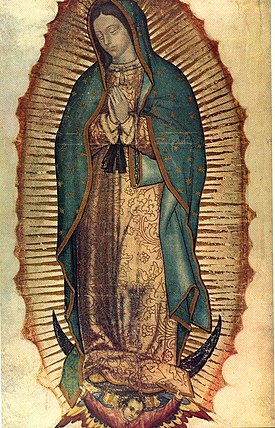
The black belt means she is pregnant
\.
The womb of the Immaculate Conception of Nuestra Senora de Guadalupe carried Jesus this way
![[30.jpg]](https://blogger.googleusercontent.com/img/b/R29vZ2xl/AVvXsEj4DxeIokv0wYjRUZU6DvfDQWD7aQjJrp8LZXnK-gMlwObOfVsfTY4Huq49fFEMdUzd8cYFoUYi1GmkwOXxM3NtZc7OK12skj2f-Sqn07rxgPojGTZFghK3WXS0q-X8UXILcz6kXg53ww/s1600/30.jpg)

9-months gestation of Jesus the Son of God

READ more here about the pregnancy of Our Lady http://stella0maris.blogspot.ca/2010/01/magisterium-benedict-versus-holy-mary.html

DOLLY THE CLONED SHEEP

The cloning process that produced Dolly
http://www.youtube.com/embed/39BbcZVCx8I
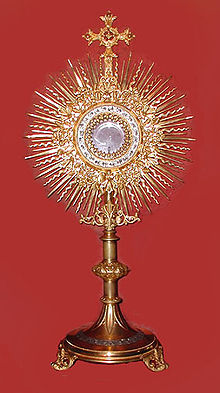
BLACK MAGIC OF EUCHARIST
1-MINUTE black magic of the cloning of Christ by sinful Vatican pope and priests
http://www.youtube.com/embed/39BbcZVCx8I
BLACK MAGIC OF EUCHARIST
1-MINUTE black magic of the cloning of Christ by sinful Vatican pope and priests
Our comment: Transubstantiation or the Mass is a recent development . St. Peter and St. Paul and the Apostles never celebrated Mass and never “transubstantiation” the bread into the flesh of Christ, what they did was to preach about Christ. The Mass was a slow development from the 12th century through various liturgical reforms until the 20th century. It was only in 1215 at the Fourth Council of the Lateran that the Mass began to take form and in 1551 at the Council of Trent that transubstantiation became what it is today. The Vatican has come to use it as its main crux of power on earth deceiving Catholics and peoples of all faiths that only Popes and men-priests have the exclusive power to transubstantiate God’s flesh. Because of the Mass, the Vatican has gotten away with all kinds of heinous crimes, e.g. the Crusades, the Inquisition, the burning of women and witches http://jp2m.blogspot.com/2006/11/john-paul-ii-revived-inquisition.html “For the sake of the Eucharist” and because of the shortage of priests, John Paul II, Cardinal Ratzinger-Benedict XVI, the Opus Dei who controls the Vatican, the Cardinals and Bishops shuffled pedophile priests from one parish to another. The rest is history: the John Paul II Pedophile Priests Army committed Holy ES Eucharist-and-Sodomy of Biblical proportions see the John Paul II Millstone http://jp2m.blogspot.com/.
In the name of Hail Mary, we dare challenge and defy the Magisterium: No words pronounced by any finite-man can create an infinite-God! No words of the Pope and priests can re-create or re-incarnate Christ’s flesh. The words of sinful popes and priests are powerless and can never create God! Only Mary the Immaculate Conception deserved to bear God in her womb. No evil pope and evil priests is worthy to touch and hold God in their evil hands. The words of popes and Cardinals, Bishops and priests are mere clashing-cymbals of St. Paul see John Paul II the Great clashing cymbal of St. Paul http://jp2m.blogspot.com/2009/11/john-paul-ii-great-clashing-cymbal-of.html. See Benedict XVI to beatify John Paul II is “brought to nothing” by St. Paul http://pope-ratz.blogspot.com/2009/11/benedict-xvi-to-beatify-john-paul-ii-is.html
No matter how we look at it, finite-man cannot create an infinite-God. Man can never create God’s flesh. Not in in-vitro fertilization of the scientific laboratories. Not in the sacred altars of holy Roman Catholic churches which by the way were the same pedophile altars of the John Paul II Pedophile Priests Army See the John Paul II Millstone http://jp2m.blogspot.com/
Rome, call us heretics and we don’t care because in Boston and in America, we have freedom of speech. It was our freedom of speech that got rid of criminal-Cardinal Bernard Law and sent him packing out of our sight and out of our land. But only you, Rome, you the Roman Catholic Church a.k.a. Magisterium would glorify criminals like Cardinal Bernard Law and John Paul II. No other American state has been able to replicate our courage as Bostonians who got rid of the first Cardinal caught guilty of the John Paul II Pedophile Priests Army in America. Yes, we caught the first SS officer of the Third Reich of the Roman Catholic Church … but he went into glorious exile in Rome because only in the Catholic Church are criminals glorified See The John Paul II Millstone John Paul II Pedophile Priests Army expands into Ireland &John Paul is elevated as "Venerable"... only in the Catholic Church are criminals glorified http://jp2m.blogspot.com/2009/12/john-paul-ii-pedophile-priests-army.html
Benedict XVI, from the Chair of Peter, thinks his papal letter will heal the victims and solve the problem of clergy abuse in Ireland. The fact is, Benedict XVI’s words are powerless. NO POPE has ever healed anyone. As this picture shows,

\
They came sick and they left sick.
There is NO "Apostolic" authority or succession here,
for NO Pope has EVER been able to heal like Peter or Paul did.
Opus Dei Goliath-bully Bill want to propagate Catholic Medieval Doctrine that all crimes of JP2 Army of pedophile priests are already forgiven and forgotten under the Sacrament of Confession that protects criminals and persecutes their victims, read here http://popecrimes.blogspot.ca/2012/11/sacrament-of-confession-protects.html

Friday, March 1, 2013
The Hague is above Pope, Vatican, Religion. The Hague must prosecute Benedict XVI now to prove secular International Justice reigns over ALL Religions and Despots
This is the FINAL CALL for The Hague to take Benedict XVI in to the International Court of Law to face – final justice – and only justice – for all hundreds of thousands of Catholic children all over the world who are victims of his crimes against humanity.
The Hague must not forfeit its - final moral voice - over the Pope and the Vatican because the world’s children and the world’s women and the world’s poor who are the victims of crimes against humanity depend on it.
The Hague must not lose and miss this best –and last - opportunity to prosecute Benedict XVI while he is still alive in order to bring final justice – the only true justice - for the hundreds of thousands of Catholic children worldwide who were sexually abused and sodomized in Biblical Proportions by the JP2 Army - John Paul II Pedophile Priests Army or B16 Army –Benedict XVI-Ratzinger Pedophile Priests Army named aptly after the two popes who systemically covered-up thousands of filthy Vatican Catholic sex maniac rapists bestial priests for over 27 years http://jp2army.blogspot.ca/ .
If The Hague is to have a viable continuous world authority over all nation’s evil powerful despots who order and/or cover-up religious ethnic cleansing, rapes against women by soldiers, rapes against children by holy priests, and other crimes against humanity, the prosecution of Benedict XVI at The Hague is now the best world stage and attention to all nations out there – that the Pope is NOT above The Hague – that religion specially the Vatican Christian Catholic Religion is NOT above The Hague, that the Vatican Billions cannot buy the souls of secular judges at The Hague, that all despots even those who claim to be the “Voice of God” or “Vicar of Christ” is NOT above moral justice of International Law at The Hague.
It is time that the patriarch old man who claims he is the descendant of St. Peter the “Vicar of Christ” (the Son of God) Pope emeritus Benedict XVI -- bow down before the secular moral authority of The Hague -- and that the Pope cannot escape International Police by hiding in an ancient religious castle like Castel Gandolfo or the Vatican, the smallest country on earth - which is really one of the last pathetic joke of the United Nations, see images below.
If The Hague fails to call on Benedict XVI to trial, it will have failed its moral duty for the most vulnerable member of humankind, the children, who were victims for half-a-century of the Vatican’s bestial priests, the JP2 Army - John Paul II Pedophile Priests Army http://jp2m.blogspot.ca/ or
B16 Army –Benedict XVI-Ratzinger Pedophile Priests. Read our related article Vatican Last Tsar Benedict XVI resigns as Vatican Pontiff of Vatican Catholic Church. It’s deceitful to say “Roman Pontiff” of “Roman Catholic Church” http://popecrimes.blogspot.ca/2013/02/vatican-last-tsar-benedict-xvi-resigns_13.html
If The Hague fails to call on Benedict XVI to trial, its future court orders and trials on other religious despots and world rulers will be weakened drastically and will be in vain and much harder to implement. Despots will simply look on Benedict XVI as their role model to commit crimes against humanity and get away with it either by buying the souls of judges through the Vatican Billions or by the display of hypocritical religious colors of red to faze and segue the focus of moral justice, read our related article, Billion Dollar Christ & Apostles in Red now playing in Vatican. Evil impact of Papal Conclave: epidemic violence against women & perpetuity of poor countries http://popecrimes.blogspot.ca/2013/02/billion-dollar-christ-apostles-in-red.html
On February 28, 2013, from New York and Rome – the Survivors Network of those Abused by Priests (SNAP) and the Center for Constitutional Rights (CCR) filed an alternate report to the United Nations Committee on the Rights of the Child documenting the ongoing worldwide sex abuse crisis in the Catholic Church, see news article below.
The Center for Constitutional Rights filed a case with the International Criminal Court on behalf of SNAP against the pope and other high-level Vatican officials for crimes against humanity in September 2011, then they provided additional documentation in the case in April 2012. The prosecutor is currently reviewing the evidence, read here The Hague: Full text Criminal Charges against Dr. Joseph Ratzinger, Pope of the Roman Catholic Church http://popecrimes.blogspot.com/2011/05/full-text-of-criminal-charges-against.html
and Hague Is Asked to Investigate Vatican Over Child Abuse. Bravo to SNAP and the Center for Constitutional Rights!! Court Filing details. http://popecrimes.blogspot.ca/2011/09/hague-is-asked-to-investigate-vatican.html
It is time that the (Roman) Vatican “Catholic” lose its clout so that Goliath-bully and Vatican Pied Pipers like Bill Donohue will stop bullying the world in their deceitful “anti-Catholic” rhetoric campaign, read more here about Donohue as it bullies the New York Times, read more here http://popecrimes.blogspot.ca/2013/01/los-angeles-files-mahony-must-be-jailed.html
Read our related articles
The
The Nazis of Hitler and the Roman Catholic
VATICAN INJUSTICE and VATICAN DECEPTIONS
Why is the Vatican a state or a country? It is only one building and one public square with permanent rooms for 800 persons --- why is it a country like the vast USA, Russia, China which has hundreds of millions of people???

Read more here http://popecrimes.blogspot.ca/2011_05_01_archive.html
VATICAN TITANIC SINKING in MORAL BANKRUPTCY
So the Cardinals or Apostles in Red are now gathered in the Vatican (not in Rome because the Curia is inside the Vatican), read our related article “Billion Dollar Christ & Apostles in Red now playing in Vatican. Evil impact of Papal Conclave: epidemic violence against women & perpetuity of poor countries"
http://popecrimes.blogspot.ca/2013/02/billion-dollar-christ-apostles-in-red.html and they are acting out the Sacrament of Confession wherein they have forgiven all the pedophile priests and Cardinals and Bishops who covered-them up and meanwhile the victims continue to suffer a living Hell as Australia is just awakening to the worst nightmare or reality of their children, see news updates below.
http://popecrimes.blogspot.ca/2013/02/billion-dollar-christ-apostles-in-red.html and they are acting out the Sacrament of Confession wherein they have forgiven all the pedophile priests and Cardinals and Bishops who covered-them up and meanwhile the victims continue to suffer a living Hell as Australia is just awakening to the worst nightmare or reality of their children, see news updates below.
Benedict XVI’s last Angelus speech he said that the church is in stormy waters and like the apostles in the boat when Christ was asleep, he “will not let the church sink”. But the Vatican Titanic is skinning in moral bankruptcy and it has lost all moral authorities in the world. because he as Cardinal Ratzinger and Pope John Paul II helmed it with the Eucharistic Priestly Sodomy of Biblical Proportions committed by thousands of pedophile priests named aptly after the fastest tracking saint John Paul II – theJP2 Army John Paul II Pedophile Priests Army – because he said and did nothing to stop this most heinous crimes against children in the 20th century.
No matter how they make Hollywood style production of the Papal Conclave, Harry Potter can teach more moral good with his magic than all the magic of the Vatican Catholic Church (not Roman Catholic Church anymore), read here http://popecrimes.blogspot.ca/2011/11/oc-diocese-buys-crystal-cathedral-as.html
Look at the magic of the Seven Sacraments all debunked.
Sacrament of Confession protects criminals and persecutes their victims http://popecrimes.blogspot.ca/2012/11/sacrament-of-confession-protects.html
The Sacrament of the Eucharist is Black Magic and Sorcery of the Flesh of Christ because the pope and priests cannot clone Dolly the sheep and therefore they cannot “clone Christ either”, read here and see images below.
The Sacrament of Baptism and Confirmation – did Christ baptise his Apostles? Did Christ require his disciples to be first confirmed? Did Christ require all those people he healed to be baptized by a priest? The fact is, Christ condemned all those High Priests in the Temple Vatican
And the Sacrament of the Holy Orders or priesthood is now proven a pedophile culture by the JP2 Army – John Paul II Pedophile Priests Army and it is now proven that priesthood is a gay culture, just look at Cardinal O’Brien’s immediate resignation and read The Homosexual Colonization of the Catholic Church http://pope-ratz.blogspot.com/2010/05/benedict-xvi-campaigns-against.html
. Here’s Benedict and his Gorgeous Georg private secretary according to Italian gays and the recent report a few days before Benedict XVI resigns about the “gay network” inside the Vatican and in the City of Rome as Vatican Officials frolic in wild parties with male prostitutes, read news updates below. Today,Vatican Catholic priests (not Roman Catholic) are like lepers – keep children away from them. Learn from history. Those who do not learn from history are doomed to repeat it. Learn from the JP2 Army – John Paul II Pedophile Priests Army http://popecrimes.blogspot.ca/2012/07/ncaa-penn-state-more-moral-than-vatican.html .Priests have no business touching children anymore. Children are supposed to be hugged and loved by their parents and siblings, not by celibate men who have renounced all form of sex, and bodily contacts.
. Here’s Benedict and his Gorgeous Georg private secretary according to Italian gays and the recent report a few days before Benedict XVI resigns about the “gay network” inside the Vatican and in the City of Rome as Vatican Officials frolic in wild parties with male prostitutes, read news updates below. Today,
What else, the Sacrament of the Last rites? This is the luxury left for the Opus Dei because their priests cater only to Opus Dei members. How many priests these days spend time giving the last rites in hospitals? Look at the Oratory of St. Joseph where those arrogant and cruel priests boast and make Saint Brother Andre as their “poor” model but the reality is he is their golden cash-cow. Brother Andre may have visited the sick during his heydays, but the Congregation de Sainte-Croix priests today do not visit the sick at all – because they are like the Pope sitting like King Midas of an empire of millions of dollars of candles lit by brainwashed people who are blindly praying to the Zeus statue of impotent St. Joseph who watched 50 years of sodomy on hundreds of students right before his eyes, and like John Paul II, he did nothing to stop them, and those candles only make those arrogant CSC or Holy Cross priests of the Oratory of St. Joseph more rich, read here http://popecrimes.blogspot.ca/2013/01/csc-holy-cross-congregation-delay-18.html
And the Sacrament of Marriage, many young people these days opt to avoid the expensive rite of church weddings.
The Vatican Titanic is sinking in moral bankruptcy and nothing can salvage it because the FALSE GOD of the Vatican
What morality can the Vatican
What morality has the Vatican for children after more than 100,000 children were abused systemically covered-up by the Vatican hierarchy.
What moral voice does the Vatican
Rosary could not defeat JP2 Army John Paul II Pedophile Priests Army in the 20th Century ... unlike the Battle of Lepanto in the 16th Century http://jp2m.blogspot.ca/
John Paul II is the Pope of Injustice because he did absolutely NOTHING during his longest papacy to bring some justice to pedophile victims of Fr. Marcial Maciel and the80 pedophile priests of Cardinal Bernard Law, his Achilles Heels, read more here http://jp2m.blogspot.com/2011/05/heil-satanas-jp2-patron-saint-of.html
Benedict XVI’s Consecration to Mary cannot protect children from pedophile priests http://pope-ratz.blogspot.com/2010/05/benedict-xvis-consecration-to-mary.html
Priests and nuns are not holier than us and not better than us
Priests and nuns are not holier-than-you and not better-than-you. Priests and nuns are not holier or better simply because they recite a formula of holy prayers and have (hypocritical) vows of poverty, chastity and obedience to the Pope, Cardinals and Bishops especially who aided and abetted half a century of JP2 Army – John Paul II Pedophile Priests heinous crimes http://jp2m.blogspot.ca/2011_04_01_archive.html).
Priests and nuns are not holier or better than lay teachers, nurses, social workers, doctors, lab technicians, the police, firefighters, workers at McDonalds and restaurants, janitors, all professions and laborers.
No matter what good deeds the priests and nuns are doing, they are not holier-than nor better than -- the Red Cross workers and Doctors without Borders who are instantly everywhere in war zone or disaster areas regardless of race and creed – while those Popes, Cardinals and Bishops sit in the lap of luxury in the Vatican Palace and Bishops’ Palaces counting the Vatican Billions, and priests and nuns live in their comfy rectories and hushed million dollars convents, read here - The fantastic wealth of Irish Catholic religious orders revealed http://popecrimes.blogspot.ca/2011/07/fantastic-wealth-of-irish-catholic.html,
And Opus Dei million dollar houses of their priests and “numeraries” equivalent to nuns and religious brothers http://www.odan.org/foundations.htm
“Holiness” is not measured by the holy prayers a person recites because Christ condemned those Holy Priests Pharisees precisely because they recited the most holy prayers from the Bible and He called them white washed sepulchres, read here http://popecrimes.blogspot.ca/2011/10/boston-to-host-former-swiss-guards.html
“It is acts of mercy” that I desire, God said in the Bible, and “not material or animal holocaust”. Christ got angry at those merchants selling those holy lambs for sacrifice in the Temple of Solomon
Read about the impotent Zeus statue of St. Joseph who overlooked 50 years of sodomy in College Notre Dame here, BOYCOTT Oratory of St.Joseph http://popecrimes.blogspot.ca/2013/01/boycott-oratory-of-saint-joseph-candles.html
The “Holy Father“ Pope and his copy-cat “holy fathers” Catholic priests cannot clone Dolly the sheep and therefore they cannot clone Christ either, read our related article, OC Diocese buys Crystal Cathedral as flesh-factory of Christ... for wealthy God-flesh-eating Catholics http://popecrimes.blogspot.ca/2011/11/oc-diocese-buys-crystal-cathedral-as.html
Well, the black magic holy words of a team of “holy priests” cannot clone Christ the Son God either, read about the Divine Trinity http://pope-ratz.blogspot.ca/2010/12/gay-trinity-of-father-son-and-holy
Please take a look at the worse Roman Catholic Church pedophile priests attacks against more than 15,500 Americans … compared to the September 11, 2001 attacks against 3,000 Americans at the Twin Towers in New York
Victims in USA - Attackers - Responsible Leaders
Pearl Harbor - 3,000 victims - 170 planes - Admiral Yamamoto
WTC & 9/11 attacks - 3,000 victims - 19 Muslims - Osama bin Laden
Priest pedophilia - 15,736 victims - 6,000 pedophile priests covered-up by John Paul II, Benedict XVI Ratzinger, Opus Dei = the Vatican Trinity.
Pearl Harbor - 3,000 victims - 170 planes - Admiral Yamamoto
WTC & 9/11 attacks - 3,000 victims - 19 Muslims - Osama bin Laden
Priest pedophilia - 15,736 victims - 6,000 pedophile priests covered-up by John Paul II, Benedict XVI Ratzinger, Opus Dei = the Vatican Trinity.
9/11 victims 3,000. JP2 Army 100,000s. May Day: both Hitler and bin Laden Announced Dead on May 1 on John Paul II Beatification Day B-Day http://jp2m.blogspot.ca/2011/05/911-victims-5000-jp2-army-100000s-may.html.
Look deeply into this image of Our Lady of Guadalupe defending and protecting children from the Serpent ... compared to Pope John Paul II, Cardinal Joseph Ratzinger, Cardinals, Bishops who coverd-up pedophile priests
http://jp2m.blogspot.ca/2008/07/letter-to-opus-dei-pope-john-paul-ii.html The names of the transferring or covering up Bishops and Cardinals are: Roll Call Please!
Pope
The Hague: Full text Criminal Charges against Dr. Joseph Ratzinger, Pope of the Roman Catholic Church http://popecrimes.blogspot.com/2011/05/full-text-of-criminal-charges-against.html The black belt means she is pregnant
\.
The womb of the Immaculate Conception of Nuestra Senora de Guadalupe carried Jesus this way
9-months gestation of Jesus the Son of God
READ more here about the pregnancy of Our Lady http://stella0maris.blogspot.ca/2010/01/magisterium-benedict-versus-holy-mary.html
DOLLY THE CLONED SHEEP
The cloning process that produced Dolly
http://www.youtube.com/embed/39BbcZVCx8I
BLACK MAGIC OF EUCHARIST
1-MINUTE black magic of the cloning of Christ by sinful Vatican pope and priests
http://www.youtube.com/embed/39BbcZVCx8I
BLACK MAGIC OF EUCHARIST
1-MINUTE black magic of the cloning of Christ by sinful Vatican pope and priests
Our comment: Transubstantiation or the Mass is a recent development . St. Peter and St. Paul and the Apostles never celebrated Mass and never “transubstantiation” the bread into the flesh of Christ, what they did was to preach about Christ. The Mass was a slow development from the 12th century through various liturgical reforms until the 20th century. It was only in 1215 at the Fourth Council of the Lateran that the Mass began to take form and in 1551 at the Council of Trent that transubstantiation became what it is today. The Vatican has come to use it as its main crux of power on earth deceiving Catholics and peoples of all faiths that only Popes and men-priests have the exclusive power to transubstantiate God’s flesh. Because of the Mass, the Vatican has gotten away with all kinds of heinous crimes, e.g. the Crusades, the Inquisition, the burning of women and witches http://jp2m.blogspot.com/2006/11/john-paul-ii-revived-inquisition.html “For the sake of the Eucharist” and because of the shortage of priests, John Paul II, Cardinal Ratzinger-Benedict XVI, the Opus Dei who controls the Vatican, the Cardinals and Bishops shuffled pedophile priests from one parish to another. The rest is history: the John Paul II Pedophile Priests Army committed Holy ES Eucharist-and-Sodomy of Biblical proportions see the John Paul II Millstone http://jp2m.blogspot.com/.
In the name of Hail Mary, we dare challenge and defy the Magisterium: No words pronounced by any finite-man can create an infinite-God! No words of the Pope and priests can re-create or re-incarnate Christ’s flesh. The words of sinful popes and priests are powerless and can never create God! Only Mary the Immaculate Conception deserved to bear God in her womb. No evil pope and evil priests is worthy to touch and hold God in their evil hands. The words of popes and Cardinals, Bishops and priests are mere clashing-cymbals of St. Paul see John Paul II the Great clashing cymbal of St. Paul http://jp2m.blogspot.com/2009/11/john-paul-ii-great-clashing-cymbal-of.html. See Benedict XVI to beatify John Paul II is “brought to nothing” by St. Paul http://pope-ratz.blogspot.com/2009/11/benedict-xvi-to-beatify-john-paul-ii-is.html
No matter how we look at it, finite-man cannot create an infinite-God. Man can never create God’s flesh. Not in in-vitro fertilization of the scientific laboratories. Not in the sacred altars of holy Roman Catholic churches which by the way were the same pedophile altars of the John Paul II Pedophile Priests Army See the John Paul II Millstone http://jp2m.blogspot.com/
Rome, call us heretics and we don’t care because in Boston and in America, we have freedom of speech. It was our freedom of speech that got rid of criminal-Cardinal Bernard Law and sent him packing out of our sight and out of our land. But only you, Rome, you the Roman Catholic Church a.k.a. Magisterium would glorify criminals like Cardinal Bernard Law and John Paul II. No other American state has been able to replicate our courage as Bostonians who got rid of the first Cardinal caught guilty of the John Paul II Pedophile Priests Army in America. Yes, we caught the first SS officer of the Third Reich of the Roman Catholic Church … but he went into glorious exile in Rome because only in the Catholic Church are criminals glorified See The John Paul II Millstone John Paul II Pedophile Priests Army expands into Ireland &John Paul is elevated as "Venerable"... only in the Catholic Church are criminals glorified http://jp2m.blogspot.com/2009/12/john-paul-ii-pedophile-priests-army.html
Benedict XVI, from the Chair of Peter, thinks his papal letter will heal the victims and solve the problem of clergy abuse in Ireland. The fact is, Benedict XVI’s words are powerless. NO POPE has ever healed anyone. As this picture shows,
They came sick and they left sick.
There is NO "Apostolic" authority or succession here,
for NO Pope has EVER been able to heal like Peter or Paul did.
Opus Dei Goliath-bully Bill want to propagate Catholic Medieval Doctrine that all crimes of JP2 Army of pedophile priests are already forgiven and forgotten under the Sacrament of Confession that protects criminals and persecutes their victims, read here http://popecrimes.blogspot.ca/2012/11/sacrament-of-confession-protects.html
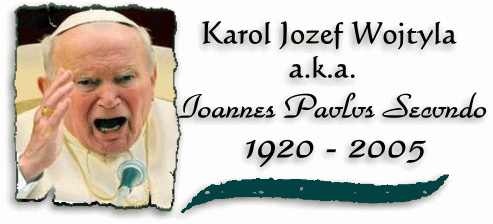

JP2 Army
JOHN PAUL II PEDOPHILE PRIESTS ARMY
The Cardinals and Bishops who enabled the Vatican sex maniac rapists priests


CSC Holy Cross Congregation delay $18 million compensation payout. Brother Andre & Saint JOSEPH giant GOLDEN COW STATUES could not help victims of CSC pedophiles http://popecrimes.blogspot.ca/2013/01/csc-holy-cross-congregation-delay-18.html

People, please STOP DONATING to the ORATORY and STOP LIGHTING CANDLES to St. Joseph and instead donate your money to Red Cross, Doctors without Borders, your local charities, and the homeless shelters of Montreal. God will listen more to your prayers in your acts of charity because they are better than material candles and money you give to the wealthy billionaire CSC religious Holy Cross family of Saint Brother Andre. If you were to face Christ on Judgement Day today, He will not ask you how many candles you have lit at the Oratory of St. Joseph, but how many poor people you have helped, as He has said, “Whatsoever you do to the least of my brethren, that you have also done to Me.”
 ZEUS GIANT SAINT JOSEPH did NOTHING to stop pedophile priests of the Congregation de Sainte-Croix happening right before his very eyes for 50 years
People, please STOP DONATING to the ORATORY and STOP LIGHTING CANDLES to St. Joseph and instead donate your money to Red Cross, Doctors without Borders, your local charities, and the homeless shelters of Montreal. God will listen more to your prayers in your acts of charity because they are better than material candles and money you give to the wealthy billionaire CSC religious Holy Cross family of Saint Brother Andre. If you were to face Christ on Judgement Day today, He will not ask you how many candles you have lit at the Oratory of St. Joseph, but how many poor people you have helped, as He has said, “Whatsoever you do to the least of my brethren, that you have also done to Me.”
ZEUS GIANT SAINT JOSEPH did NOTHING to stop pedophile priests of the Congregation de Sainte-Croix happening right before his very eyes for 50 yearsIf you live in Los Angeles, or elsewhere in the USA or in the world, and are planning a “pilgrimage” to the Oratory of St. Joseph or flying to the Vatican, DON'T GO and instead DONATE that pilgrimage money to the Red Cross or your local charity - or sponsor a poor student and pay for his or her school supplies and school lunch for a year, or feed a homeless person for a year at McDonald's, instead of flying to Montreal to see the Oratory or the Vatican Mammon Beast - and God will listen more to your prayers in your act of mercy rather feeding the Vatican Mammon Beast or St. Joseph Oratory Mammon Beast copying the Vatican Titanic sinking in moral bankruptcy. http://popecrimes.blogspot.ca/2012/12/oratory-of-st-joseph-copy-vatican.html
Children are better sex educated reading the Los Angles files rather than wasting their time to attend the wizardry of the Mass where priests ceaselessly reiterate those old horrid stories of extinct people in the Bible, read here the Immoral Bible http://pope-ratz.blogspot.ca/2010_12_01_archive.html.
BOYCOTT Oratory of Saint Joseph! CANDLES to giant Zeus statues of St. Joseph and Brother Andre cannot protect children from CSC pedophiles
http://popecrimes.blogspot.ca/2013/01/boycott-oratory-of-saint-joseph-candles.html
Vatican Billions: its history, sources, and assets today worldwide. BOYCOTT the Vatican Museum and boycott ALL donations to the Vatican Catholic Church Reign of Terror
Vatican Billions: its history, sources, and assets today worldwide. BOYCOTT the Vatican Museum and boycott ALL donations to the Vatican Catholic Church Reign of Terror
http://popecrimes.blogspot.ca/2011/03/vatican-billions-holy-mass-tourism-for.html
READ our latest articles:
- Vatican Last Tsar Benedict XVI resigns as Vatican Pontiff of Vatican Catholic Church. It’s deceitful to say “Roman Pontiff” of “Roman Catholic Church” is here
Billion Dollar Christ & Apostles in Red now playing in Vatican. Evil impact of Papal Conclave: epidemic violence against women & perpetuity of poor countries
http://popecrimes.blogspot.ca/2013/02/billion-dollar-christ-apostles-in-red.html


1 comment:
Excellent expose. In Quebec, after the joug of the Catholic Church, over 400 years,the Church exploited us, especially women who were having babies almost every year (my mother had 17, under the fear of hell) religious orders. jesuits, redemptorists, to which my uncle and three cousins belonged, are being sued by great number of victims. Nuns admistering hospitals and convents, The Misericorde Hospital, no longer under the religious orders, were SHAMING UNWED MOTHERS, USING A DESPICABLE PRAYER,were selling the babies of these unfortunates in New-York for as much as $10,000.00 sending unadopted orphans, to mental institutions, who were perfectly sane. The Province is now paying a mere $25,000.00, for all the years of suffering and being physically and emotionally abused by nuns. Our churches are now empty! They are being demolished or sold for condos. The convent of the Ursulines, my alma mater, is now a residence for senior citizens, so is the Christian Brothers school. We rebelled and got rid of religious!
Marie P.
Post a Comment